
Key Takeaways
- Metal 3D printing dust control extends beyond the printing chamber. Powder loading, transfer, sieving, depowdering and post-processing can release fine particles. A conventional cartridge dust collector is not automatically suitable for these operations.
- Feedstock powder and process-generated particles require different considerations. Metal powder bed fusion can generate fine condensates and airborne particles that differ from the original feedstock in size, composition and behavior.
- Cartridge filtration efficiency does not establish explosion safety. Filter media, housing design, cleaning methods and ignition protection must be evaluated as a complete system. General metal grinding dust collection principles cannot be applied without considering additive manufacturing conditions.
- Powder reactivity determines collection-system suitability. Aluminum, titanium and certain other metal powders may present combustible or reactive dust hazards. Experience with aluminum laser-cutting dust collection provides useful context, but powder-specific testing remains essential.
- Static control, containment and housekeeping are interconnected. Conductive accessories, bonding, grounding and safe dust removal must complement the collector’s filtration performance. Broader industrial dust collector fire-risk considerations are relevant when evaluating the complete system.
Metal Powder Handling and Dust Exposure Across the Additive Manufacturing Workflow
Metal additive manufacturing, particularly laser powder bed fusion (PBF-LB), is often associated with enclosed processing chambers and controlled atmospheres. However, the printing stage is only one part of the production cycle.
After printing, operators must remove loose powder, extract printed components, clean the build chamber and prepare recovered material for subsequent processing. These activities can introduce particle exposure pathways that do not exist during fully enclosed printing.
An effective metal powder dust collection strategy must therefore cover the entire workflow rather than focusing exclusively on the printer’s internal filtration unit.
Powder Transfer, Sieving and Feedstock Recovery
Powder handling presents several opportunities for material release, particularly when containers are opened, powder is transferred between machines or sieving equipment is serviced.
Fine metal particles can become airborne during pouring, container disconnection and other open handling operations. Closed transfer systems, sealed connections and suitable containment arrangements may reduce these releases.
However, containment must be evaluated under actual operating conditions. A connection that remains sealed during steady operation may still release powder when disconnected.
Powder recovery also requires material-quality controls. Recovered feedstock may contain changes in particle-size distribution, oxygen content or contamination.
Material collected from an industrial dust collector should not automatically be reused in a printer. Process condensates, foreign particles and mixed-metal residues may make collected dust unsuitable for feedstock recovery.
Depowdering and Post-Processing
Depowdering is particularly challenging for components containing internal channels, lattice structures or complex cavities.
Loose powder may remain trapped even after visible external material has been removed. Depending on part geometry, specialized depowdering equipment and inspection methods may be necessary.
Additional particles may be generated during support removal, grinding, blasting and machining.
These particles are not necessarily identical to the original feedstock. Their size distribution, chemical state and ignition characteristics may differ.
The following table summarizes the main dust-control considerations across the process.
| Process stage | Potential dust release | Main engineering consideration |
|---|---|---|
| Powder loading | Container opening and powder transfer | Sealed connections and controlled handling |
| Powder sieving | Material movement and equipment opening | Enclosure integrity and powder segregation |
| Chamber cleaning | Residual powder inside the printer | Compatible extraction and safe access |
| Component depowdering | Powder trapped in surfaces and cavities | Local containment and appropriate cleaning methods |
| Part finishing | Fine particles from cutting or grinding | Task-specific extraction and ignition-risk assessment |
| Workstation cleaning | Settled powder becoming airborne again | Approved housekeeping and collection methods |
Dry sweeping and uncontrolled compressed-air blowing can re-suspend settled material. Cleaning methods should be selected according to the powder’s reactivity, equipment requirements and workplace hazard assessment.
Cartridge Filter Selection for Fine Metal Powder Collection
Pleated cartridge filters offer a relatively large filtration area within a compact housing. Their construction can support efficient particulate capture in suitable industrial applications.
However, metal additive manufacturing introduces requirements that extend beyond conventional filtration efficiency.
A filter capable of capturing fine particles is not necessarily appropriate for combustible or reactive metal dust.
Particle Retention, Airflow and Filter Integrity
Cartridge selection should begin with the actual operating conditions, including metal composition, particle-size distribution, dust concentration, airflow and expected loading.
Important filtration parameters include:
- Particle-retention performance under relevant test conditions
- Filter-media compatibility with the collected material
- Cartridge sealing and housing integrity
- Operating airflow and differential-pressure limits
- Dust-loading behavior and replacement requirements
- Compatibility with the specified cleaning method
Nominal filtration ratings alone provide insufficient information for critical applications.
Fine particles may penetrate unsuitable media or escape through poorly sealed connections. A high-efficiency cartridge also cannot compensate for dust escaping from a poorly designed capture point.
The extraction system must therefore be evaluated from the source enclosure through the collection equipment and exhaust path.
Pulse-Jet Cleaning and Dust Re-Entrainment
Pulse-jet cleaning uses compressed air to release accumulated particles from the filter media.
For ordinary industrial dust, this approach can help maintain filtration performance. However, when handling combustible metal powders, the cleaning sequence requires additional evaluation.
A cleaning pulse can temporarily suspend collected particles inside the housing, potentially creating a concentrated dust cloud.
The suitability of pulse cleaning depends on the powder’s characteristics, collector design and engineered ignition-prevention and explosion-protection measures.
A conventional dry pulse-jet collector should never be assumed suitable for reactive metal powders solely because it uses high-efficiency or anti-static cartridges.
Filter replacement and collected-dust removal also need to be considered. Dust exposure can occur during maintenance even when the equipment performs adequately during normal operation.
Combustible Metal Dust Safety: Dry, Wet and Inert Collection Systems
Metal powder collection presents both occupational exposure and process-safety challenges.
Depending on particle characteristics and operating conditions, combustible metal dust may create fire or explosion hazards. Certain reactive powders may also introduce chemical compatibility concerns.
The selection of dry, wet or inert collection technology should therefore follow a powder-specific hazard assessment.
Dry Collection Systems
Dry filtration systems can be suitable for certain applications when the complete installation is properly engineered for the material and operating environment.
Potential hazards include dust accumulation, ignition sources, electrostatic discharge and combustible dust clouds generated during cleaning or maintenance.
Where required by the hazard assessment and applicable regulations, the system may need appropriate prevention, isolation, suppression or pressure-relief provisions.
These safeguards must be evaluated together rather than treated as independent accessories.
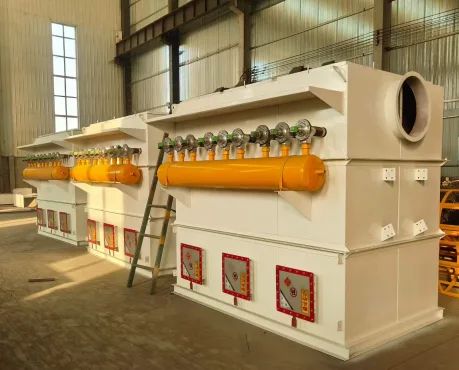
Wet and Inert Collection Systems
Wet collection can be considered for certain metal dust applications, but it is not universally safer.
Some reactive metal powders can react with water and generate flammable hydrogen. Collected sludge may also require specialized treatment and disposal.
Inert collection systems may use a controlled gas atmosphere or a compatible inerting medium to manage specific risks.
However, an inert system is only effective when its operating conditions and protective functions are properly designed and verified.
Where oxygen control is part of the safety strategy, monitoring, alarms, failure responses and maintenance requirements are essential considerations.
| Collection approach | Potential application | Critical limitation |
|---|---|---|
| Engineered dry filtration | Compatible metal powders under suitable protection measures | Combustible dust accumulation and ignition hazards |
| Wet collection | Applications with verified powder-liquid compatibility | Possible chemical reaction, hydrogen generation and sludge hazards |
| Inert-gas collection | Processes requiring controlled-atmosphere powder handling | Monitoring, containment and failure-response requirements |
| Specialized inert-liquid collection | Selected reactive powders with a compatible collection medium | Material compatibility, liquid management and disposal requirements |
No collection approach should be selected simply because it is commonly used with another metal or alloy.
In the United States, NFPA 660:2025 provides an important framework for combustible-dust hazard assessment and protection.
ISO/ASTM 52938-1:2025 addresses safety requirements for laser powder-bed-fusion machines within its defined scope. It excludes pyrophoric feedstock and operation in potentially explosive atmospheres, so it should not be treated as a universal certification for all metal powder collection conditions.
Electrostatic Control and Explosion-Protection Boundaries
Static electricity is an important consideration during metal powder transfer and collection.
Electrical charge can accumulate when particles move through transfer lines or when conductive components are not properly connected.
An engineered electrostatic-control strategy should consider the complete extraction assembly, including containers, hoses, fittings, filter housings and equipment connections.
Bonding and grounding arrangements should be selected and verified for the intended service.
Conductive or static-dissipative filter media may support these controls, but cannot independently eliminate the risk of ignition.
Likewise, a HEPA filtration rating is not an explosion-protection certification.
HEPA performance concerns particle retention under specified test conditions. It does not establish that a complete vacuum cleaner or dust collector is suitable for combustible metal powder.
Where filtered air is returned to occupied spaces, the recirculation arrangement also requires separate assessment.
The appropriate control strategy depends on the powder, equipment, operating conditions and applicable safety requirements.
Published Industrial Evidence: Exposure Pathways and Collection-System Risks
Published occupational investigations and field studies provide useful insight into the challenges of metal additive manufacturing dust control.
The following examples are independent investigations and research findings, not Omela installations or product performance tests.
U.S. Metal Additive Manufacturing Facility: Powder Migration Beyond the Printing Area
A 2025 U.S. occupational-health investigation evaluated metal exposure at an additive manufacturing facility using powder bed fusion, directed energy deposition and post-processing equipment.
The investigation examined airborne metals, workplace surfaces, clothing and skin contamination.
Researchers found metal-containing particles on surfaces and in areas beyond the immediate powder-handling operations.
Personal breathing-zone concentrations did not exceed the applicable occupational exposure limits measured during the survey. However, surface contamination and material migration remained important findings.
The investigators recommended improvements to powder containment, ventilation and housekeeping.
Engineering implication: Acceptable airborne concentration measurements during a limited survey do not necessarily demonstrate effective control of powder transfer, surface contamination or movement between work areas.
U.S. Metal 3D Printing Accident: Dust Accumulation and Inerting Safeguards
A U.S. regulatory investigation followed a November 2013 fire and explosion at a metal additive manufacturing facility processing combustible alloy powders, including titanium- and aluminum-containing materials.
The accident injured a worker.
Regulatory findings identified safety concerns involving reactive metal powders, an indoor dry dust collector, accumulated dust and insufficiently verified inerting safeguards.
The collector’s reverse-pulse cleaning operation was also identified as capable of producing a combustible dust cloud inside the equipment.
The available findings do not establish that a cleaning pulse directly ignited the accident.
Nevertheless, the investigation illustrates the importance of evaluating the complete collection system rather than relying on filtration efficiency alone.
Engineering implication: Dust inventory, cleaning sequences, oxygen-control safeguards and maintenance procedures should be included in the combustible-dust risk assessment.
Swedish Additive Manufacturing Facility: Ultrafine Particle Peaks During Post-Processing
A 2026 peer-reviewed study examined particle exposure across a Swedish metal additive manufacturing facility.
Researchers monitored operations including printing and post-processing, focusing on nano- and submicrometer-sized particles.
Short-duration particle-number concentrations reached approximately 3.3 million particles/cm³, with the highest peaks observed in post-processing areas.
Meanwhile, measured inhalable and respirable dust mass concentrations were generally low.
These results demonstrate an important distinction: particle-number concentration and mass concentration measure different exposure characteristics.
The reported peaks do not automatically establish an occupational exposure-limit exceedance, and the measurements should not be interpreted as universal emission rates for metal 3D printers.
Engineering implication: Exposure assessment should consider specific activities, particle characteristics and short-duration releases, particularly during depowdering, cleaning and finishing.
Engineering Selection Checklist for Metal Powder Dust Collection
Before selecting filtration equipment for a metal additive manufacturing application, engineers should evaluate the following requirements:
- Powder characteristics: Identify the alloy, particle-size distribution, combustibility, reactivity, moisture sensitivity and relevant material safety information.
- Process operations: Document powder loading, transfer, sieving, printing, depowdering, finishing and waste handling.
- Capture and containment: Evaluate enclosed handling, transfer connections, local exhaust capture and potential powder migration.
- Filtration requirements: Establish retention performance, filter sealing, operating airflow, pressure-drop limits and media compatibility.
- Collection architecture: Determine whether an engineered dry, wet or inert arrangement is suitable based on the specific hazards.
- Ignition and explosion protection: Assess static control, bonding, grounding, dust accumulation, equipment classification and required safeguards.
- Commissioning and maintenance: Define system verification, operating monitoring, powder disposal, filter replacement and safe maintenance procedures.
For high-risk materials, system selection and modifications should be reviewed by appropriately qualified process-safety and dust-collection specialists.
Engineering Recommendation: Evaluate the Complete Powder Collection Process
Metal 3D printing powder dust collection is not simply a question of choosing a cartridge with a finer micron rating.
The challenge involves controlling fine particles across several operations while managing the chemical and physical hazards of the material.
Effective collection begins with identifying where powder is released, how it moves through the workplace and which containment methods are appropriate.
Filter media, airflow and differential pressure can then be optimized within a collection system that has been assessed for the specific powder and process.
The correct engineering sequence is to evaluate powder characteristics and process hazards first, determine the appropriate collection architecture second, and select compatible filtration components only after those requirements are established.
This approach supports more reliable dust containment, clearer equipment specifications and safer maintenance throughout the metal additive manufacturing workflow.
FAQ: Metal 3D Printing Powder Filtration and Collector Safety
Are Ordinary Cartridge Dust Collectors Suitable for Metal 3D Printing Powder?
Not automatically. Suitability depends on the specific metal powder, combustibility or reactivity, transfer process, filtration requirements and the complete collector’s engineered safeguards. A standard dry cartridge unit should not be assumed appropriate without a documented hazard assessment.
Can Anti-Static Filter Cartridges Prevent Metal Powder Explosions?
No. Static-dissipative media may support an engineered electrostatic-control strategy, but it does not replace proper bonding, grounding, equipment selection, dust management or required explosion-prevention and protection measures.
Is Wet Dust Collection Always Safer for Aluminum or Titanium Powder?
No. Some reactive metal powders can react with water and generate flammable hydrogen. Wet, dry and inert systems each require powder-specific evaluation and appropriate design, monitoring, maintenance and waste-handling controls.
Where Is Metal 3D Printing Powder Most Likely to Escape?
Potential release points include powder loading, transfer, sieving, printer chamber opening, depowdering, part finishing and workstation cleaning. The highest-risk tasks vary by machine, powder and containment design and should be assessed with task-based observations or measurements.
Does a HEPA Filter Make a Metal Powder Vacuum Explosion-Proof?
No. HEPA performance describes particle filtration under specified test conditions; it does not certify the vacuum, collector, electrical components, hoses or collection method as safe for combustible or reactive metal powder.
Author

Jessica Ma – Senior Filtration Engineer, Omela Filtration
Jessica Ma is a senior filtration engineer at Omela Filtration, specializing in dust and liquid filtration. With over 15 years of experience, she focuses on optimizing baghouse performance, enhancing filtration efficiency, and developing high-performance solutions for industrial dust collectors and precision liquid filtration applications.