Carbon Black Dust Filtration Solution
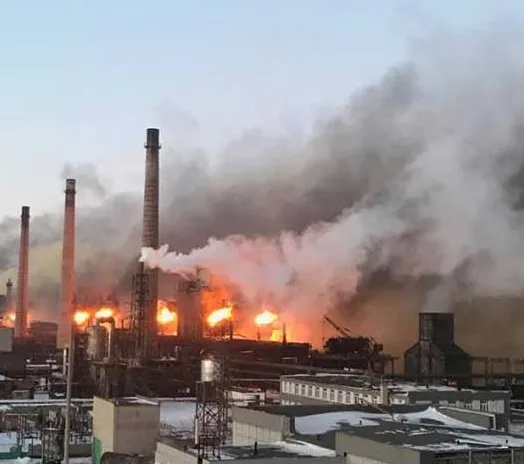
Carbon Black Industry Dust Filtration Solutions
The carbon black industry produces one of the most challenging dust environments in industrial filtration due to the extremely fine particulate nature, combustibility, and high surface area of carbon black dust. Effective dust filtration systems not only protect workers and equipment, but also support regulatory compliance for emissions and workplace safety.
Carbon black production involves thermal decomposition of hydrocarbons under controlled conditions, generating very fine carbon particulates that are lightweight and highly dispersible. The size of carbon black particles typically ranges from sub-micron to a few micrometers, making them difficult to capture and prone to wide distribution in plant air.
Key industrial concerns include:
- Fine particulate emissions:
Carbon black dust is so fine that it readily becomes airborne and spreads
across production and handling areas. - Combustible / Explosion hazard:
Carbon black dust is classified as combustible and can contribute to
combustible dust hazards if accumulated; appropriate filtration and
housekeeping are critical. - Occupational exposures:
Facilities must control airborne dust to meet occupational exposure limits
(e.g., OSHA PEL ~3.5 mg/m³).
Recommended Filter Media
Filter Media & Baghouse Selection Principles
Due to the demanding nature of carbon black dust, filter media should provide:
- Low and stable differential pressure (dP)
- High permeability and cleanability
- Resistance to carbon dust abrasion
- Extended service life
Examples of effective media options include:
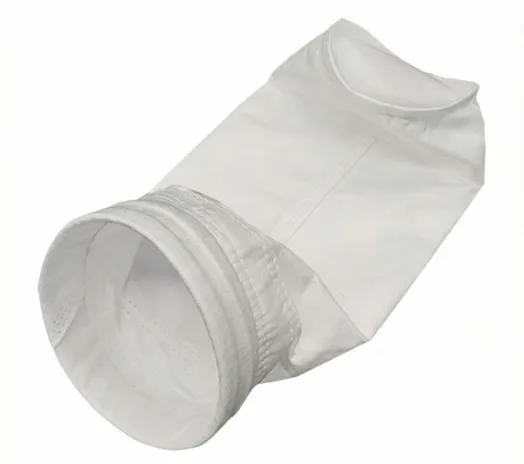
- PTFE-membrane laminated filter bags – superior cleanability
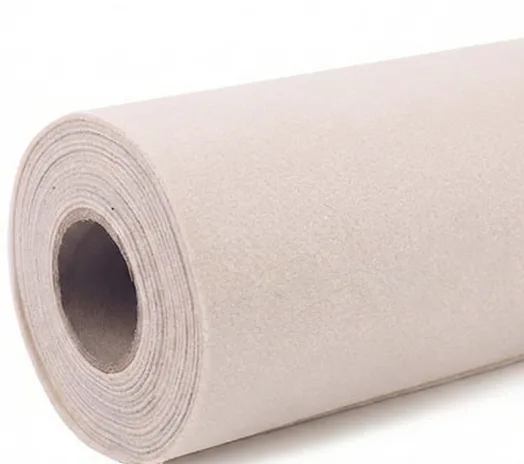
and stable long-term performance - High-temperature needle felts (PPS, P84) – appropriate when
process temperatures exceed typical polyester limits - High permeability low-drag filter bags – designed to maintain
airflow, reduce dP, and extend bag life, leading to lower total cost of
ownership (COO) in carbon black production systems
Higher performance filter bags with advanced membrane technology help reduce persistent emissions, optimize air-to-cloth ratio, and lower operating costs.
Typical Operating Conditions in Carbon Black Production & Collection Systems
| Process Section | Location | Normal Gas Temp. | Peak Temp. | Dust Characteristics | Operating Mode |
|---|---|---|---|---|---|
| Carbon Black Reactor Outlet | Reactor outlet / quench inlet | 170–200 °C | 220 °C | Ultra-fine carbon black, nano-scale (~100 nm), high surface area, highly cohesive | Continuous, reaction-driven |
| Quench Boiler / Waste Heat Recovery | Quench boiler outlet | 160–190 °C | 210 °C | Fine carbon black with condensable hydrocarbons, sticky | Continuous, heat-recovery coupled |
| Primary Carbon Black Collector | Upstream of baghouse | 150–190 °C | 210 °C | Very fine, highly dispersible carbon black, high dust loading (≥200 g/Nm³) | Continuous, high dust flux |
| Baghouse Filtration Zone | Filter compartment | 150–190 °C | 210 °C | Nano-particle carbon black, strong agglomeration, high blinding tendency | Continuous, on-line pulse-jet |
| Product Separation & Gas Polishing | Filter outlet / separator | 150–190 °C | 200 °C | Residual ultra-fine carbon black, trace hydrocarbons | Continuous, sealed system |
| Discharge & Product Handling | Hopper / airlock discharge | 120–160 °C | 180 °C | Fine carbon black powder, explosive (ATEX Zone 0), cohesive | Continuous, inerted (N2 purge) |
Recommended Filter Bag Constructions for Carbon Black Applications
| Process Section | Recommended Media | Felt Weight | Finish / Surface Treatment | Typical Bag Design | Cage Recommendation |
|---|---|---|---|---|---|
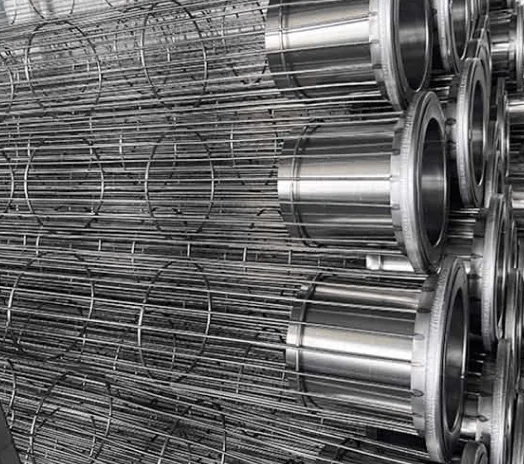
| Reactor Outlet / Primary Collection | PPS needle felt | 550–600 g/m² | Calendered, singed, anti-adhesion finish | Pulse-jet bags with reinforced top cuff | Stainless steel cage, standard pitch |
| Waste Heat Boiler Outlet | PPS with PTFE membrane | 550–650 g/m² | PTFE membrane, hydrocarbon-resistant | High-temperature pulse-jet bags | Stainless steel cage, reinforced bottom |
| Main Carbon Black Baghouse | PPS or P84 / PPS blend | 600–650 g/m² | PTFE membrane for ultra-low permeability | Precision pulse-jet bags for stable DP | Stainless steel cage, close pitch |
| Nano-Particle Filtration Zone | P84 polyimide filter media | 500–550 g/m² | PTFE membrane or advanced surface finish | Long-cycle pulse-jet bags | Stainless steel cage, close spacing |
| Product Polishing / Final Filtration | PPS with PTFE membrane | 500–600 g/m² | Anti-static + anti-adhesion finish | Hermetically sealed bag design | Stainless steel cage, ATEX-compliant |
| Discharge & Hopper Section | PPS or fiberglass with PTFE | 650–800 g/m² | Anti-adhesion, chemical-resistant finish | Heavy-duty bags with reinforced bottom | Stainless steel cage, 12–16 vertical wires |
Carbon Black Prototype System – Hermetically Sealed Filtration & Product Recovery (UK R&D Facility)
The client is proposing a 1/5 scale carbon black generating prototype for a FEED study, to be installed in an R&D furnace facility. The process involves ultra-fine (~100 nm) carbon black carried in a gas stream and requires safe, sealed handling due to ATEX Zone 0 dust explosibility and high dust concentration.
The prototype requires a filtration solution that is hermetically sealed to atmosphere, supports continuous operation, integrates with waste-heat recovery, and maintains stable performance under sticky/caking dust behavior. The client also requested confirmation on the ~300 Am3/hr inlet flow scope, plus controls and discharge interface details.
Operating Conditions & Challenges
| Process inlet flow rate | ~300 Am3/hr (scope clarification required) |
| Gas pressure | 90 kPa |
| Process stream temperature | 190 °C |
| Dust concentration | 224.7 g/Nm³ (very high loading) |
| Particle size distribution | ~100 nm (nano-scale, cohesive) |
| Bulk / apparent density | 250 kg/m³ |
| Stickiness / caking tendency | Yes (high blinding tendency) |
| Dust explosibility | ATEX Zone 0 |
| Emission / containment requirement | Hermetically sealed to atmosphere |
| Material of construction | SS304 |
| Operation mode | Continuous |
| Cleaning method | Pulse Jet + vibration |
| Waste-heat recovery | Yes |
Omela Engineering Solution
- Filter Media & Bag Design (nano-particle carbon black, anti-blinding / low-permeability option)
- Explosion-Safe & Hermetic Design (sealed housings, leak-tight interfaces, controlled discharge concept)
- Pulse Jet + Vibration Cleaning Strategy (manage stickiness/caking; stabilize differential pressure)
- Discharge & Airlock Interface (DN250 typical; confirm final airlock type/size)
- N2 Purging Integration (interlocked purge mode as requested)
- PLC/HMI Scope & Control Integration (option: supply PLC/HMI and integrate filter control into code)
- Waste-Heat Recovery Compatibility (layout and materials aligned with heat recovery integration)
For the FEED prototype, our priority is a hermetically sealed filtration system that can handle nano-scale carbon black at high loading
while supporting waste-heat recovery and safe ATEX Zone 0 operation. We also need clear scope confirmation for ~300 Am3/hr and control integration details.
ATEX Zone 0
Hermetically Sealed Containment
Ultra-fine nano-scale carbon black (~100 nm) is safely handled in a fully sealed filtration system designed for ATEX Zone 0 operation, with interlocked N2 purging, controlled discharge, and zero atmospheric release throughout continuous R&D operation.
Measured Results
| Parameter | Baseline / Requirement | Target / Omela Design Outcome |
| Containment to atmosphere | Hermetically sealed required | Sealed design + leak-point sealing strategy |
| Dust handling safety | ATEX Zone 0 | ATEX-oriented concept: sealed interfaces + interlocked N2 purge |
| Differential pressure stability | Sticky/caking risk | Pulse jet + vibration cleaning to stabilize DP |
| Flow scope | ~300 Am3/hr | Sized to match inlet flow requirement (final confirmation pending) |
| Cleaning upsets | Avoid frequent upsets | Anti-adhesion / low-permeability option + optimized cleaning logic |
| Controls integration | PLC/HMI scope to confirm | Option to supply PLC/HMI + integrate filter control into code |
| Discharge interface | DN250 typical needed | Airlock/hopper interface aligned to DN250 (final selection to confirm) |
| Waste-heat recovery | Required | Design compatible with heat-recovery section integration |
Reduce
Filtration Costs
Significantly
Longer bag life, fewer change-outs, and lower total cost of ownership (TCO). Let our experts show you how much you can save.
Frequest Asked Questions
Carbon black dust is extremely difficult to filter due to its ultra-fine particle size (~100 nm), very high surface area, and strong agglomeration tendency.
Key challenges include:
- Severe filter blinding
caused by cohesive nano-particles - High dust loading
(often ≥ 200 g/Nm³) - Explosibility (ATEX Zone 0)
when mixed with hydrogen or hydrocarbons - Stickiness and caking,
especially after quench and heat-recovery stages
These factors require high-performance membrane media, stable pulse-jet control, and fully sealed system design.
Carbon black systems frequently operate with hydrogen-rich process gas, placing parts of the system in ATEX Zone 0, where an explosive atmosphere is continuously present.
To comply with Zone 0 requirements, the filtration system must include:
- Hermetically sealed baghouse construction
- Anti-static filter media
- Interlocked nitrogen (N₂) purging
- Gas-tight hopper, airlock, and discharge interfaces
- Explosion-prevention by design,
not mitigation after ignition
This is fundamentally different from standard dust collectors or conventional ATEX Zone 2 designs.
Based on operating temperatures (~150–200 °C), dust behavior, and chemical environment, typical recommendations include:
- PPS needle felt with PTFE membrane
for primary and polishing stages - P84 polyimide media
for zones requiring superior cake release and DP stability - Higher felt weights (600–800 g/m²)
in high dust flux or discharge sections
PTFE membranes are essential to achieve surface filtration, minimize particle penetration, and maintain stable differential pressure.
DP stability is achieved through a system-level approach, not media selection alone:
- Low air-to-cloth ratios
(typically ≤ 1.0–1.2 m/min) - Precision pulse-jet control,
optimized for nano-particle cake behavior - Membrane media with anti-adhesion finishes
- Close-pitch stainless steel cages
to prevent bag deformation and re-entrainment
In both WTE and carbon black applications, proper tuning can reduce DP fluctuation by 30–50%.
Nitrogen purging is required to:
- Displace oxygen in ATEX Zone 0 environments
- Prevent ignition during
start-up, shutdown, or upset conditions
Typical implementations include:
- Interlocked N₂ purge logic linked to pressure, temperature,
and fan status - Purging of filter housing, hopper, and discharge airlock
- Integration into the PLC/HMI system, not standalone manual
control
This approach ensures safety without excessive nitrogen consumption.
Yes — when correctly engineered.
Pulse-jet cleaning is widely used in carbon black filtration, provided that:
- The system is fully inerted with nitrogen
- Filter media and cages are anti-static
- Cleaning pressure and frequency are carefully controlled to avoid
dust dispersion - The baghouse is gas-tight and pressure-rated
In practice, pulse-jet + vibration (where required) offers the best balance between cleaning efficiency and cake stability.
For sealed systems, the design target is often zero atmospheric release, not a numeric stack limit.
In practice:
- Primary objective:
hermetically sealed containment - Secondary objective:
ultra-low outlet dust (< 10–20 mg/Nm³) for internal gas reuse or polishing - No visible emissions,
even during transients
This aligns with both R&D prototype systems and full-scale industrial units.
Yes. Carbon black filtration systems are routinely scaled using similarity principles, including:
- Gas velocity and residence time
- Air-to-cloth ratio
- Pulse-jet energy per unit area
A well-instrumented 1/5-scale prototype provides valuable data for:
- Filter media validation
- Cleaning strategy optimization
- DP and fouling behavior
- Final FEED and EPC design
This significantly reduces risk during full-scale deployment.
Depending on project phase (R&D / FEED / EPC), scope may include:
- Filter bags and cages
- Complete baghouse housing (SS304/316)
- PLC & HMI for filtration, purging, and interlocks
- Pulse-jet cleaning system
- Nitrogen purging system
- Gas-tight discharge airlock (e.g., DN250)
Clear definition of scope is essential before final GA drawings and firm quotation.