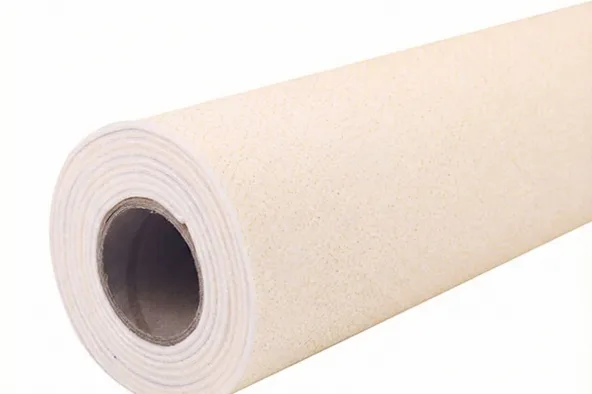
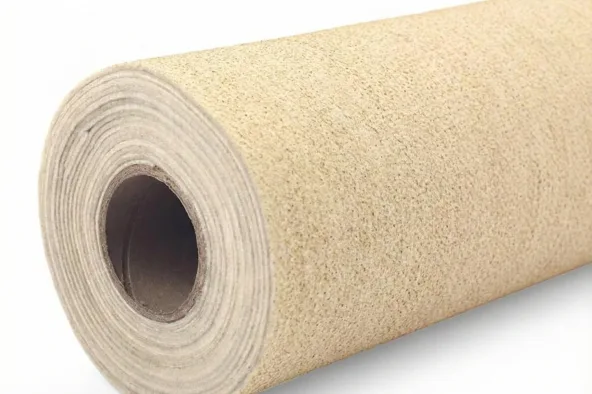
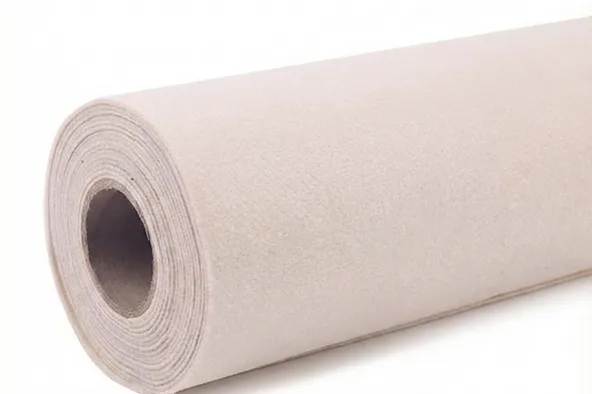
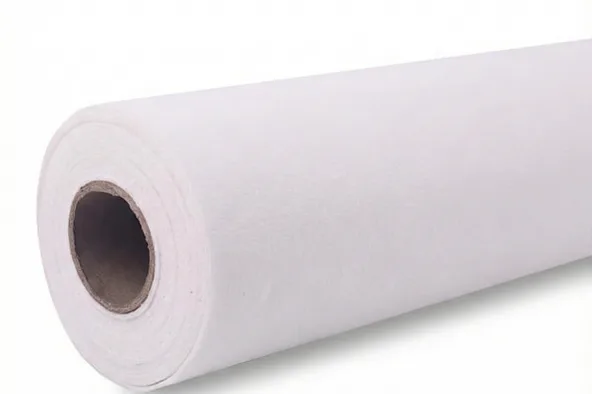
Fiberglass Needle-Punched Felt

Fiberglass Needle-Punched Felt Overview

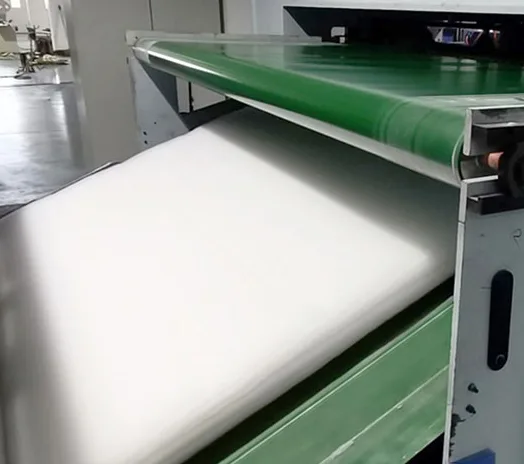
Fiberglass Needle Felt is a high-temperature, chemically inert, and dimensionally stable non-woven filtration media designed for harsh industrial dust and gas environments. It provides reliable performance where organic felts fail, especially under extreme heat and corrosive flue-gas conditions.

Key Performance Advantages

  • Extreme heat resistance suitable for continuous high-temperature operation.
  • Excellent chemical stability against acids, alkalis, solvents, and corrosive gases.
  • High abrasion resistance ideal for mineral, cement, clinker, and metal dust.
  • Long service life due to its inorganic fiber structure.
  • Stable airflow with consistent dust-capture efficiency.

Typical Industrial Applications

  • Metal smelting and metallurgical furnaces
  • Cement kilns, preheaters, and clinker coolers
  • Coal, coke, and high-temperature combustion systems
  • Waste-to-energy (WtE) incineration plants
  • Chemical and petrochemical processing

When selecting Fiberglass Needle Felt, key considerations include operating temperature range, chemical exposure level (acids, alkalis, SO₂, NOₓ), dust abrasiveness, airflow requirements, and expected maintenance interval.

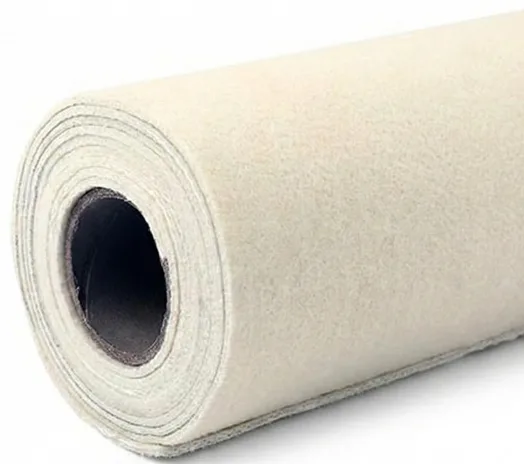
Key Performance Benefits

01
High Temperature Resistance

Withstands continuous high-temperature flue gas and harsh thermal conditions without shrinkage or structural deformation.

02
Excellent Chemical Stability

Highly resistant to acids, alkalis, solvents, and corrosive gas components—ideal for cement, metallurgy, and incineration systems.

03
Superior Abrasion Resistance

The inorganic glass fiber matrix delivers strong abrasion resistance, extending filter life under heavy dust loading and high-velocity gas streams.

04
Compatible with Advanced Surface Treatments

Can be enhanced with PTFE coating, PTFE membrane, singeing, or calendaring to improve dust release, filtration stability, and chemical protection.

05
Ideal for Extreme Industrial Conditions

Designed for high-temperature, corrosive, and abrasive environments such as cement kilns, metal smelting, WtE incinerators, and chemical plants.

06
Flexible Supply Options

Available as roll goods for further fabrication or as fully finished filter bags tailored to customer specifications.

Fiberglass Needle-Punched Felt Specifications

Technical Properties of Fiberglass Needle Felt
Fiber Fiberglass fiber
Scrim Fiberglass yarn
Weight (g/m²) 850
Thickness (mm) 2–4
Width (m) ≤2.2
Finish Treatment PTFE impregnation
Air Permeability (L/m²·s @200Pa) 200–300
Tensile Strength (N/5×20cm) Warp: 1300
Weft: 1500
Tensile Elongation (%) Warp: 8
Weft: 8
Temperature
Continuous Temperature (°C) 230
Instant Temperature (°C) 250
Chemical Properties
Anti-acid Good
Anti-alkali Good
Anti-abrasion Good
Hydrolysis Stability Middle

INDUSTRIAL
APPLICATIONS

Fiberglass Needle Felt is engineered for extreme-temperature, chemically aggressive, and abrasive industrial environments. It offers outstanding dimensional stability, strong chemical resistance, low shrinkage, and long service life in challenging dust-collection systems.This makes fiberglass felt ideal for industries such as cement production, metallurgy, waste-to-energy, mining, and high-temperature combustion processes.

Cement, Lime & Mineral Processing

Cement, Lime & Mineral Processing

Ideal for cement kilns, clinker coolers, and mineral-processing lines where extreme heat and abrasive dust are constant challenges.

Metallurgical Furnaces & Smelting Operations

Metallurgical Furnaces & Smelting Operations

Best suited for ferrous and non-ferrous metallurgy, where dust is abrasive, temperature is extreme, and chemical exposure is harsh.

Waste-to-Energy (WtE) & High-Temperature Combustion

Waste-to-Energy (WtE) & High-Temperature Combustion

The most reliable material for incineration and waste-to-energy systems, where acid dew point, condensate, and corrosive gases are constant threats.

Engineering Support & Customization

Engineering card image

Pre-Project Technical Evaluation

  • Operating temperature window (continuous and peak, typically up to 230–250 °C)
  • Thermal cycling frequency and start-up / shut-down conditions
  • Moisture level, acid dew point, and risk of condensation
  • Chemical composition of the gas stream (acids, alkalis, chlorides, SOₓ, NOₓ)
  • Dust loading, particle size distribution, and abrasiveness
  • Required filtration efficiency, air-to-cloth ratio, and allowable pressure drop
  • Compatibility with existing bag cages, tube sheet design, and cleaning system
Engineering card image

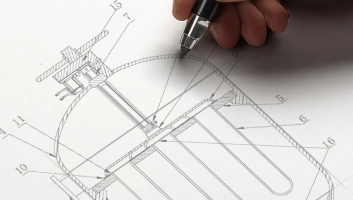
Custom Engineering Solutions

  • Selection of felt weight, thickness, fiber diameter, and permeability
  • Optional scrim reinforcement or multi-layer structures for higher mechanical strength
  • Customized surface treatments: PTFE impregnation or membrane, singed and calendared finishes for better dust release
  • Optimization for cement kilns, metallurgical furnaces, waste-to-energy, and high-temperature process gas
  • Custom bag designs: top / bottom configurations, sewing vs. welded seams, reinforcement of high-stress areas
  • Engineering support to integrate fiberglass felt into existing or new baghouse and gas-cleaning systems
Engineering card image

Quality Assurance & Testing

  • Air permeability and pressure-drop testing at specified differential pressure
  • Tensile strength and elongation testing in both warp and weft directions
  • Heat-shrinkage and dimensional stability tests at operating temperature (up to 230–250 °C)
  • Chemical resistance checks in acidic and alkaline media relevant to the application
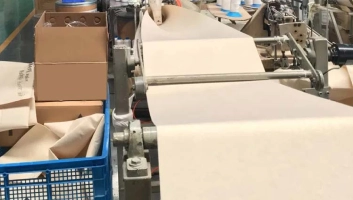
  • Microscopic inspection of fiber distribution, needling uniformity, and surface finish
  • Verification of PTFE impregnation or membrane integrity, and coating adhesion
LET’S WORK TOGETHER

Why Choose Omela Filtration?

Choosing the right filtration supplier affects everything from system stability to maintenance downtime. At Omela Filtration, we combine reliable materials, controlled production, and years of industry experience to support dust and liquid filtration needs across different plants and applications.

We use consistent-grade filter media, sewing thread and metals sourced from qualified suppliers. Each batch is checked for weight, thickness, air permeability and tensile strength to keep performance steady across shipments.

Our facility is equipped with modern sewing lines, hot-welding machines and automated inspection tools. This keeps production efficient and helps us meet tight delivery schedules, even on custom orders.

Our engineers and technicians have long experience with dust collectors, liquid systems and industry-specific conditions. They help you match materials to temperature, chemistry and air-to-cloth ratios to avoid unnecessary failures.

From sampling to documentation and shipping, our team responds quickly and keeps information clear. Customers in cement, asphalt, power and water-treatment plants rely on our service to resolve problems without delay.

From the first technical discussion to installation and long-term maintenance, our team stays involved at every stage. We analyze your operating conditions, adjust product designs when needed, and ensure the final filtration setup works reliably in real plant environments. After delivery, our service team continues to provide guidance and troubleshooting support, helping you keep your system stable and downtime low.


Donaldson
nederman
camfil-apc
cnbm
ACC
Metso

Frequest Asked Questions

1. What operating temperature can Fiberglass Needle Felt withstand?
2. In which industries is Fiberglass Needle Felt most commonly used?
3. How does Fiberglass Needle Felt perform in corrosive flue-gas environments?
4. What factors should be evaluated before selecting Fiberglass Needle Felt for a filtration system?
5. Can Fiberglass Needle Felt be customized for different applications?
6. How does fiberglass compare to PPS, P84, or other organic felts?
5/5 - (3 votes)

Trusted by Industries
Worldwide

With 20+ years of experience and 1000+ global clients, we deliver stable filtration performance and dependable dust-collector operation.