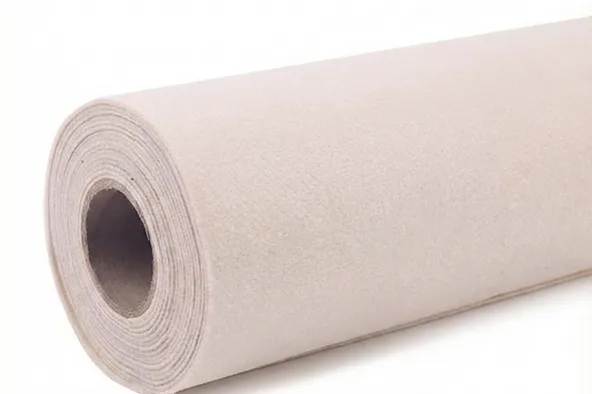
Polyester Needle-Punched Felt

Polyester Needle-Punched Felt Overview

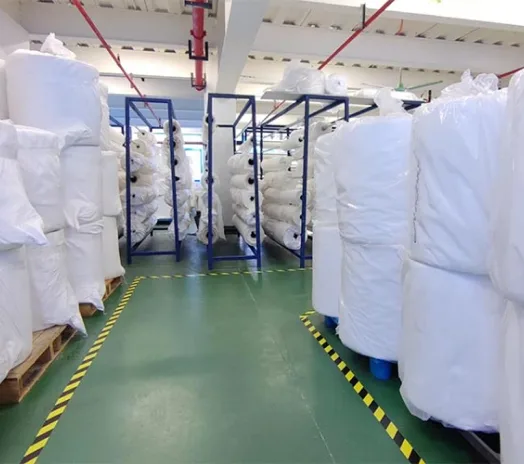
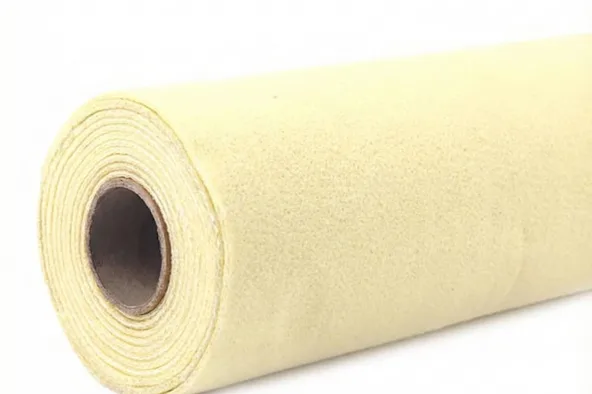
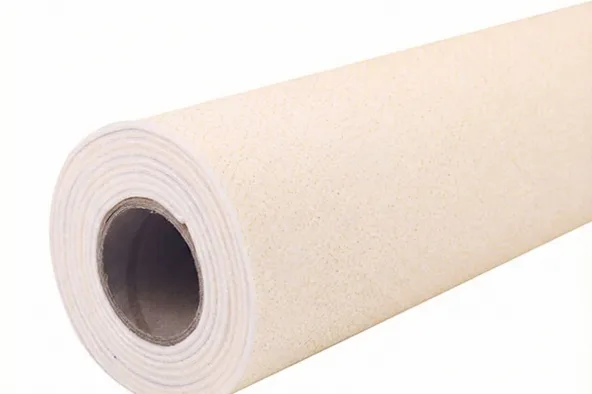
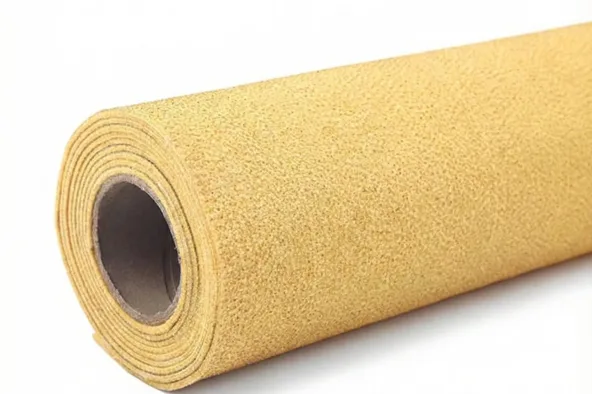
Polyester needle-punched felt is a filter media made from 100% high-quality polyester short fibers, mechanically bonded via multiple needle-punching passes into a dense, non-woven felt structure.

This dense structure gives stable permeability, good mechanical strength, and consistent filtration performance — making it one of the most widely used materials for industrial dust-collection filter bags.

Key Material Profile

  • Material: 100% polyester short fibers, needle-punched felt.
  • Typical Weight Range: 300–650 g/m² (±10%).
  • Thickness (approx.): around 1.7 mm for standard felt.
  • Structure: non-woven, mechanically entangled fiber web — no weaving, so no yarn interlace.
  • Permeability & Filtration Efficiency: uniform structure ensures stable airflow and good dust capture behavior, under typical industrial conditions.
  • Chemical & Wear Resistance: generally good compatibility with many common dust/gas environments; offers decent chemical stability and abrasion resistance under moderate conditions.

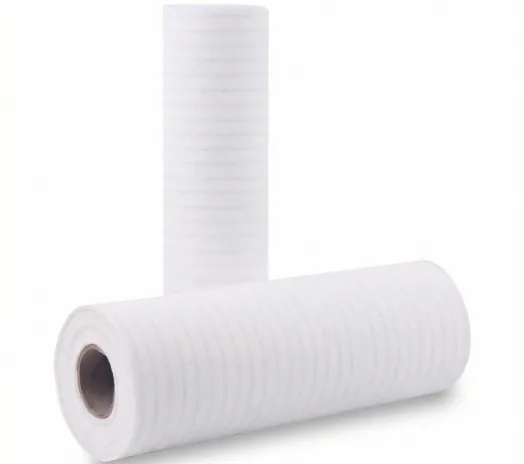
Key Performance Benefits

01
Reliable thermal stability & mechanical strength

ensures consistent bag performance in medium-temperature (< ~130 °C) filtration systems.

02
Good resistance to dry & non-corrosive dust

suitable for flue gas without acidic moisture, corrosive vapors, or aggressive solvents.

03
Stable permeability & dust-holding capability

the needle-punched non-woven structure supports steady airflow and efficient filtration under normal dust loading.

04
Compatible with surface treatments & membranes

can be upgraded with singeing, calendering, oil/water-repellent finish, anti-static finish, or optional PTFE membrane.

05
Ideal for moderate industrial applications

typical working temperature up to ~120–130 °C; short-term tolerance up to ~140 °C depending on grade.

06
Available in rolls or finished filter bags

versatile options for roll-goods supply, OEM bag production, or custom-dimension fabrication.

Acrylic Needle-Punched Felt Specifications

Item Value
Air Permeability
(L/dm²·min)
130–180
Surface Resistivity
(MΩ)
310–335
Volume Resistivity
(MΩ)
57–63
Tensile Strength
MD (N)
≥ 1000
Tensile Strength
CD (N)
≥ 1300
Break Elongation
MD (%)
< 35
Break Elongation
CD (%)
< 35
Working Temp
Continuous (°C)
130
Working Temp
Peak (°C)
150

INDUSTRIAL
APPLICATIONS

Polyester needle-punched felt is ideal for dust-collection and filtration in industrial contexts where conditions are moderate in temperature and dust load, and gas conditions are non-corrosive. Typical applications include:

Coal-fired power plants

Coal-fired power plants

Ideal for dry, stable flue-gas conditions in medium-temperature boilers. Provides reliable filtration, good mechanical strength, and cost-effective dust control.

Cement mills (raw-mill / cooler)

Cement mills (raw-mill / cooler)

Handles high dust loading in cement processes where temperatures are moderate and gas chemistry is non-acidic. Offers stable airflow and abrasion resistance.

Material Handling

Material Handling

Suitable for conveyors, silos, and pneumatic systems. Delivers steady filtration performance and durability in general powder-handling operations.

Engineering Support & Customization

Engineering card image

Pre-Project Technical Assessment

  • Assessment of operating temperature, dust characteristics, and gas conditions to confirm suitability of polyester felt for the application
  • Evaluation of flue-gas moisture level to prevent condensation and hydrolysis, which polyester is sensitive to
  • Recommendation of felt weight, thickness, and surface finish (singeing, calendaring, PTFE) based on filtration demand
  • Air-to-cloth ratio analysis to ensure stable ΔP, good airflow, and proper pulse-jet cleaning performance
  • Sample polyester felt or trial bags available for on-site comparison and performance validation
Engineering card image

Custom Engineering Solutions

  • Assessment of operating temperature, dust characteristics, and gas conditions to confirm suitability of polyester felt for the application
  • Evaluation of flue-gas moisture level to prevent condensation and hydrolysis, which polyester is sensitive to
  • Recommendation of felt weight, thickness, and surface finish (singeing, calendaring, PTFE) based on filtration demand
  • Air-to-cloth ratio analysis to ensure stable ΔP, good airflow, and proper pulse-jet cleaning performance
  • Sample polyester felt or trial bags available for on-site comparison and performance validation
Engineering card image

Production & Quality Assurance

  • Media customization in various weights (350–550 g/m²), with optional singeing, calendaring, anti-static, oil-/water-repellent, or PTFE membrane finishes
  • Tailored designs for dry, non-acidic flue gas conditions where polyester performs best
  • Mechanical-strength optimization through reinforced scrim, seam engineering, or multi-layer composite structures
  • Engineering support to ensure polyester felt fits existing baghouse cages and cleaning systems without structural changes
  • Optional hybrid media combinations (Polyester + PTFE membrane) for low-emission, fine-particle applications
LET’S WORK TOGETHER

Why Choose Omela Filtration?

Choosing the right filtration supplier affects everything from system stability to maintenance downtime. At Omela Filtration, we combine reliable materials, controlled production, and years of industry experience to support dust and liquid filtration needs across different plants and applications.

We use consistent-grade filter media, sewing thread and metals sourced from qualified suppliers. Each batch is checked for weight, thickness, air permeability and tensile strength to keep performance steady across shipments.

Our facility is equipped with modern sewing lines, hot-welding machines and automated inspection tools. This keeps production efficient and helps us meet tight delivery schedules, even on custom orders.

Our engineers and technicians have long experience with dust collectors, liquid systems and industry-specific conditions. They help you match materials to temperature, chemistry and air-to-cloth ratios to avoid unnecessary failures.

From sampling to documentation and shipping, our team responds quickly and keeps information clear. Customers in cement, asphalt, power and water-treatment plants rely on our service to resolve problems without delay.

From the first technical discussion to installation and long-term maintenance, our team stays involved at every stage. We analyze your operating conditions, adjust product designs when needed, and ensure the final filtration setup works reliably in real plant environments. After delivery, our service team continues to provide guidance and troubleshooting support, helping you keep your system stable and downtime low.


Donaldson
nederman
camfil-apc
cnbm
ACC
Metso

Frequest Asked Questions

1. What is Polyester Needle-Punched Felt?
2. What temperature range is suitable for Polyester Needle-Punched Felt?
3. What are the main advantages of Polyester Needle-Punched Felt?
4. In which applications is Polyester Needle-Punched Felt most suitable?
5. What surface and post-treatments are available for Polyester Needle-Punched Felt?
6. How does Polyester Needle-Punched Felt compare with Acrylic, PPS, and PTFE felts?
5/5 - (3 votes)

Trusted by Industries
Worldwide

With 20+ years of experience and 1000+ global clients, we deliver stable filtration performance and dependable dust-collector operation.