Asphalt Industry Dust Filtration Solutions
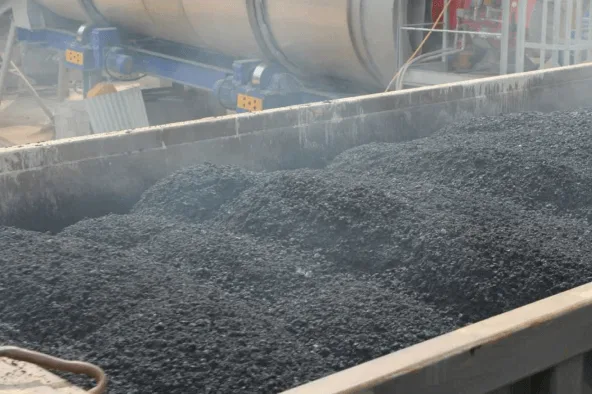
Asphalt Industry Dust Filtration Solutions
At Omela, we provide high-temperature, abrasion-resistant, and anti-blinding dust filtration solutions engineered for asphalt plants—including drum dryers, batch towers, hot aggregate elevators, screening systems, storage silos, and truck loading points. Our solutions help asphalt producers maintain stable baghouse operation, lower emissions, and reduce unplanned shutdowns.
Asphalt production creates challenging filtration conditions: hot gas, fine sticky dust, moisture at elevated temperature, and variable operating loads. Omela supports the full filtration life cycle—from filter media selection and bag manufacturing to cage matching, maintenance support, and system optimization.
- High-temperature dust-laden gas from dryer and mixing sections
- Fine, sticky particulate with bitumen vapor influence
- Moisture at elevated temperature causing blinding risk
- Abrasive aggregate dust and variable airflow conditions
- Strict emission limits, plant uptime pressure, and energy efficiency requirements
Asphalt Production Process & Filtration Challenges
Asphalt production includes drying, heating, screening, mixing, storage, and loading stages, each with different gas temperatures, dust characteristics, and filtration risks.
Cold Aggregate Feeding & Material Handling
- Intermittent dust release at conveyors and transfer points
- Abrasive mineral particles
- Localized dust sources with limited installation space
Drum Dryer & Drying Zone
- High-temperature dust-laden gas flow
- High volume and velocity
- Moisture at elevated temperature with blinding risk
Hot Aggregate Elevator, Screens & Hot Bins
- Fine particles after drying and separation
- Abrasive and partially alkali-corrosive dust
- Variable dust composition depending on aggregate source
Mixing Tower & Batch / Drum Mixing Section
- Fine sticky dust influenced by bitumen vapor
- Temperature fluctuation during operation
- Need for stable differential pressure and effective pulse cleaning
Storage Silos & Truck Loading
- Fugitive dust at loading and transfer points
- Frequent start-stop operating conditions
- Emission control needed near populated or urban areas
Engineered Solutions
Omela Filtration Solutions for Asphalt Plants
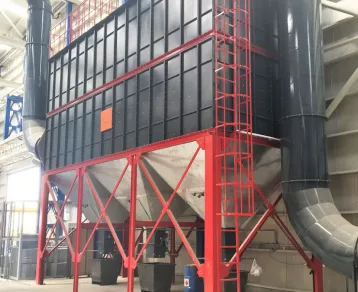
Asphalt plants operate under demanding filtration conditions where high-temperature gas, sticky fine dust, and moisture can quickly shorten filter bag life and destabilize baghouse performance. Omela provides complete baghouse filtration solutions to help asphalt producers reduce emissions, improve dust release, and maintain reliable production.
From filter media selection and surface treatment to cage design and replacement planning, our engineering team helps match the right filtration package for each asphalt process section. We focus on stable differential pressure, longer service life, fewer shutdowns, and lower maintenance cost.
Whether you are operating a batch plant, drum mix plant, storage silo system, or upgrading an existing baghouse, Omela delivers practical, field-oriented filtration solutions for asphalt industry applications.
Typical Operating Conditions in Asphalt Plant Baghouses
| Process Section | Location | Normal Gas Temp. | Peak Temp. | Dust Characteristics | Operating Notes |
| Cold Aggregate Handling | Conveyors / transfer points | Ambient | 60 °C | Abrasive coarse mineral dust | Localized dust control, intermittent operation |
| Drum Dryer | Drying and heating section | 140–180 °C | 220 °C | High-volume, hot, fine dust with moisture | Main baghouse load, stable pulse cleaning required |
| Hot Aggregate Elevator & Screens | Elevator / screening tower | 120–170 °C | 200 °C | Fine, abrasive and variable dust | Variable dust loading depending on aggregate source |
| Mixing Section | Batch tower / drum mix area | 140–190 °C | 220 °C | Sticky fine particulate influenced by bitumen vapor | Anti-blinding surface treatment is often required |
| Storage Silo & Loading | Silo top / truck loading point | 80–140 °C | 180 °C | Localized fugitive dust | Start-stop operation and space constraints are common |
Recommended Filter Bag Constructions for Asphalt Applications
| Process Section | Recommended Media | Felt Weight | Finish / Surface Treatment | Typical Bag Design | Cage Recommendation |
| Cold Aggregate Handling | Polyester needle felt | 500-550 g/m² | Calendered, singed, optional antistatic finish | Snap-band top, double-stitched seams | Carbon steel cage, 10-12 vertical wires |
| Hot Aggregate Elevator & Screens | Aramid needle felt | 500-550 g/m² | Heat-set, calendered, optional oil & water repellent | Snap-band top, double-stitched seams | Galvanized or silicon-coated steel cage |
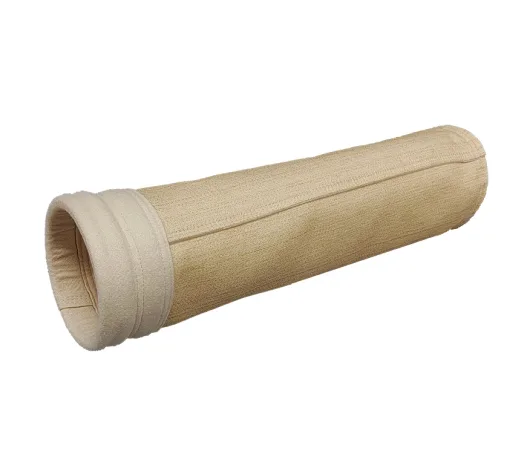
| Mixing Section | Aramid filter bags | 500-550 g/m² | Oil & water repellent + PTFE membrane recommended | Snap-band top, reinforced cuff, smooth inner finish for better dust release | High-strength cage with venturi, precise top fit to reduce wear |
| High Temperature / Stringent Emission Sections | Fiberglass filter bags or PTFE filter bags | 750-850 g/m² | PTFE impregnation or PTFE membrane depending on temperature and emissions target | Custom bag length, reinforced top and bottom, high-temp sewing thread | High-rigidity cage with corrosion-resistant finish |
| Storage Silos & Truck Loading | Polyester needle felt or Aramid needle felt | 500-550 g/m² | Calendered, optional oil & water repellent | Compact bag design for localized collectors | Light-duty cage matched to collector dimensions |
320 t/h Asphalt Drum Mix Plant - Baghouse Filter Bag Upgrade in Southeast Asia
The existing asphalt plant baghouse was experiencing unstable differential pressure, visible stack opacity during peak production, and frequent filter bag replacement due to high-temperature sticky dust and moisture at elevated temperature.
The plant needed a practical upgrade to improve emissions performance, reduce bag blinding, and maintain stable production during both normal hot mix and seasonal high-load operation.
The existing asphalt plant baghouse was experiencing unstable differential pressure, visible stack opacity during peak production, and frequent filter bag replacement due to high-temperature sticky dust and moisture at elevated temperature.
The plant needed a practical upgrade to improve emissions performance, reduce bag blinding, and maintain stable production during both normal hot mix and seasonal high-load operation.
Operating Conditions & Challenges
| Process Section | Drum dryer + mixing section baghouse |
| Gas Temperature | 160-190 °C normal, peak 220 °C |
| Dust Loading | Fine mineral dust with sticky hydrocarbon influence |
| Dust Characteristics | Abrasive, fine, partially adhesive, variable with aggregate source and moisture |
| Main Symptoms | High pressure drop, poor dust release, frequent pulsing, shortened bag life |
| Plant Objective | Lower emissions, longer bag life, fewer shutdowns, stable production throughput |
Omela Solution
- Upgraded the collector with aramid filter bags using oil & water repellent finishing
- Applied PTFE membrane option in the most critical high-sticking section
- Optimized cage fit, venturi matching, and top sealing details
- Reviewed pulse cleaning interval and compressed air usage
- Recommended inspection and replacement planning for wear-prone components
By combining the right filter media, surface treatment, and hardware matching, the baghouse achieved more stable operation under variable asphalt plant conditions.
35%

Differential Pressure Reduction
Improved dust release and more effective pulse cleaning lowered average operating differential pressure by approximately 35%.
Measured Results
| Parameter | Before Upgrade | After Upgrade |
| Average Differential Pressure | 1,850-2,100 Pa | 1,200-1,450 Pa |
| Bag Replacement Frequency | Frequent premature failures | Extended replacement interval |
| Stack Condition | Occasional visible opacity spikes | More stable and cleaner discharge |
| Pulse Cleaning Demand | High | Reduced |
| Plant Operation | Interrupted by dust control issues | More stable continuous operation |
Reduce
Filtration Costs
Significantly
Longer bag life, fewer change-outs, and lower total cost of ownership (TCO). Let our experts show you how much you can save.
Frequest Asked Questions
Common causes of high differential pressure in asphalt plant baghouses include:
- Sticky fine dust influenced by bitumen vapor
- Moisture at elevated temperature leading to filter bag blinding
- Insufficient pulse cleaning or incorrect pulse interval settings
- Aged or damaged filter bags with poor dust release performance
- Air leakage in ducting, seals, or collector compartments
- Improper air-to-cloth ratio causing excessive dust loading on the bags
A detailed review of operating temperature, moisture, dust characteristics, and pulse cleaning performance is usually needed to identify the real root cause.
For most asphalt plant baghouses, aramid (Nomex) filter bags are a common and cost-effective choice because they provide reliable heat resistance for normal asphalt operating conditions.
- Aramid: widely used, cost-effective, good heat resistance
- Aramid + PTFE membrane: better for fine sticky dust and lower emissions
- Fiberglass: suitable for higher-temperature sections
- PTFE: selected when chemical resistance and very high temperature capability are critical
The final media selection should be based on gas temperature, moisture, dust stickiness, emissions target, and collector design.
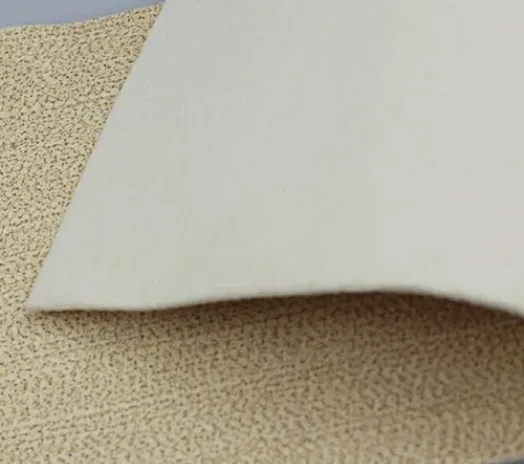
Oil & water repellent treatment is important in asphalt applications because the dust is often fine, sticky, and exposed to moisture at elevated temperature.
- It helps reduce bag blinding
- It improves dust release during pulse cleaning
- It supports more stable differential pressure
- It can help extend filter bag service life
For more demanding conditions, PTFE membrane lamination can provide even better surface filtration and fine dust control.
The main dust sources in an asphalt mixing plant commonly include:
- Drum dryer
- Hot aggregate elevator
- Vibrating screens
- Hot aggregate storage bins
- Weigh hopper and mixer
- Truck loading points
Among these, the drum dryer is often the largest emission source because it handles high-volume, high-temperature dust-laden gas during drying and mixing.
The temperature capability depends on the filter media:
- Aramid (Nomex): commonly used around 200 °C continuous service
- Aramid blend products: some designs are rated around 204 °C continuous, with higher short-term surge tolerance
- Fiberglass: often used up to about 260 °C
- PTFE: also commonly used up to about 260 °C
Actual media selection should always consider normal temperature, peak temperature, moisture, chemical exposure, and dust characteristics together rather than temperature alone.
To reduce baghouse downtime and premature filter bag failure, asphalt plants should focus on both media selection and system operation:
- Select the right filter media for actual temperature and dust conditions
- Use oil & water repellent or PTFE membrane where blinding is a risk
- Check pulse cleaning settings and compressed air quality
- Inspect cages, venturis, seals, and duct leakage
- Control temperature spikes and avoid condensation conditions
- Perform routine inspection and replacement planning before failures become severe
A stable baghouse is usually the result of matching the right filter bag construction with proper collector maintenance and operating control.