Power Plants Dust Filtration Solutions
Power Plants Dust Filtration Solutions
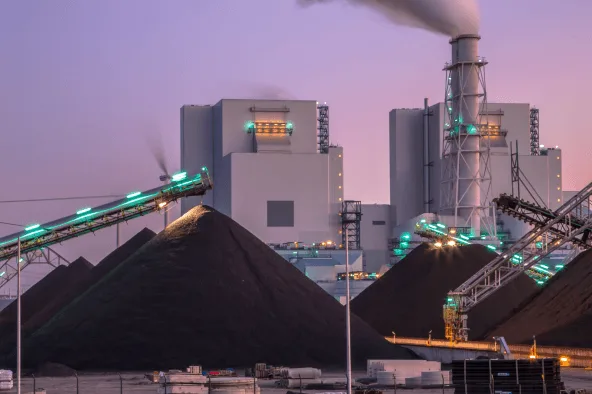
At Omela Filtration, we provide high-temperature, corrosion-resistant, and long-life dust filtration solutions specifically engineered for power plants—including coal-fired boilers, biomass power units, and waste-to-energy systems. Our solutions help maintain stable baghouse operation, reduce emissions, and ensure compliance with increasingly strict environmental regulations.
Power plant flue gas filtration presents some of the most demanding conditions in industrial dust control: high temperatures, acidic gases, ultra-fine fly ash, and continuous large-volume airflow. Omela supports the full filtration lifecycle—from filter media selection and precision manufacturing to cage matching and system optimization.
- High-temperature flue gas (typically 120–250°C, peaks up to 280°C)
- Corrosive components such as SO₂, NOx, and acidic condensates
- Fine fly ash particles with strong adhesion and penetration tendency
- High humidity and risk of acid dew point corrosion
- Large air volume and continuous operation requirements
- Strict emission standards and long-term operational stability demands
For these challenging environments, materials such as PPS filter bags, PTFE filter bags, and P84 filter bags are commonly recommended. You can also explore our full range of dust filter bags for different power generation systems.
Power Plant Flue Gas Process & Dust Filtration Challenges
Power generation processes—including coal combustion, biomass burning, and waste incineration—produce large volumes of flue gas containing fine particulate matter, corrosive gases, and high-temperature moisture. Each stage of the process presents different filtration challenges, requiring carefully selected filter media and system design.
Fuel Feeding & Combustion Stage
- Generation of high-temperature flue gas with fine fly ash particles
- Presence of corrosive gases such as SO₂ and NOx during combustion
- Unstable temperature fluctuations affecting filter media performance
- Initial dust load with high concentration and fine particle size
Flue Gas Cooling & Conditioning
- Temperature drops approaching acid dew point, increasing corrosion risk
- Moisture condensation leading to dust adhesion and bag blinding
- Chemical reactions forming acidic compounds affecting filter lifespan
- Requirement for stable gas conditioning to protect filtration system
Baghouse Filtration Process
- Continuous high airflow requiring stable filtration efficiency
- Fine particulate penetration increasing filtration difficulty
- Pressure drop management to maintain system efficiency
- Pulse-jet cleaning impact on filter bag durability
Ash Handling & Emission Control
- Collected fly ash requires efficient discharge without re-entrainment
- Strict emission limits (PM2.5 / PM10) require high filtration accuracy
- Long-term operation demands stable filter bag performance
- System reliability critical to avoid plant shutdowns and penalties
Engineered Solutions
Omela Filtration Solutions for Power Plants
Power plants operate under some of the most demanding dust filtration conditions, where high-temperature flue gas, fine fly ash, acidic components, and continuous large air volume can quickly affect filter bag life and baghouse stability. Omela Filtration provides complete dust collection and filter media solutions to help power plants reduce particulate emissions, protect downstream equipment, and maintain reliable long-term operation.
From filter media selection and bag construction to cage matching and replacement planning, our engineering team helps match the right filtration solution to each power generation process. We focus on stable differential pressure, corrosion resistance, extended service life, and lower maintenance cost under real plant conditions.
Whether you are operating a coal-fired boiler, biomass power unit, waste-to-energy line, or upgrading an existing baghouse system, Omela delivers practical, field-oriented dust filtration solutions for power plant applications. Explore our dust filter bags.
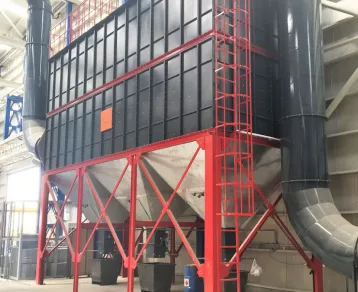
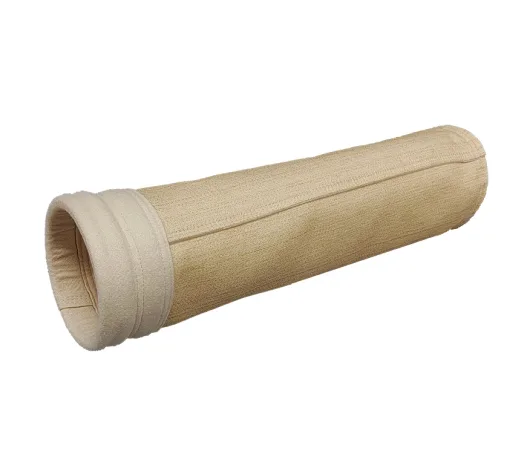
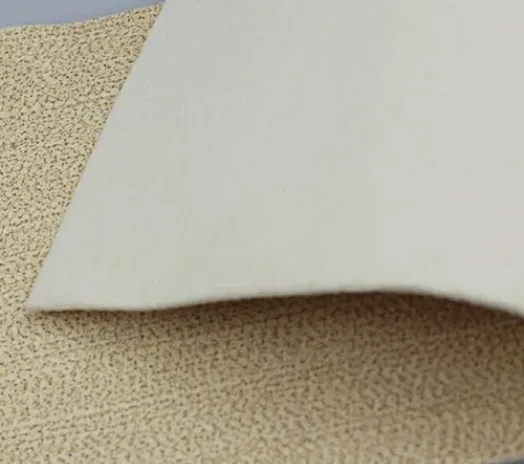
Typical Operating Conditions in Power Plants
| Process Section | Location | Normal Gas Temp. | Peak Temp. | Dust Characteristics | Operating Notes |
| Fuel Feeding & Handling | Coal conveyors / transfer points | Ambient | 60 °C | Coarse coal dust, abrasive particles | Intermittent dust release, localized dust control required |
| Boiler Combustion Zone | Furnace outlet / economizer | 140–180 °C | 200–220 °C | Fine fly ash with high temperature and reactivity | High dust concentration, stable high-temperature operation required |
| Flue Gas Cooling Section | Air preheater / duct system | 110–140 °C | 160 °C | Acidic gases (SO₂, NOx) with fine particulates | Risk of acid dew point corrosion and condensation |
| Baghouse Filtration System | Dust collector (ESP/BAG filter) | 120–160 °C | 180 °C | Ultra-fine fly ash, high adhesion and penetration | Requires stable differential pressure and efficient pulse cleaning |
| Ash Handling & Discharge | Hopper / ash silo | 80–120 °C | 150 °C | Collected fine ash, prone to re-entrainment | Continuous discharge required to avoid secondary dust emission |
Recommended Filter Bag Constructions for Power Plants
| Process Section | Recommended Media | Felt Weight | Finish / Surface Treatment | Typical Bag Design | Cage Recommendation |
| Fuel Feeding & Coal Handling | Polyester needle felt | 500–550 g/m² | Calendered, singed, optional antistatic finish | Standard pulse-jet filter bag | Carbon steel galvanized cage |
| Boiler / High-Temperature Flue Gas | PPS filter bags | 500–550 g/m² | Heat-set, singed, PTFE membrane optional | Pulse-jet bag with reinforced top and bottom | Galvanized or silicon-coated cage |
| Corrosive Flue Gas Section | PTFE filter bags | 750–800 g/m² | Pure PTFE scrim and surface, membrane optional | High-performance long-life filter bag | Stainless steel cage recommended |
| High-Efficiency Fine Fly Ash Collection | P84 filter bags | 500–550 g/m² | Heat-set, singed, PTFE membrane optional | Pulse-jet bag for fine particle capture | Galvanized cage with smooth weld finishing |
| FGD / High-Moisture Downstream Area | PTFE filter bags or PTFE laminated PPS | 550–800 g/m² | Membrane laminated, hydrolysis-resistant construction | Chemical-resistant filter bag design | Stainless steel or anti-corrosion coated cage |
| Biomass / Waste-to-Energy Applications | P84 filter bags + PTFE membrane or PTFE filter bags | 550–800 g/m² | Heat-set, membrane laminated, chemical-resistant finish | High-temperature composite filter bag | Stainless steel cage recommended |
300 MW Coal-Fired Power Plant – Baghouse Filter Bag Upgrade Project
The existing baghouse system at a 300 MW coal-fired power plant was experiencing unstable differential pressure, increased particulate emissions, and frequent filter bag failures due to high-temperature flue gas and acidic components. Fine fly ash with strong adhesion and penetration tendency further accelerated filter media wear and reduced filtration efficiency.
The plant required a reliable upgrade solution to improve emission performance, extend filter bag service life, and maintain stable operation under continuous high-load conditions.
Operating Conditions & Challenges
| Parameter | Details |
| Application | Coal-fired power plant baghouse system |
| Gas Temperature | 140–180°C (peaks up to 200°C) |
| Dust Type | Fine fly ash with high adhesion |
| Chemical Environment | SO₂, NOx, acidic gases |
| Main Issues | Bag blinding, high pressure drop, frequent replacement |
Omela Filtration Solution
- Selected PPS filter bags with excellent resistance to acid and hydrolysis
- Applied PTFE membrane to improve fine particle capture and reduce dust penetration
- Optimized bag structure and reinforced critical stress points
- Matched high-quality cages to ensure long-term stability
Results After Upgrade
- Stable differential pressure with improved airflow performance
- Significant reduction in particulate emissions
- Extended filter bag service life by over 50%
- Reduced maintenance frequency and operational cost
Omela Filtration provided a reliable and cost-effective solution tailored to our operating conditions, helping us achieve stable long-term performance and meet emission standards.
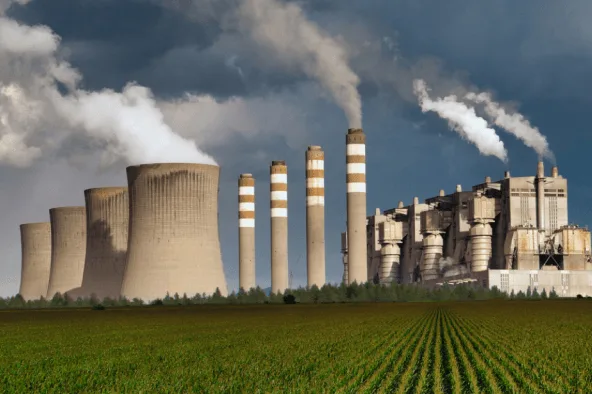
35%

Differential Pressure Reduction
Optimized filter media structure and improved dust release significantly reduced operating differential pressure by approximately 35%, ensuring stable airflow and higher baghouse efficiency in high-temperature flue gas conditions.
Measured Results
| Parameter | Before Upgrade | After Upgrade |
| Average Differential Pressure | 1,850–2,100 Pa | 1,200–1,450 Pa |
| Filter Bag Service Life | Short lifespan due to acid and moisture attack | Extended service life with improved resistance to flue gas corrosion |
| Stack Emission Condition | Visible opacity during peak load operation | Stable low-emission discharge meeting environmental standards |
| Pulse Cleaning Frequency | High cleaning frequency, increased compressed air consumption | Reduced cleaning frequency with improved dust release performance |
| System Stability | Frequent fluctuations affecting continuous operation | Stable operation under continuous high-load conditions |
Reduce
Filtration Costs
Significantly
Longer bag life, fewer change-outs, and lower total cost of ownership (TCO). Let our experts show you how much you can save.
Frequest Asked Questions
Power plant flue gas filtration involves several challenges, including high operating temperatures, acidic gases such as SO₂ and NOx, fine fly ash with strong adhesion, and moisture that may lead to acid dew point corrosion. These conditions require filter media with excellent heat resistance, chemical stability, and dust release performance.
Baghouse dust collectors (pulse jet bag filters) are the most widely used systems in power plants for controlling particulate emissions. Compared with electrostatic precipitators (ESP), baghouse systems provide higher filtration efficiency, especially for fine fly ash particles, and are more adaptable to varying operating conditions.
Power plant flue gas filtration involves several challenges, including high operating temperatures, acidic gases such as SO₂ and NOx, fine fly ash with strong adhesion, and moisture that may lead to acid dew point corrosion. These conditions require filter media with excellent heat resistance, chemical stability, and dust release performance.
PPS filter bags offer strong resistance to acidic gases and hydrolysis, making them ideal for coal-fired power plants. They can operate continuously at temperatures up to around 190°C and provide stable filtration performance under corrosive flue gas conditions.
PTFE filter bags are recommended for more demanding environments where flue gas contains high levels of corrosive chemicals, moisture, or temperature fluctuations. They provide superior chemical resistance, high temperature tolerance, and longer service life compared to conventional filter media.
Common issues include high differential pressure, filter bag blinding, uneven airflow distribution, and inefficient pulse cleaning. These problems are often caused by improper filter media selection, high moisture content, or dust characteristics such as fine and sticky fly ash.
Differential pressure can be reduced by selecting filter media with better dust release properties, such as membrane-laminated filter bags, optimizing pulse cleaning parameters, and maintaining stable operating conditions. Proper system design and maintenance are also essential.
Key factors include operating temperature, chemical composition of flue gas, dust characteristics, moisture level, and system design. Selecting the right combination of material, surface treatment, and bag construction is essential for long-term stable operation.