Metalworking-Welding Fume Filtration
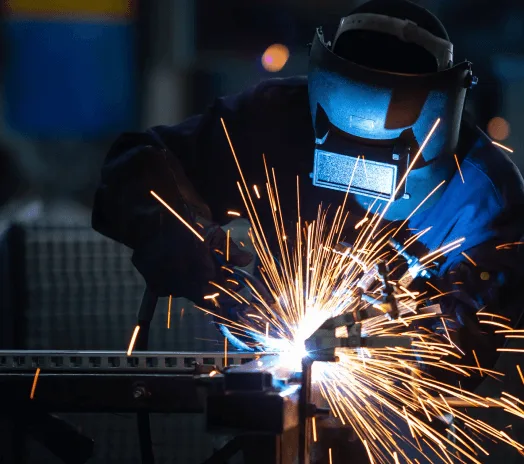
Metalworking & Welding Fume Filtration Solutions
Welding fumes and metalworking dust are dominated by very fine, often sub-micron particles generated by thermal and abrasive processes. A robust filtration solution must combine effective capture (source or ambient), high-efficiency filtration, and stable pressure drop to protect workers and keep production running.
Typical processes
- Welding (MIG/TIG/Flux-core)
- Grinding / buffing / polishing
- Laser & plasma cutting
- Machining mist & smoke
Why Filtration Matters in Metalworking
- Sub-micron particulate from welding requires high-efficiency filtration for effective control.
- Mechanical surface cleaning (grinding, buffing, polishing) produces heavy dust loads and requires proper capture/transport velocities.
- Indoor air quality improves when fumes/dust are captured and filtered instead of relying on ventilation alone.
Capture Strategy
- Source capture: hoods/arms/enclosures at weld cells, cutting tables, or grinding stations.
- Ambient air filtration: recirculating units for general plant air when source capture isn’t enough.
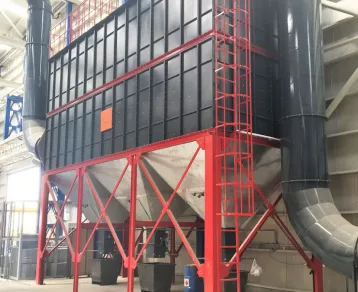
- Central dust/fume collection: cartridge collectors or pulse-jet systems for multi-station lines.
Metalworking & Welding Fume
Process & Filtration Challenges
Welding Operations (MIG / TIG / FCAW / SMAW)
- Generates very fine, often sub-micron metal fumes
- Particles remain airborne for long periods and disperse rapidly
- High health risk due to inhalable and respirable metal oxides
- Requires high-efficiency filtration and stable capture at the source
Grinding, Buffing & Polishing
- Produces mixed particle sizes, from fine dust to heavier metal fragments
- High dust loading can overload filters if capture and duct velocity are inadequate
- Abrasive particles accelerate filter wear
- Requires robust filtration media and well-designed hooding
Laser & Plasma Cutting
- Releases fine particulate and thermal fumes
depending on material and process - Dust loading can fluctuate sharply during cutting cycles
- Requires consistent airflow to maintain capture across cutting tables
- Filtration systems must handle
variable loading without DP instability
Machining & Metalworking Fluids (Mist & Smoke)
- Generates oil mist and smoke aerosols rather than dry dust
- Fine droplets can penetrate low-efficiency filters
- Risk of slippery surfaces and equipment contamination
- Often requires multi-stage mist filtration
separate from dry dust collectors
Centralized Production Environments
- Multiple processes operating simultaneously
- Combined dust and fume streams with varying characteristics
- Airflow balance and pressure stability become critical
- Systems must support continuous operation with minimal downtime
Key Filtration Challenges
- Capturing sub-micron welding fumes effectively
- Managing high dust loading from grinding and finishing
- Maintaining stable differential pressure over long operating cycles
- Preventing re-entrainment and filter bypass
- Ensuring compliance with occupational exposure and indoor air quality requirements
Filter Media & Baghouse Selection Principles
Metalworking & Welding Fume Applications
Based on welding fume characteristics and industry best practices, effective media options include:
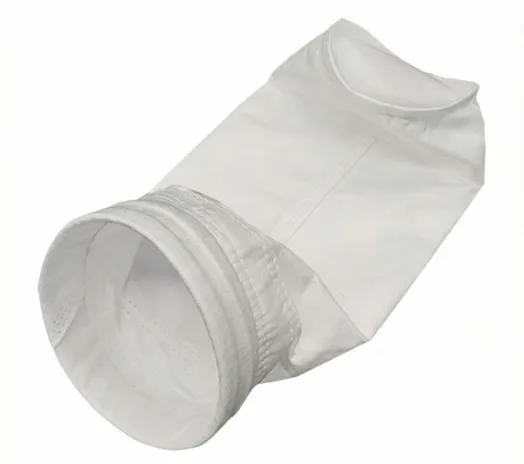
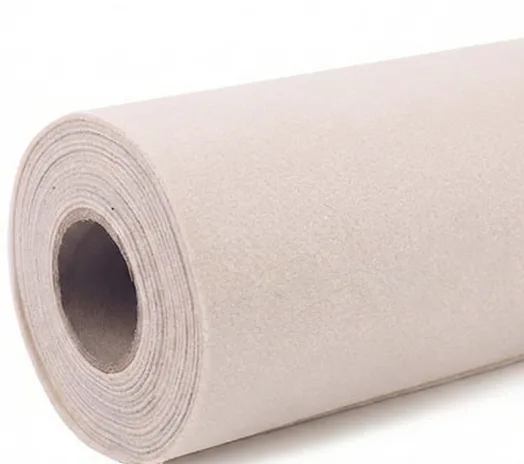
- PTFE membrane laminated needle felts
- Near-surface particle capture for sub-micron fumes
- Low residual dust cake
- Consistently low emissions and stable long-term dP
- Fine-fiber synthetic needle felts (polyester or aramid blends)
- Improved surface area versus standard felts
- Suitable for moderate fume loading and mixed metal dust
- Flame-retardant and antistatic treated media
- Required where sparks, combustible dust, or explosion risk may be present
- Enhances operator safety and system reliability
Baghouse & System Selection Considerations
For metalworking and welding fume control, system configuration is as critical as media selection:
- Pulse-jet baghouse or cartridge collectors with
high-efficiency cleaning - Low air-to-cloth ratios to ensure stable fume cake formation
- Proper spark arrestors or pre-separation upstream of filters
- Modular designs for robotic welding cells or centralized
extraction systems
When properly selected, advanced membrane filter media combined with optimized pulse-jet cleaning significantly reduce airborne metal fume concentrations, extend filter service life, and lower total cost of ownership (TCO) for fabrication facilities.
Typical Metalworking Processes & Filtration Challenges
| Process | Primary Contaminant | Particle Profile | Main Risk | Recommended Capture |
|---|---|---|---|---|
| Welding | Weld fume / smoke | Very fine, often sub-micron particulate | Worker exposure, persistent haze | Source capture arms/hoods + high-efficiency cartridge filtration |
| Grinding / Buffing / Polishing | Metal dust | Mixed fine + heavy particles | High dust loading, duct plugging if poorly designed | Enclosed hoods + adequate duct transport velocity + cartridge/baghouse |
| Laser / Plasma Cutting | Metal fumes + fine dust | Fine particles, process-dependent | Air quality + filter loading spikes | Table downdraft capture + high-efficiency filtration |
| Machining (wet) | Oil mist / smoke | Aerosol droplets | Slip hazards, equipment contamination | Mist collector (multi-stage) + appropriate drainage media |
Filter Selection Guide for Welding Fume & Metal Dust
| Application | Preferred Collector Type | Filter Media Recommendation | Key Selection Notes |
|---|---|---|---|
| Weld fume (source capture) | Cartridge fume collector | High-efficiency cartridge (fine particulate), optional nano-fiber / membrane style | Focus on sub-micron capture and stable pressure drop; verify spark control needs |
| Weld fume (ambient) | Ambient air cleaner | High-efficiency filter stage (per target IAQ) | Use when multiple stations or open layouts make source capture incomplete |
| Grinding / heavy dust | Cartridge collector or pulse-jet baghouse | Durable felt / membrane media with good cleanability | Capture and duct design are critical to prevent settling and re-entrainment |
| Mixed processes (weld + grind + cut) | Central collection system | Staged filtration: primary + optional afterfilter | Design for variable loading; consider afterfilter housings if needed |
300 Welding Stations Metal Fabrication Plant
Centralized Welding Fume Filtration Upgrade – Mexico
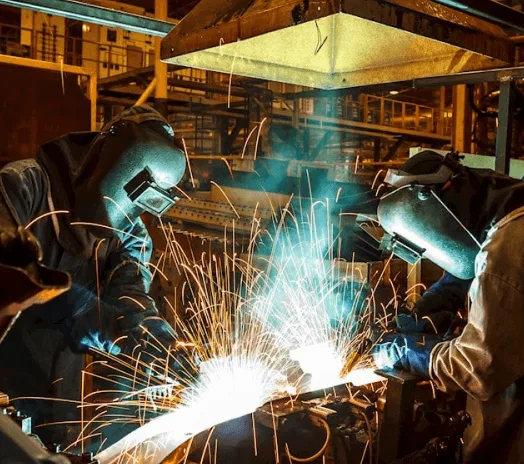
A large metal fabrication and welding facility in Mexico operates multiple production lines including MIG, TIG, and flux-cored arc welding (FCAW) for automotive and structural steel components.
The existing local extraction and general ventilation system was unable to effectively control fine welding fumes, resulting in:
- Elevated airborne metal particulate levels
- Visible welding haze across the shop floor
- Frequent filter clogging and unstable system pressure
- Worker exposure concerns related to hexavalent chromium, manganese, and zinc oxide fumes
The client required a centralized, high-efficiency welding fume filtration solution to improve air quality, meet occupational exposure limits, and support continuous high-duty production.
Omela Engineering Solution
Omela designed and supplied a centralized welding fume filtration system tailored for high-density welding operations.
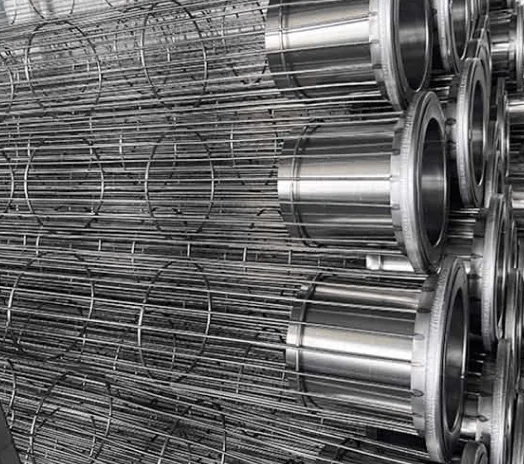
- Filter Media & Cartridge Design
- Centralized Dust Collection System
- Pulse Jet Cleaning Optimization
- Safe Dust Handling & Disposal
- Indoor Air Quality & Energy Optimization
Client Feedback
“After the upgrade, welding fumes are no longer visible on the shop floor.
Air quality has improved significantly, and our operators report a much
cleaner and safer working environment.
The system runs stably even during peak production.”
— Plant Operations Manager, Metal Fabrication Facility, Mexico
Measured Results
| Parameter | Before Upgrade | After Omela Solution |
| Airborne Welding Fume Level | Visible haze, inconsistent across stations | Clear air, stable visibility across production zones |
| Filtration Efficiency (Submicron Metal Fumes) | < 90% (submicron capture inconsistent) | > 99% (fine metal fume capture) |
| Differential Pressure (dP) | Unstable, frequent spikes; cleaning upsets | Stable in optimized operating range; smooth cleaning cycles |
| Filter Cartridge Service Life | 6–8 months (typical) | 18–24 months (projected, based on initial operation) |
| Unplanned Maintenance Events | Frequent (filter clogging & airflow imbalance) | Significantly reduced (scheduled inspection focus) |
| Indoor Air Recirculation Feasibility | Limited / not reliable for compliance | Enabled for safe recirculation (high-efficiency filtration) |
| Energy / HVAC Impact | High ventilation loss (conditioned air exhausted) | Reduced via recirculation and stabilized extraction demand |
Reduce
Filtration Costs
Significantly
Longer bag life, fewer change-outs, and lower total cost of ownership (TCO). Let our experts show you how much you can save.
Frequest Asked Questions
Welding fumes consist of ultra-fine metal oxide particles generated when metals are heated above their boiling point and condense in air. According to industry studies, these particles are often submicron in size (<1 μm) and can penetrate deep into the lungs.
Common hazardous components include:
- Hexavalent chromium (Cr⁶⁺)
from stainless steel welding - Manganese
from carbon and alloy steels - Nickel, zinc oxide, and aluminum oxides
- Toxic gases such as
ozone and nitrogen oxides (NOx)
Long-term exposure is linked to respiratory disease, neurological effects, and increased cancer risk, making effective fume extraction a critical occupational safety requirement.
Unlike coarse industrial dust, welding fumes present several unique challenges:
- Extremely fine particle size
(often 0.01–0.5 μm) - Low particle mass but high number concentration
- Thermally buoyant plume behavior
that rises rapidly - Sticky and reactive metal oxides
that can blind filters
As highlighted in multiple industry guides, standard dust collectors designed for grinding or bulk dust are not sufficient for welding fumes without specialized media and airflow design.
For effective welding fume control, industry best practice recommends:
- PTFE membrane–laminated filter media
for submicron capture - High-efficiency cartridge filters
with surface-loading characteristics - Low-pressure-drop media
to maintain stable airflow
PTFE membranes provide:
- Near-surface particle capture (improved cleanability)
- Consistently high filtration efficiency
(>99% for fine fumes) - Reduced risk of deep media penetration and premature clogging
This approach is widely adopted in modern welding fume extraction systems for both compliance and energy efficiency.
Both approaches are used, but source capture is always preferred when feasible.
- Source capture systems
(welding hoods, arms, enclosures) remove fumes
before they disperse,
requiring lower airflow and improving efficiency. - Centralized systems are suitable for:
- Large fabrication halls
- Multi-station robotic welding lines
- Situations where mobility or layout limits local capture
In many modern plants, a hybrid approach is used: localized capture at critical stations combined with centralized filtration and air management.
Yes — if the filtration system is properly designed and certified.
High-efficiency welding fume collectors equipped with:
- PTFE membrane filters
- Proper airflow monitoring
- Leak-tight housings
can safely support indoor air recirculation, reducing heating and cooling losses. This is especially valuable in large fabrication facilities where exhausting all air outdoors would significantly increase HVAC energy
consumption. Local regulations must always be reviewed, but technically, recirculation is widely practiced when filtration performance is verified.
Beyond health and regulatory benefits, effective fume extraction delivers measurable operational gains:
- Cleaner work environment
improves visibility and weld quality - Reduced filter maintenance frequency
- Stable differential pressure
lowers fan energy consumption - Extended filter service life
reduces consumable costs - Improved worker comfort leads to
higher productivity
Many facilities report lower total cost of ownership (TCO) after upgrading to optimized welding fume filtration systems.
Welding fume control is governed by occupational exposure limits and air quality regulations, including:
- Workplace exposure limits (WEL / OSHA / EU directives)
- Indoor air quality and ventilation standards
- Employer duty-of-care and EHS compliance requirements
Modern filtration solutions are designed to help facilities consistently meet tightening exposure limits, especially for carcinogenic metals like hexavalent chromium.
Long-term stability depends on several design factors:
- Correct air-to-media ratio
- Proper pulse-cleaning or reverse-pulse strategy
- Selection of anti-blinding, surface-loading filter media
- Balanced airflow across welding stations
A well-engineered system avoids excessive pressure drop fluctuations and prevents rapid filter fouling, ensuring reliable performance even in high-duty-cycle welding environments.