String Wound Filter Cartridges

String Wound Filter Cartridges Oveview

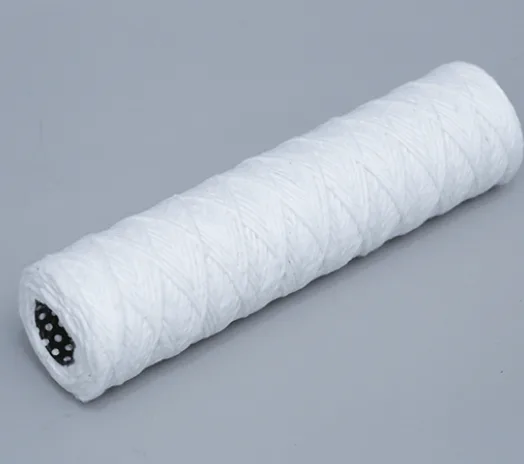
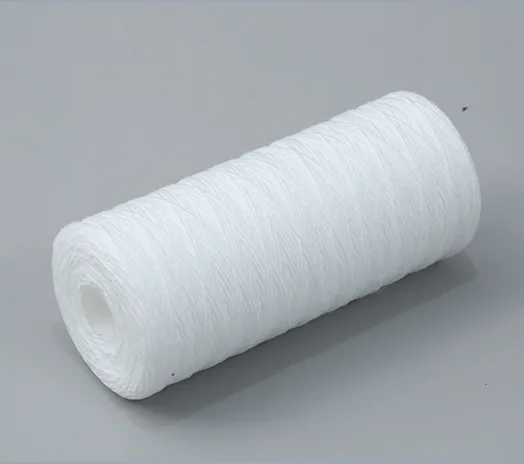
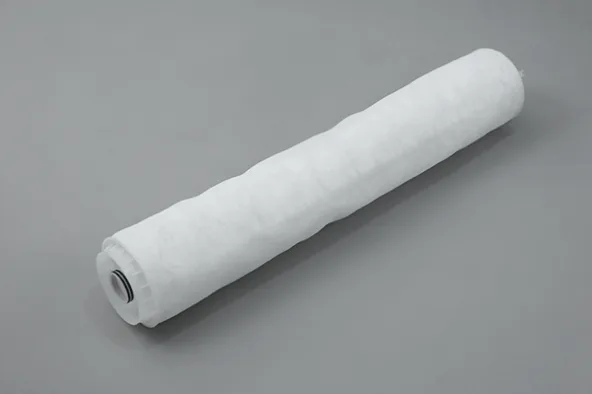
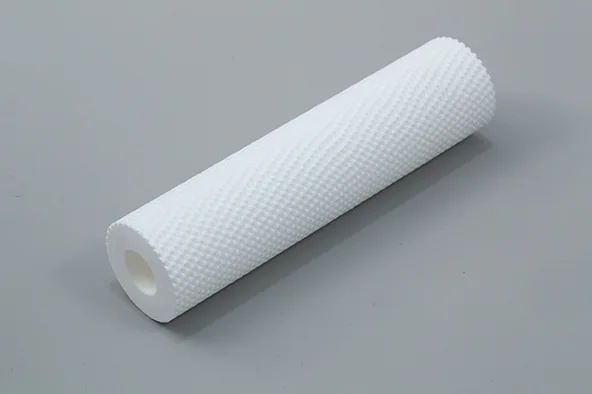
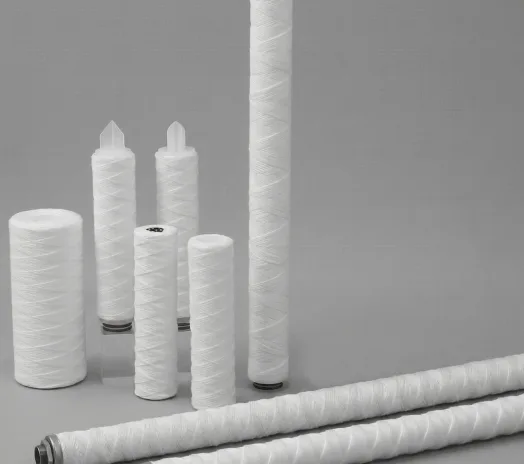
String wound filter cartridges are a type of depth filtration element made by tightly winding high-quality fibers around a porous core to form a gradient density matrix that traps contaminants throughout its depth. This winding pattern creates a progressively tighter pore structure from the outside to the inner core, enabling large and fine particles to be captured efficiently without rapid pressure rise. This design delivers high dirt-holding capacity, low differential pressure, and long service life in a wide range of liquid filtration applications.

Key Features & Benefits

  • True depth filtration matrix with gradient density for efficient particle capture.
  • High dirt-holding capacity enables longer cartridge life and fewer replacements.
  • Low differential pressure helps maintain system flow and reduces energy consumption.
  • Broad chemical compatibility (depending on yarn material selection).
  • Wide micron range available (typically 0.5–200 µm) to match diverse filtration needs.
  • Multiple core options provide structural integrity, including PP or stainless steel cores.

String wound cartridges provide an economical solution for coarse to medium filtration duties, especially in applications where large volumes of fluids must be processed cost-effectively. Their true depth filtration mechanism ensures contaminants are trapped both on the surface and deep within the wound fiber matrix, extending service intervals and reducing operating cost.

Core Technology & Construction

01
True Depth Filtration Structure

Precision string winding creates a gradient-density depth structure, trapping larger particles on the outer layers and finer contaminants toward the core for efficient multi-layer retention.

02
Broad Micron Rating Coverage

Nominal filtration ratings typically range from 1–120 μm, making string wound cartridges suitable for diverse prefiltration and clarification duties.

03
Chemical-Resistant Yarn Materials

Manufactured using high-purity polypropylene yarn, offering excellent resistance to acids, alkalis, solvents, and common industrial process fluids.

04
Flexible Size & Housing Compatibility

Available in a wide range of lengths, outer diameters, and core configurations to fit standard housings and support easy system retrofitting.

05
High Dirt-Holding Capacity

Depth filtration design distributes contaminant loading throughout the cartridge body, extending service life and reducing replacement frequency.

06
Consistent Pressure Drop Performance

Uniform contaminant capture delivers a stable and predictable differential pressure profile, helping maintain system efficiency throughout operation.

String Wound Filter Cartridges Specification

Filter Media Materials Natural cotton, bleached cotton, polyester, polypropylene (PP), nylon, fiberglass
Core Materials Polypropylene, tinned steel, SS304, SS316L
End Cap / Fin None (coreless) or polypropylene
O-Ring Materials Nitrile (NBR), PVC, silicone, Viton
Opening Type DOE, SOE (222, 226)
Filter Rating 0.5–150 μm (other ratings available on request)
Maximum Differential Pressure 60 PSI / 4.1 bar
Recommended Change-Out ΔP 25 PSID / 1.7 bar
Flow Rate 5–28 GPM (62 mm OD cartridge)
10–30 GPM (114 mm OD cartridge)
Maximum Operating Temperature PP: 82°C
Cotton: 150°C
Polyester: 121°C
Nylon: 177°C
Glass fiber: 399°C
Standard Inner Diameter 28 mm, 30 mm
Standard Outer Diameter 2.5″ (64 mm), 4.5″ (114 mm)
Available Lengths 5″ (127 mm), 10″ (254 mm), 20″ (508 mm), 30″ (762 mm), 40″ (1016 mm)
Typical Service Life 3–6 months (depending on operating conditions)

INDUSTRIAL
APPLICATIONS

String Wound Filter Cartridges are widely used wherever high dirt-holding capacity, depth retention, and cost-effective prefiltration are required.

Water & Wastewater Treatment

Water & Wastewater Treatment

String wound cartridges are commonly used as primary or secondary prefilters in municipal and industrial water systems. Their true depth filtration structure efficiently captures sand, rust, scale, and suspended solids, protecting downstream RO membranes, pumps, and process equipment while extending system service intervals.

Food & Beverage Processing

Food & Beverage Processing

Manufactured using food-grade cotton, polypropylene, or polyester yarns, string wound cartridges provide gentle, non-shedding filtration without taste or odor transfer. The graded winding density ensures reliable removal of particulates while maintaining stable flow for beverage clarification and process water filtration.

Chemical & Industrial Liquids

Chemical & Industrial Liquids

With selectable winding materials and cores, string wound cartridges offer broad chemical compatibility and strong mechanical integrity. They are well suited for low to medium viscosity fluids where sediment control, depth retention, and cost efficiency are critical.

Engineering Support & Customization

Engineering card image

Pre-Project System Evaluation

  • Evaluation of raw water source, turbidity, SDI, operating temperature, and expected sediment or particulate loading.
  • Analysis of system flow rate, allowable pressure drop, and existing housing or skid configuration.
  • Review of fluid chemistry to confirm compatibility with winding materials (cotton, PP, polyester, fiberglass), core materials, and O-ring options.
  • Preliminary sizing of cartridge dimensions and housing quantity to balance filtration efficiency, dirt-holding capacity, CAPEX, and long-term OPEX.
Engineering card image

Custom Engineering Solutions

  • Micron ratings from 0.5 to 150 μm, with controlled gradient winding density for improved depth filtration and contaminant distribution.
  • Custom length options (5″–40″+), standard or Big Blue outer diameters, and selectable inner diameters to fit global housings.
  • Multiple winding materials available: natural cotton, bleached cotton, polypropylene, polyester, nylon, and fiberglass for different chemical and temperature conditions.
  • Core options including polypropylene, tinned steel, SS304, and SS316L for enhanced mechanical strength.
  • Flexible end-cap and connection styles: DOE, SOE (222/226), flat or fin configurations.
  • Optional OEM / ODM services, including private labeling, customized packaging, and application-specific configurations for distributors and system integrators.
Engineering card image

Quality Assurance & Testing

  • Micron-rating and filtration efficiency verification to ensure stable depth retention across the cartridge structure.
  • Flow-rate and pressure-drop testing under simulated operating conditions to confirm predictable ΔP behavior.
  • Differential pressure and structural integrity testing to ensure safe operation up to rated limits.
  • Comprehensive batch traceability, covering raw materials, winding parameters, core materials, inspection records, and final quality release before shipment.
LET’S WORK TOGETHER

Why Choose Omela Filtration?

Choosing the right filtration supplier affects everything from system stability to maintenance downtime. At Omela Filtration, we combine reliable materials, controlled production, and years of industry experience to support dust and liquid filtration needs across different plants and applications.

We use consistent-grade filter media, sewing thread and metals sourced from qualified suppliers. Each batch is checked for weight, thickness, air permeability and tensile strength to keep performance steady across shipments.

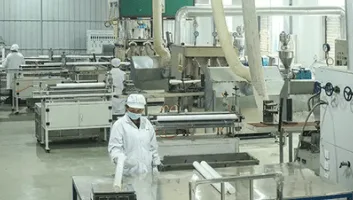
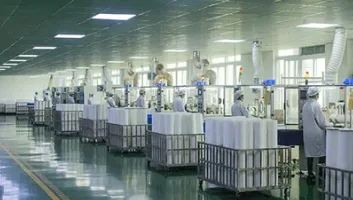
Our facility is equipped with modern sewing lines, hot-welding machines and automated inspection tools. This keeps production efficient and helps us meet tight delivery schedules, even on custom orders.

Our engineers and technicians have long experience with dust collectors, liquid systems and industry-specific conditions. They help you match materials to temperature, chemistry and air-to-cloth ratios to avoid unnecessary failures.

From sampling to documentation and shipping, our team responds quickly and keeps information clear. Customers in cement, asphalt, power and water-treatment plants rely on our service to resolve problems without delay.

From the first technical discussion to installation and long-term maintenance, our team stays involved at every stage. We analyze your operating conditions, adjust product designs when needed, and ensure the final filtration setup works reliably in real plant environments. After delivery, our service team continues to provide guidance and troubleshooting support, helping you keep your system stable and downtime low.


Donaldson
nederman
camfil-apc
cnbm
ACC
Metso

Frequest Asked Questions

1. What applications are string wound filter cartridges best suited for?
2. What winding materials are available for different process conditions?
3. How often should string wound cartridges be replaced?
4. Can string wound cartridges handle high temperatures or aggressive fluids?
5. Are your string wound cartridges compatible with standard housings?
6. How do string wound cartridges differ from melt-blown cartridges?
5/5 - (3 votes)

Trusted by Industries
Worldwide

With 20+ years of engineering expertise and 1000+ global clients across water treatment, chemicals, coatings, food & beverage, and industrial process filtration, Omela delivers reliable liquid-filtration performance, extended bag life, and stable system operation under demanding conditions.