


Omela Industrial Filter Bag Cages

1. What Filter Bag Cages are?

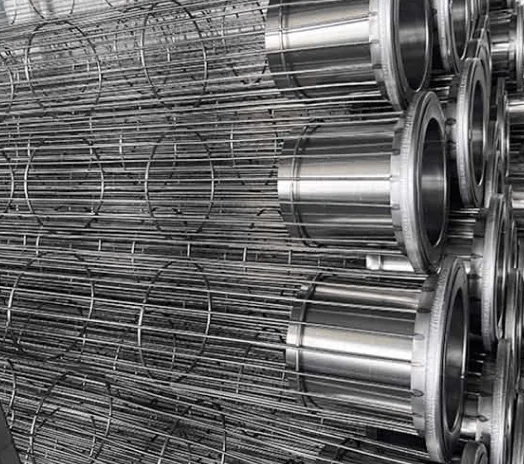
Filter Bag Cages are the internal frames or skeletons inserted into filter bags of baghouse / dust-collector systems, providing structural support so bags maintain their shape under airflow or pressure.

Best use scenarios — Industrial dust collection, flue-gas cleaning, cement & mineral plants, metal processing, waste-incineration, high-dust load air filtration, any baghouse filter system.

Compatible industries — Cement, steel & metallurgy, power plants, waste incineration, mining, mineral processing, chemicals, general industrial dust control.

Key Selection Criteria:

  • Cage Material — carbon steel, galvanized steel, stainless steel (304/316), or titanium depending on corrosion, temperature, and gas chemistry
  • Corrosion & Heat Resistance — required for high-temperature flue gas, acidic/alkaline exhaust, or moisture-rich environments.
  • Wire Diameter & Rigidity — determines cage strength; thicker wires improve durability under pulse-jet cleaning.
  • Cage Diameter & Length — must match filter bag dimensions to prevent bag stretching, sagging, or abrasion.
  • Ring Spacing & Cage Structure — influences bag stability, dust release behavior, and pulse-jet cleaning efficiency.
  • Surface Treatment / Coating — silicon, epoxy, PTFE, or PVC for added corrosion, abrasion, or moisture resistance.
  • Compatibility With Filter Bags — snap-band type, venturi fit, bag diameter tolerance, pleated or round design
  • Mechanical Stability — ability to withstand cyclic cleaning pressure, vibration, and long-term mechanical load.
Omela dust filter bags cages
60%
Annual Cost Reduction

A well-engineered cage improves bag cleaning efficiency, reduces pressure drop, minimizes re-entrainment, and extends filter bag life.

2. Types of Filter Bag Cages

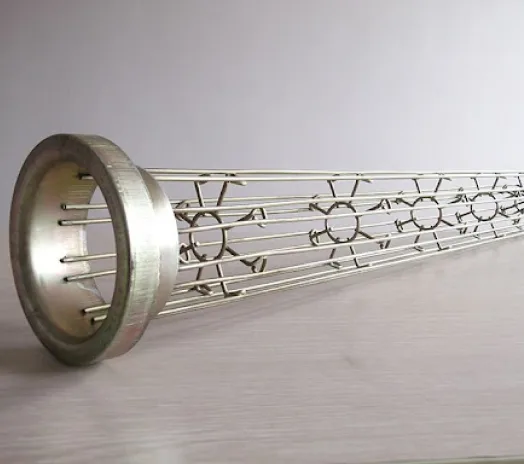
Stainless Steel Filter Bag Cage

Stainless Steel Filter Bag Cage

Stainless Steel Filter Bag Cages are high-strength, corrosion-resistant structural frames installed inside filter bags

View Details
Titanium Filter Bag Cages

Titanium Filter Bag Cages

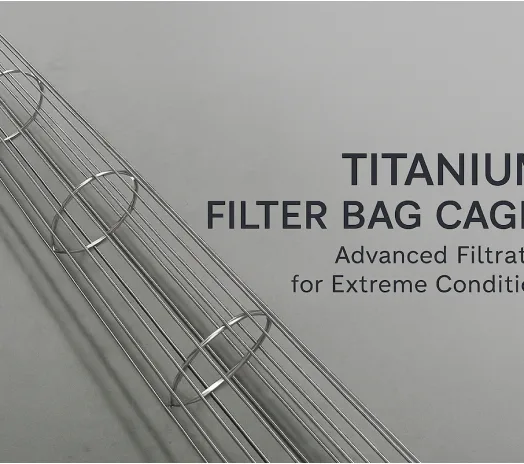
Titanium Filter Bag Cages are ultra-corrosion-resistant, lightweight, high-strength structural frames designed for the most aggressive...

View Details
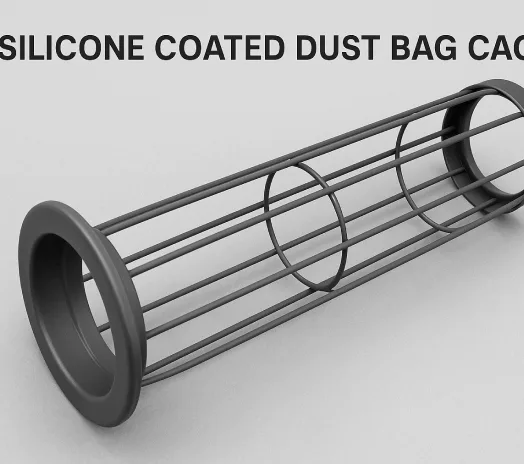
Silicone Coated Dust Bag Cages

Silicone Coated Dust Bag Cages

Silicone Coated Dust Bag Cages are high-strength steel support cages treated with a high-temperature silicone layer to protect...

View Details
Galvanized Steel Filter Bag Cages

Galvanized Steel Filter Bag Cages

Galvanized Steel Filter Bag Cages are cost-effective, corrosion-protected support structures designed...

View Details
Pleated Filter Bag Cages

Pleated Filter Bag Cages

Pleated Filter Bag Cages are high-efficiency, extended-surface support structures engineered for pleated filter bags

View Details

3. Filter Bag Cage Specifications

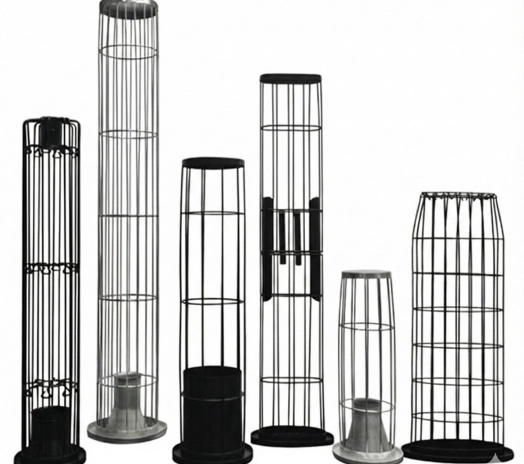
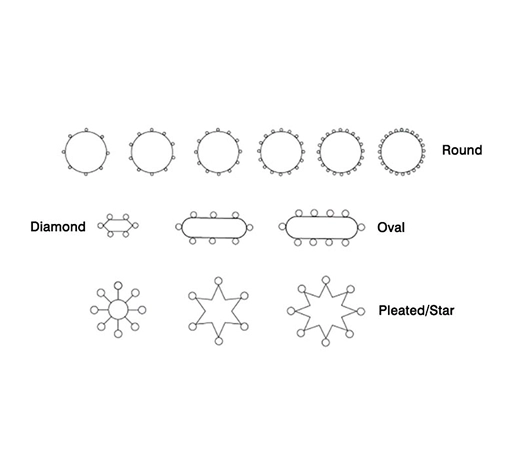
Types Round, oval, diamond, pleated.
Wire Diameter 3.0/3.2/3.5/3.8/4.0/5.0 mm.
Number of Wires 8 / 10 / 12 / 16 / 20 / 24.
Ring Space 6 inch or 8 inch (15.24 cm or 20.32 cm)
Cage Diameter 4 inch to 8 inch (100 mm to 200 mm)
Wire Thickness 2 mm to 5 mm
Material Carbon Steel, Titanium Steel, Galvanized Steel, Stainless Steel.
Connection Methods Flanges, collars, or venturis.
Finishment Epoxy, silicon, PVC vinyl coating.

WOVEN FILTER CLOTH
APPLICATIONS

Filter bag cages are essential structural supports inside industrial baghouses, ensuring optimal filter bag shape, maximizing dust-capture efficiency, and maintaining stable airflow in demanding particulate-control environments.

cement application

Cement & Mineral Processing

Filter bag cages provide dimensional stability and strong mechanical support inside cement kilns and mineral-processing baghouses. They help resist abrasion from clinker dust, maintain bag shape under high gas temperatures, and improve pulse-jet cleaning performance—ensuring consistent particulate control in cement plants, lime plants, and mineral grinding systems.

Read More
Waste-Incineration & Environmental Control application

Waste-Incineration & Environmental Control

Municipal and industrial incinerators produce corrosive, fine-particle exhaust; cages engineered with stainless steel, titanium, or special coatings (epoxy, silicone, PTFE) provide superior corrosion resistance and structural integrity. They improve dust-collection reliability under extreme chemical and thermal stress.

Read More
Power Plants & Industrial Boilers application

Power Plants & Industrial Boilers

Coal-fired boilers, biomass power plants, and industrial heating systems rely on filter bag cages for stable flue-gas filtration. Proper cage rigidity and ring spacing ensure optimal pulse-jet cleaning, reduced pressure drop, and long bag life while capturing fly ash and fine particulates from high-temperature exhaust streams.

Read More

Delivering Lower Baghouse TOC Through Engineered Filter Bag Cages

30%
Lower Total Operating Cost

Plants upgrading from generic cages to Omela-engineered filter bag cages typically achieve up to 30% reduction in total operating cost through fewer bag failures, fewer emergency shutdowns, and more stable differential pressure.

2–3×
Cage & Bag Service Life

Optimized ring spacing, wire diameter, and anti-corrosion finishes help filter bags stay round, stable, and properly supported, delivering 2–3 times longer bag and cage life in cement, steel, power, and waste-incineration baghouses.

0 25 50 75 100 Carbon Galvanized SS 304 SS 316 Coated Corrosion Resistance Index Mechanical Durability Index

4. Filter Bag Cage Selection Guide

01
Cage Material & Corrosion Resistance

The foundation of cage performance lies in the material used. Common options include carbon steel, galvanized steel, stainless steel (304/316), and titanium. Material selection directly determines resistance to high temperatures, acidic/alkaline flue gas, moisture-rich environments, and corrosion. Stainless steel or coated cages are preferred for applications involving corrosive gases, high humidity, or continuous high-temperature operation.

02
Wire Diameter, Number of Wires & Structural Rigidity

Wire diameter (2–5 mm), wire count (8/10/12/16/20/24), and ring spacing (6 or 8 inches) collectively define the cage’s rigidity and ability to maintain bag shape under reverse-pulse cleaning. Thicker wires and higher wire counts increase strength, reduce deformation, and minimize bag abrasion—directly extending filter bag life and improving filtration stability.

03
Cage Geometry & Dimensional Compatibility

The cage geometry—round, oval, diamond, or pleated—must precisely match the filter bag dimensions. Proper alignment ensures smooth airflow, prevents bag stretching or sagging, and reduces wear points. Key dimensions include cage diameter (100–200 mm), length (customized), and ring spacing. Accurate sizing ensures stable cleaning behavior and consistent differential pressure.

04
Surface Coatings & Environmental Protection

Surface treatments significantly enhance durability in demanding environments. Common finishes include epoxy coating, silicone coating, PVC vinyl coating, and PTFE coating. These treatments improve corrosion resistance, abrasion resistance, moisture resistance, and high-temperature stability—making them essential in cement plants, steel mills, waste incinerators, and chemical processing facilities.

05
Connection Design: Venturi, Flange & Collar Fitment

The connection method influences cage stability, sealing, and pulse-jet cleaning efficiency.Venturi improves reverse-pulse acceleration and enhances cleaning intensity. Collars and flanges ensure secure seating inside the baghouse tube sheet.

5. Shapes of Filter Bag Cages

Filter bag cages are the internal frames or skeletons installed inside filter bags of baghouse / dust-collector systems. They support the fabric against airflow and pulsing pressure so the bags keep their shape, avoid collapse, and maintain a stable filtration area throughout the entire service life.

Available cage shapes:

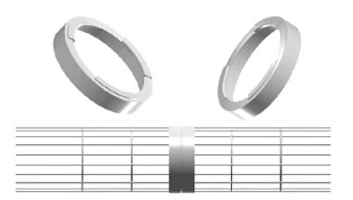
  • Round Cages: The most common shape, round cages provide uniform support and airflow distribution. They are easy to manufacture and fit standard cylindrical filter bags.
  • Oval Cages: Oval cages are used in applications requiring a larger filtration area within a compact footprint. They help optimize space while maintaining effective bag support.
  • Diamond Cages: Diamond-shaped cages enhance pulse-jet cleaning efficiency by promoting better air circulation around the bag surface. They are often used in high-dust-loading applications.
  • Pleated Cages: Pleated cages are designed for pleated filter bags, providing additional surface area for filtration. They improve dust-holding capacity and reduce pressure drop.

By combining the right cage shape with the correct material and coating, Omela helps optimize dust capture efficiency, bag life, and overall baghouse performance.

Omela dust filter bags cage shapes

Filter Bag Cages Accessories

Application & Material Selection

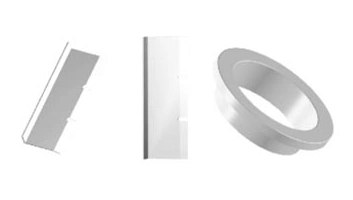
Filter Bag Cage Collars

  • Available in carbon steel, galvanized steel, stainless steel (304/316), or aluminum depending on corrosion and temperature conditions
  • Ensures secure connection between filter bag and cage for stable sealing and leak-free performance
  • Designed to match various baghouse systems (snap-band, clamp-band, or cuff-type connection)
  • Precision-formed for dimensional accuracy to prevent bag abrasion and ensure long service life
Fabric Weave Engineering

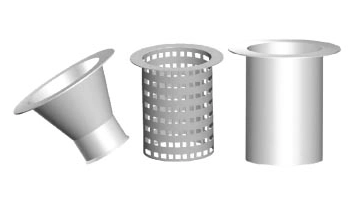
Filter Bag Cage Venturis

  • Enhances pulse-jet cleaning intensity by accelerating compressed air flow into the bag
  • Improves dust release, lowers differential pressure, and increases bag cleaning efficiency
  • Available in spun, welded, or deep-drawn designs with materials such as carbon steel, stainless steel, or aluminum
  • Tailored sizing to match cage diameter, bag ID, and cleaning system requirements
Finishing & Coating

Filter Bag Cage Joints

  • Provides structural reinforcement for multi-section or extra-long cages
  • Precision-machined to maintain perfect alignment and cage rigidity under high-temperature or high-vibration conditions
  • Optional protective coatings (epoxy, silicone, PTFE) available for corrosion resistance and extended cage durability
  • Ensures smooth cage-to-bag interface to prevent wear, snagging, or premature fabric damage
LET’S WORK TOGETHER

Why Choose Omela Filtration?

Choosing the right filtration supplier affects everything from system stability to maintenance downtime. At Omela Filtration, we combine reliable materials, controlled production, and years of industry experience to support dust and liquid filtration needs across different plants and applications.

We use consistent-grade filter media, sewing thread and metals sourced from qualified suppliers. Each batch is checked for weight, thickness, air permeability and tensile strength to keep performance steady across shipments.

Our facility is equipped with modern sewing lines, hot-welding machines and automated inspection tools. This keeps production efficient and helps us meet tight delivery schedules, even on custom orders.

Our engineers and technicians have long experience with dust collectors, liquid systems and industry-specific conditions. They help you match materials to temperature, chemistry and air-to-cloth ratios to avoid unnecessary failures.

From sampling to documentation and shipping, our team responds quickly and keeps information clear. Customers in cement, asphalt, power and water-treatment plants rely on our service to resolve problems without delay.

From the first technical discussion to installation and long-term maintenance, our team stays involved at every stage. We analyze your operating conditions, adjust product designs when needed, and ensure the final filtration setup works reliably in real plant environments. After delivery, our service team continues to provide guidance and troubleshooting support, helping you keep your system stable and downtime low.


Donaldson
nederman
camfil-apc
cnbm
ACC
Metso

Frequently Asked Questions

1. What materials are available for Filter Bag Cages?
2. What cage shapes can you supply and how do they affect performance?
3. What accessories are available for Filter Bag Cages?
4. How do you ensure the quality and consistency of Filter Bag Cages?

Trusted Filter Bag Cage Partner
Worldwide

With 20+ years of experience and 1000+ global clients, we deliver stable filtration performance and dependable dust-collector operation.