
Key Takeaways
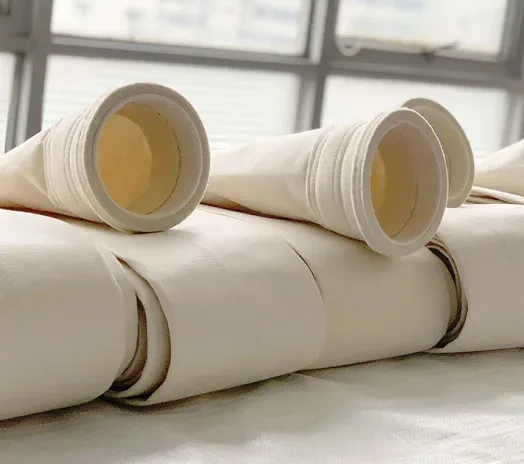
Water and oil repellent polyester felt is a specially treated polyester needle felt used for dry dust collector filter bags, not liquid filtration. The base media is polyester needle-punched felt, and the surface is treated to resist occasional moisture, light oil vapor, and sticky dust adhesion.
This finish helps reduce dust cake build-up, improve dust release during pulse cleaning, slow down pressure drop increase, and lower the risk of baghouse clogging in moderately humid or slightly oily dust environments.
It is not a solution for every wet or oily process. If the gas stream has heavy condensation, high water vapor, strong acid dew point, large amounts of oil mist, tar, asphalt fumes, or severe hydrolysis risk, higher-grade media such as acrylic, PPS, aramid, PTFE membrane, or full PTFE may be more appropriate.
Omela Filtration supplies polyester filter bags, polyester needle-punched felt, industrial dust filter bags, and customized filter bag cages for pulse-jet baghouses, bin vents, process dust collectors, and material-handling systems.
What Is Water and Oil Repellent Polyester Felt?
Water and oil repellent polyester felt is a polyester needle-punched filter media that has been treated with a functional surface finish. In filter bag specifications, it may also be called:
water-oil repellent polyester felt
oil and water repellent polyester filter bag
hydrophobic and oleophobic polyester needle felt
polyester felt with water and oil repellent finish
The base material is usually 100% polyester fiber. The needle-punched felt structure provides mechanical strength, dust-holding capacity, and stable airflow under moderate dry dust conditions. The added water-oil repellent treatment changes the surface behavior of the fibers, making them less likely to absorb moisture or hold sticky particles.
In a baghouse, this matters because dust collection does not rely only on the fabric itself. A stable dust cake forms on the surface of the filter bag and performs much of the fine particle capture. If the dust cake becomes wet, oily, or compacted, pulse cleaning becomes less effective. The filter bag can then blind, clog, and run at high pressure drop.
Water and oil repellent polyester felt is designed to reduce that risk in applications where standard polyester felt is almost suitable, but the dust stream contains occasional moisture, humidity, or light oily components.
How It Differs from Standard Polyester Felt
Standard polyester needle felt is one of the most widely used filter bag materials for general industrial dust collection. It is economical, mechanically strong, and suitable for many dry, moderate-temperature dust streams.
However, standard polyester has limitations. It is not ideal when the dust becomes damp, sticky, or oily. Moisture can bind dust particles together, creating a dense dust cake that does not release well during cleaning. Light oil vapor can also make the dust adhere more strongly to the fiber surface.
Water and oil repellent treatment improves the surface behavior of polyester felt.
| Item | Standard Polyester Felt | Water-Oil Repellent Polyester Felt |
|---|---|---|
| Base material | Polyester needle felt | Polyester needle felt |
| Surface treatment | Usually singed, calendered, or heat-set | Water and oil repellent finish added |
| Best condition | Dry, moderate-temperature dust | Dry to slightly humid or lightly oily dust |
| Dust cake release | Good in normal dry dust | Better when dust has mild stickiness |
| Main benefit | Low cost and broad use | Reduced clogging risk and more stable pressure drop |
The treatment does not change polyester into a high-temperature or corrosion-resistant material. It only improves resistance to occasional moisture and oil-related adhesion.
Why Moist Dust Causes Baghouse Clogging
Moisture is one of the most common reasons for filter bag blocking. When warm process gas cools below the dew point, water vapor may condense on the filter bag surface. Dust then mixes with moisture and forms a sticky layer.
This layer can create several problems:
- Dust cake becomes dense and difficult to pulse off
- Air permeability decreases
- Differential pressure rises faster
- Cleaning frequency increases
- Filter bag service life becomes shorter
Once sticky dust enters the depth of the felt, it may not be fully removed by normal pulse cleaning. The filter bag may still look acceptable from the outside but remain blocked internally.
This is why moisture control is always more important than simply changing filter bags. Good insulation, correct startup procedures, stable gas temperature, dry compressed air, and proper hopper discharge are still required. Water-oil repellent treatment helps, but it should not be used to compensate for severe condensation.
Why Light Oil or Sticky Dust Needs Special Attention
Oil vapor, grease aerosols, resinous particles, wax, or sticky powder can also reduce filter bag performance. Even a small amount of oily material may cause dust to attach more strongly to the media surface.
In some processes, the dust itself is naturally sticky. In others, stickiness appears only under certain conditions, such as seasonal humidity, low startup temperature, process upsets, or incomplete combustion.
Typical symptoms include:
- Dust remains on the bag after pulse cleaning
- Pressure drop does not return to the normal baseline
- The filter surface feels greasy or compacted
- Cleaning interval becomes shorter over time
- Dust collector airflow becomes unstable
Water and oil repellent polyester felt can help when the oil or stickiness is light and intermittent. If the dust contains heavy oil mist, tar, asphalt fumes, or resinous vapor, polyester felt may not be enough. In those cases, PTFE membrane, oleophobic specialty media, pre-separation, or process correction may be needed.
Main Functions of Water-Oil Repellent Polyester Filter Bags
1. Improving Dust Cake Release
The water-oil repellent finish makes the fiber surface less likely to hold damp or slightly oily dust. This can improve the release of dust cake during pulse cleaning.
A cleaner dust release helps maintain stable airflow and reduces the amount of residual dust left after each cleaning cycle.
2. Reducing Baghouse Clogging
When dust does not easily adhere to the media, the filter bag is less likely to blind quickly. This is especially helpful in applications where standard polyester bags perform well most of the time but fail during humid weather or process fluctuations.
3. Stabilizing Differential Pressure
A stable pressure drop is one of the most important signs of healthy baghouse operation. Water-oil repellent polyester felt can help slow down pressure drop increase by reducing sticky dust build-up.
4. Extending Filter Bag Service Life
If clogging and over-cleaning are reduced, the filter bag experiences less mechanical stress. This can help extend service life in suitable applications.
5. Improving Maintenance Predictability
When pressure drop is more stable and dust cake release is more consistent, plants can plan bag replacement and maintenance more reliably.
Typical Applications
Water and oil repellent polyester felt is most suitable for moderate-temperature dust collection where standard polyester is close to being acceptable, but moisture or sticky dust creates operating instability.
Common applications include:
Cement, Lime, and Mineral Dust
Cement, lime, and mineral dust can become difficult to clean when humidity is present. Outdoor baghouses, silo vents, packing machines, and material transfer points may experience seasonal moisture or condensation during startup.
Water-oil repellent polyester felt can help reduce surface caking and improve cleaning where the temperature stays within the polyester range.
Woodworking and Biomass Dust
Wood dust, biomass dust, and sawdust can absorb moisture from humid air. In some cases, this creates a sticky dust cake and reduces filter performance.
Water repellent polyester filter bags may help in dry-to-moderately humid systems, but fire and spark risk must also be reviewed.
Food, Grain, and Powder Processing
Food powders, flour, starch, feed ingredients, spices, sugar-based dust, and grain dust may become sticky when humidity rises. In these applications, filter bag selection should also consider static electricity and hygiene requirements.
If combustible dust risk is present, antistatic media and proper explosion protection should be evaluated.
Chemical and Pigment Dust
Some chemical powders and pigments contain fine particles that may compact on the filter surface. If moisture or light oily components are present, water-oil repellent treatment can improve dust release.
Chemical compatibility should always be confirmed before using polyester.
General Industrial Material Handling
Transfer points, packaging lines, mixers, elevators, silos, conveyors, and bin vents often use polyester filter bags. When dust conditions are mostly dry but occasionally humid, water-oil repellent polyester felt can be a practical upgrade.
When This Material Is Not the Right Choice
Water and oil repellent polyester felt has clear limits. The treatment improves surface performance, but the base fiber remains polyester.
Use caution or select another media when the process has:
- Continuous operating temperature above the polyester range
- Heavy condensation or acid dew point risk
- Strong acid, strong alkali, or aggressive chemical vapor
- Heavy oil mist, tar, asphalt fumes, or resinous aerosols
- High hydrolysis risk or long-term saturated humidity
In high-humidity or mildly acidic conditions, acrylic may perform better than polyester. In coal-fired boilers or waste-to-energy applications, PPS or PTFE-based media may be more appropriate. In asphalt mixing plants, aramid is often used because of elevated temperature. In chemically severe or highly corrosive systems, PTFE membrane or full PTFE may be required.
Standard Polyester vs. Water-Oil Repellent Polyester vs. PTFE Membrane
Many customers ask whether water-oil repellent polyester is the same as PTFE membrane. It is not.
Water-oil repellent treatment modifies the surface of the felt fibers to reduce moisture and oil adhesion. PTFE membrane adds a microporous surface layer on top of the media, creating stronger surface filtration and much higher fine-dust capture.
| Option | Best For | Limitation |
|---|---|---|
| Standard polyester felt | Dry, moderate-temperature dust | Not ideal for sticky or humid dust |
| Water-oil repellent polyester felt | Slightly humid or lightly oily dust | Not for severe condensation or heavy oil mist |
| PTFE membrane polyester felt | Fine dust, low emissions, better surface filtration | Higher cost and needs correct handling |
| Acrylic felt | Humid or mildly acidic medium-temperature gas | Higher cost than polyester |
| PPS/PTFE/P84 media | Harsher gas chemistry or high-temperature filtration | Higher material cost |
For many general baghouse applications, water-oil repellent polyester felt is a cost-effective middle option. It gives better surface behavior than standard polyester without the full cost of membrane or specialty high-temperature media.
How to Select Water and Oil Repellent Polyester Felt Filter Bags
Selection should be based on operating data, not only on the bag diameter and length.
Check Operating Temperature
Polyester is a medium-temperature material. It is normally used around 120–130°C, with short peaks around 140–150°C depending on the grade and construction. If your process frequently exceeds this range, choose a higher-temperature material.
Check Moisture Pattern
Occasional moisture is different from continuous condensation. Water-oil repellent treatment can help with moderate humidity, but it cannot solve a dew point problem. If condensation appears during startup or shutdown, insulation and operating procedures should be reviewed.
Check Dust Stickiness
The treatment is useful for mildly sticky dust. If the dust is strongly sticky, tar-like, oily, or resinous, additional measures may be needed.
Check Cleaning System
Pulse pressure, valve condition, compressed-air dryness, blowpipe alignment, and cleaning frequency all affect bag performance. Poor cleaning can still clog a treated bag.
Check Baghouse Design
Air-to-cloth ratio, inlet velocity, hopper discharge, can velocity, and airflow distribution should be reviewed. If the collector is overloaded, a surface treatment alone may not solve high pressure drop.
Public Industry Lessons
High-Humidity Dust Collection
Industry suppliers commonly recommend oil and water repellent polyester felt where humidity affects filter bag performance. The lesson is that the treatment is most useful when the system is generally suitable for polyester but needs better resistance to moisture-related surface caking.
Moisture-Related Bag Blocking
Dust collector troubleshooting resources often identify condensation and moisture as common causes of bag blocking. When dust mixes with condensed water, it can form a sticky layer that is difficult to clean. The lesson is that filter media selection and dew point control must be considered together.
Oleophobic Treatment for Wet, Oily, or Sticky Dust
Some dust collector filter media suppliers describe oleophobic treatments as useful for moisture-prone or oily environments because they help reduce dust build-up and support more consistent dust cake release. The lesson is that surface chemistry matters when the dust is not completely dry.
Polyester Material Limits
Polyester remains one of the most cost-effective baghouse materials for moderate-temperature, dry, non-corrosive dust. However, polyester has limited hydrolysis resistance. The lesson is that water-oil repellent treatment can improve surface behavior but does not remove the inherent limits of polyester fiber.
Common Selection Mistakes
Mistake 1: Treating It as a Waterproof Bag
Water and oil repellent polyester felt is not a waterproof fabric. It is a surface-treated dust filter media. It can resist occasional moisture better than standard polyester, but it should not operate in wet filtration or continuous condensation.
Mistake 2: Using It for High-Temperature Gas
The treatment does not increase the temperature class of polyester. If the gas temperature is too high, use aramid, PPS, P84, fiberglass, or PTFE-based media instead.
Mistake 3: Ignoring Dew Point
If the gas regularly falls below dew point, sticky dust cake and corrosion may still occur. Fix the process condition first.
Mistake 4: Choosing It Instead of Antistatic Media
Water-oil repellent treatment is not the same as antistatic treatment. If the dust is combustible, antistatic properties may be required.
Mistake 5: Expecting It to Replace PTFE Membrane
PTFE membrane provides surface filtration and low emissions. Water-oil repellent treatment mainly improves resistance to moisture and oil adhesion. They solve different problems.
Information Needed for an Accurate Recommendation
To quote water and oil repellent polyester felt filter bags, provide:
- Dust type, moisture level, and whether the dust is sticky or oily
- Operating temperature, peak temperature, and dew point risk
- Bag diameter, length, top style, bottom style, and quantity
- Baghouse type, cleaning method, and current pressure drop trend
- Current bag material, service life, failure photos, and emission target
With this information, the supplier can decide whether standard polyester, water-oil repellent polyester, antistatic polyester, PTFE membrane polyester, acrylic, PPS, aramid, or another material is more suitable.
Final Recommendation
Water and oil repellent polyester felt filter bags are a practical choice when a standard polyester bag is almost suitable, but occasional moisture, light oil vapor, or mildly sticky dust causes clogging, poor dust cake release, and unstable pressure drop.
They are especially useful in medium-temperature, dry-to-slightly-humid dust collection systems such as cement handling, mineral processing, woodworking, grain and food powder handling, chemical powders, and general industrial material transfer.
However, they should not be used as a universal solution for wet, corrosive, high-temperature, or heavily oily gas streams. Severe condensation, acid dew point, strong chemical attack, heavy oil mist, tar, and hydrolysis risk require a different media strategy.
Omela Filtration can help evaluate whether water and oil repellent polyester felt is suitable for your baghouse. By reviewing dust type, humidity, temperature, pressure drop, cleaning system, bag dimensions, and failure symptoms, Omela engineers can recommend a filter bag material that balances filtration performance, bag life, and operating cost.
FAQ
1. What is water and oil repellent polyester felt?
Water and oil repellent polyester felt is polyester needle-punched filter media treated with a special finish to reduce moisture and oil adhesion. It is used for dry dust collector filter bags in baghouse systems.
2. Is water and oil repellent polyester felt used for liquid filtration?
No. In this context, it is mainly used for dry dust collection, not liquid filtration. It helps filter dust-laden air while resisting occasional moisture or light oil vapor in the gas stream.
3. When should I use water and oil repellent polyester filter bags?
Use them when standard polyester bags are suitable by temperature and chemistry, but the dust has occasional moisture, light oiliness, or mild stickiness that causes clogging or poor dust cake release.
4. Can water and oil repellent polyester felt prevent baghouse clogging?
It can help reduce clogging caused by mild moisture, light oil vapor, or sticky dust cake. However, it cannot solve severe condensation, heavy oil mist, tar, or serious process moisture problems.
5. What temperature can water and oil repellent polyester felt handle?
The temperature limit is mainly determined by the polyester base media. Many polyester felt bags are used around 120–130°C, with short peaks around 140–150°C depending on the grade and construction.
6. Is water and oil repellent polyester felt the same as PTFE membrane?
No. Water-oil repellent treatment improves surface resistance to moisture and oil adhesion. PTFE membrane adds a microporous surface layer for stronger surface filtration and lower emissions.
7. What information is needed to quote water and oil repellent polyester filter bags?
Provide dust type, moisture level, operating temperature, peak temperature, bag size, top and bottom style, quantity, baghouse cleaning method, current pressure drop, current bag life, and failure photos if available.
Author

Jessica Ma – Senior Filtration Engineer, Omela Filtration
Jessica Ma is a senior filtration engineer at Omela Filtration, specializing in dust and liquid filtration. With over 15 years of experience, she focuses on optimizing baghouse performance, enhancing filtration efficiency, and developing high-performance solutions for industrial dust collectors and precision liquid filtration applications.