
Key Takeaways
- Food and beverage filter bags are used to remove particles, pulp, fibers, gels, sediments, carbon, crystals, oil impurities, and process debris from syrup, edible oil, juice, wine, dairy, beverage ingredients, and process water.
- Food filtration should be selected by product type, viscosity, temperature, particle load, hygiene requirement, taste/odor sensitivity, micron rating, pressure drop, and housing fit, not only by bag size.
- Liquid filter bags can use felt, mesh, multilayer, or stainless steel mesh structures depending on whether the process needs depth filtration, surface filtration, high flow, low shedding, or reusable cleaning.
- Filter cartridges may be used after bag filtration when finer clarification, final polishing, or downstream membrane protection is required.
- The best food and beverage filter bag is not always the finest one. It is the bag that removes harmful contaminants while maintaining stable flow, product clarity, hygiene, low pressure drop, and safe changeout.
Why Food and Beverage Filtration Matters
Food and beverage filtration is not only about removing visible dirt. In real production, filtration can affect clarity, taste, texture, flow stability, filling accuracy, equipment protection, and hygienic operation.
A filter bag may be installed before a pump, after a mixing tank, before filling, before a cartridge filter, or during transfer between tanks. Each position has a different purpose. A coarse bag may remove pulp, fibers, or large debris, while a finer bag or cartridge may be needed for clarification or final polishing.
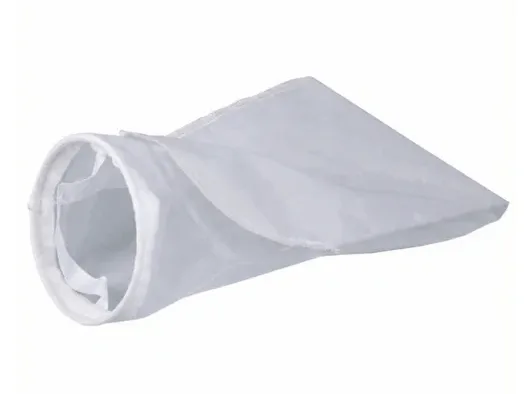
A liquid filter bag works by allowing process liquid to pass through felt or mesh media. Suspended solids are trapped either inside depth media or on the surface of mesh media, and the cleaned liquid exits the housing. Liquid filter bags are commonly used to remove suspended solids, gels, particles, oil droplets, and contaminants from process liquids, while performance depends on media selection, micron rating, permeability, chemistry compatibility, temperature limits, and housing sealing.
The key point is simple: food filtration should protect the product without damaging the process. A filter bag should not create odor, shed fibers, strip useful ingredients, cause excessive pressure drop, or create unnecessary downtime.
What Contaminants Need to Be Removed?
Food and beverage liquids may contain both natural solids and unwanted process contaminants. The goal is not always to remove every solid. The goal is to remove the particles that affect product quality or equipment reliability.
Common contaminants include pulp, peel fragments, seed particles, fibers, starch particles, sugar crystals, caramelized residues, carbon particles, protein flocs, yeast, sediment, gels, coagulated solids, scale, tank debris, gasket fragments, and oil-processing impurities.
For example, a cloudy juice may intentionally keep some pulp, while a clear beverage may need much finer clarification. Edible oil may need polishing to remove suspended impurities. Process water may only need prefiltration before cartridges, membranes, UV systems, or nozzles.
Where Filter Bags Fit in the Process
Food and beverage filtration is often more stable when it uses staged filtration instead of one very fine filter at the beginning.
| Process Stage | Main Purpose | Typical Filtration Goal |
|---|---|---|
| Raw material prefiltration | Remove large debris before processing | Fibers, crystals, pulp, visible particles |
| Mixing or transfer filtration | Protect pumps, valves, and tanks | Undissolved solids, flocs, gels, tank debris |
| Clarification | Improve appearance and consistency | Fine suspended solids, haze particles |
| Filling-line protection | Reduce nozzle blockage and filling defects | Particles that affect packaging stability |
| Prefiltration before cartridges | Reduce downstream filter load | Coarse-to-medium particles before polishing |
Using a fine bag too early may cause fast plugging, high pressure drop, slow filling, and frequent changeout. A coarse-to-fine arrangement is often more practical for syrup, oil, juice, dairy ingredients, and process water.
Syrup and Liquid Sugar Filtration
Syrup, liquid sugar, corn syrup, glucose syrup, and beverage sweeteners can be viscous. They may contain sugar crystals, carbon particles, fibers, gels, or process residues. When viscosity is high, liquid passes through the filter media more slowly, and pressure drop can rise quickly.
A published liquid sugar process case reported that the filtration goal was to reduce maintenance cost, reduce downtime, and improve operator safety; after filtration-system changes, filter changes were reduced from once per shift to once every three days.
For syrup filtration, the practical lesson is clear: capacity and maintenance access matter as much as micron rating. A filter setup that is too small may create frequent changeout even when the selected micron rating is technically correct.
Edible Oil Filtration
Edible oil filtration may involve crude oil clarification, polishing, removal of process residues, or final filtration before storage and filling. The filtration target may include suspended particles, carbon, waxy solids, filter aid residues, and fine process debris.
A published edible oil case described a production line operating at about 95°C and 10 t/h where filter bag failure caused downtime; after the filtration setup was changed, the filter bag replacement interval increased threefold, annual savings were reported, and maintenance costs were reduced by 67%.
The practical lesson is that edible oil filtration should be sized for temperature, flow rate, particle load, and mechanical strength. A bag that works in a low-load process may not survive the same way in a hot, continuous, high-flow line.
Juice, Wine, and Beverage Filtration
Juice, wine, and beverage filtration usually focus on clarity, taste, and stability. The contaminant may be pulp, sediment, fibers, yeast, haze-forming particles, ingredient residues, or storage debris.
Public beverage cases show that sugar syrup, apple cider, sweetener, beer, and liqueur filtration often focus on reducing filtration cost, improving service life, preserving clarity, lowering waste, and maintaining product consistency.
Mesh bags are often useful for pulp, fibers, and coarse particles. Felt bags are more suitable when the process needs finer suspended-solid capture and clarification. In sensitive beverage lines, bag filtration may be followed by cartridge filtration for final polishing.
Dairy and Ingredient Water Filtration
Dairy and ingredient streams can contain soft particles, protein flocs, sediment, or process debris. Unlike hard particles, soft contaminants may deform under pressure and behave differently inside the filter bag.
A dairy process case highlights the difference between process water and ingredient water. Process water may indirectly contact the final product, while ingredient water becomes part of the product; both require defined filtration and inspection, and ingredient water may require RO filtration with prefiltration depending on the inlet water condition.
For dairy-related filtration, hygiene, temperature, media cleanliness, and changeout handling are important. The filter bag should support stable operation without adding fibers, odor, or contamination risk.
Process Water Filtration
Process water is used in washing, rinsing, ingredient preparation, cooling, utility systems, and pretreatment. In many food and beverage plants, bag filtration is used as a practical prefiltration stage to protect downstream equipment.
Filter cartridges may be used after bag filters when the process needs finer particle retention, turbidity control, or membrane protection. Industrial filter cartridges can remove suspended solids, colloids, microorganisms, and contaminants from process and utility fluids, and are used in food and beverage, RO pretreatment, water treatment, chemical, and industrial liquid systems.
Material Selection: Felt, Mesh, Multilayer, or Metal Mesh?
Material choice should match the liquid, temperature, particle type, hygiene requirement, and filtration purpose.
| Material / Construction | Common Use Direction | Main Advantage | Watch Point |
|---|---|---|---|
| PP Felt | Process water, beverage ingredients, general liquid filtration | Cost-effective depth filtration | Check temperature and food-contact documentation |
| Polyester Felt | Edible oils, process liquids, polishing steps | Mechanical strength and dirt-holding capacity | Check chemistry and temperature |
| Nylon Mesh | Juice pulp, fibers, coarse particles, washable prefiltration | Surface filtration and defined openings | Check compatibility and cleaning method |
| Multilayer Bags | Finer clarification or higher retention needs | Better particle retention | May increase pressure drop |
| Stainless Steel Mesh | Hot liquids, reusable filtration, coarse solids | Washable, rigid, durable | Check corrosion and cleaning requirements |
For food-contact use, “food grade” should not be assumed from the material name alone. FDA states that its 21 CFR food-contact inventory contains substances authorized for food-contact uses, including substance identity and the specific intended uses and conditions of use.
Micron Rating: Finer Is Not Always Better
Micron rating should be selected according to the smallest harmful particle and the filtration stage.
Coarse filtration is suitable for visible solids, pulp, fibers, crystals, or large debris. Medium filtration can improve clarity and reduce downstream loading. Fine filtration or cartridge filtration may be needed for polishing, packaging quality, or membrane protection.
A very fine bag is not always the best choice. If the liquid has high viscosity or heavy solids, a fine bag may blind quickly, slow production, increase pressure drop, and create frequent changeouts. The better approach is often larger filter area, staged filtration, or lower flow per bag.
Based Case Lessons
| Public Case / Technical Reference | What It Shows | Practical Lesson |
|---|---|---|
| Liquid sugar process case | Filter changes were reduced from once per shift to once every three days after system changes. | Syrup filtration is not only about micron rating; maintenance frequency, safety, and filter area matter. |
| Edible oil production case | A hot, high-flow edible oil line improved replacement interval threefold and reduced maintenance cost after changing the filtration setup. | Hot oil filtration needs media strength, correct sizing, and stable operation. |
| Soft drink and beverage cases | Sugar syrup, apple cider, sweetener, beer, and liqueur filtration focused on clarity, service life, waste reduction, and consistency. | Beverage filtration should protect both appearance and operating cost. |
| Dairy water filtration case | Process water and ingredient water require different filtration logic; RO prefiltration may depend on inlet water condition. | Food plants should separate process-water protection from ingredient-water quality needs. |
| Food-contact material framework | Authorized food-contact substances depend on identity, intended use, and conditions of use. | Food-grade filtration requires documentation review, not only material naming. |
These cases support one practical conclusion: food and beverage filtration is a quality-control and process-stability step, not just a consumable replacement task.
Hygiene, Taste, Odor, and Fiber Shedding
Food and beverage filtration must consider more than particle capture. The filter bag should not introduce taste, odor, loose fibers, seam threads, or visible contamination.
For clear beverages, polished oils, syrup, and final filling stages, low-shedding media and suitable seam construction matter. For coarse filtration, mesh bags may reduce fiber-release risk. For higher dirt-loading steps, felt bags may provide more holding capacity, but handling and documentation should be reviewed carefully.
The housing also matters. A clean filter bag installed into a dirty housing cannot protect the product. Basket condition, gasket condition, sanitary handling, and changeout procedure should be part of the filtration plan.
Common Problems and Practical Corrections
| Field Problem | Possible Cause | Practical Direction |
|---|---|---|
| Bag plugs quickly | Rating too fine, high solids, high viscosity | Use staged filtration, larger bag, or lower flow per bag |
| Product clarity unstable | Wrong micron rating or variable particle load | Review particle size and filtration stage |
| Fibers appear in product | Media shedding or seam/thread release | Use low-shedding media, mesh, or welded construction |
| Flow drops during filling | Pressure drop rises too fast | Increase filter area or define changeout pressure |
| Taste or odor concern | Incompatible media or poor storage | Confirm food-contact documentation and storage conditions |
| Particles pass downstream | Rating too coarse or housing bypass | Check bag rating, ring fit, basket, gasket, and housing seat |
| Frequent changeout | Heavy loading or undersized housing | Add prefiltration or increase filtration area |
Information to Collect Before Selection
Before choosing a food and beverage filter bag, collect:
- Product type: syrup, edible oil, juice, wine, dairy, beverage ingredient, or process water
- Filtration purpose: prefiltration, clarification, polishing, filling protection, or downstream filter protection
- Target contaminants: pulp, fibers, sediment, carbon, gels, crystals, protein flocs, scale, or process debris
- Required micron rating or current filter rating
- Flow rate and batch volume
- Operating temperature and product viscosity
- Housing size, bag size, ring type, basket condition, and gasket material
- Required food-contact documentation or hygiene requirement
- Current problem: fast plugging, poor clarity, fiber shedding, odor concern, bypass, or frequent changeout
- Quantity and delivery destination
- Photos of current bags, housing, basket, and collected particles
Final Engineering View
Food and beverage filter bag selection should begin with the product and the filtration goal.
A syrup line, edible oil plant, juice process, wine process, dairy stream, and process water system may all use filter bags, but they do not need the same media, micron rating, or housing setup.
The key question is not:
Which filter bag is finest?
The better question is:
Which contaminants must be removed without harming product quality or slowing production?
A practical filtration setup should balance clarity, hygiene, taste and odor control, flow stability, pressure drop, food-contact documentation, housing fit, and downstream equipment protection.
FAQ
What are food and beverage filter bags used for?
Food and beverage filter bags are used to remove pulp, fibers, sediments, gels, carbon, crystals, protein flocs, particles, and process debris from syrup, edible oil, juice, wine, dairy, beverage ingredients, and process water.
Which filter bag material is used for food and beverage filtration?
Common materials include PP felt, polyester felt, nylon mesh, multilayer media, and stainless steel mesh. The final choice depends on food-contact documentation, product type, temperature, viscosity, particle load, micron rating, and whether the bag is single-use or reusable.
What micron rating is suitable for syrup filtration?
The suitable micron rating depends on syrup viscosity, solids loading, clarity target, and process stage. Coarse filtration may remove fibers and crystals, while finer filtration may be used for polishing before filling.
Can filter bags be used for edible oil filtration?
Yes. Filter bags can be used for edible oil clarification, polishing, and process particle removal. Oil temperature, viscosity, particle load, and hygiene requirements should be reviewed before choosing the media and micron rating.
Are mesh or felt bags better for juice filtration?
Mesh bags are often useful for pulp, fibers, and coarse particles. Felt bags are better for finer suspended solids and clarification. Some juice processes may use staged filtration to balance clarity and flow.
Why do food and beverage filter bags plug quickly?
Fast plugging may be caused by high solids, high viscosity, too fine a micron rating, cold product temperature, heavy pulp or sediment load, insufficient filter area, or lack of coarse prefiltration.
What information is needed to choose food and beverage filter bags?
Provide product type, filtration purpose, contaminants, micron rating, flow rate, batch volume, temperature, viscosity, housing size, bag size, ring type, hygiene requirement, current problems, and photos.
Author

Jessica Ma – Senior Filtration Engineer, Omela Filtration
Jessica Ma is a senior filtration engineer at Omela Filtration, specializing in dust and liquid filtration. With over 15 years of experience, she focuses on optimizing baghouse performance, enhancing filtration efficiency, and developing high-performance solutions for industrial dust collectors and precision liquid filtration applications.