
Waste-to-Energy Plants Introduction
Global municipal solid waste generation is accelerating at an unprecedented rate. Industry projections estimate total worldwide waste output will reach 2.59 billion tonnes by 2030 and 3.4 billion tonnes by 2050 — figures that place waste-to-energy (WTE) incineration at the center of sustainable urban infrastructure planning for the coming decades.
For plant engineers and environmental compliance teams operating WTE facilities, the bag filter is not merely a piece of auxiliary equipment — it is the last line of defense between the combustion chamber and atmospheric emissions. Getting the filter bag specification right determines whether a facility meets increasingly stringent particulate emission standards, avoids unplanned shutdowns, and achieves a total cost of ownership that justifies the investment.
This article examines the specific challenges that municipal solid waste incineration flue gas presents to filter media, the technical requirements for filter bags used in this application, and a verified case study demonstrating what compliant performance looks like in practice.
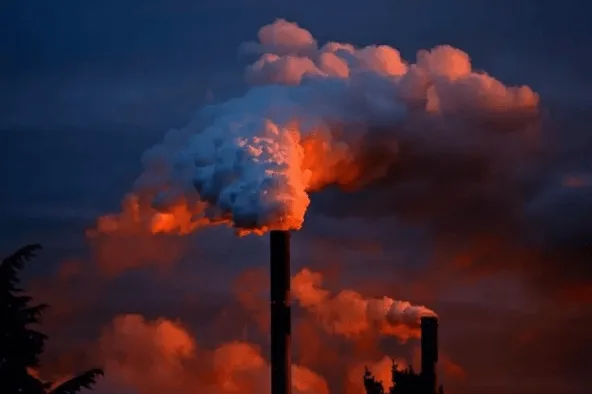
Why MSW Incineration Is One of the Hardest Bag Filter Applications
Waste-to-energy flue gas is widely regarded among filtration engineers as among the most demanding gas streams a filter bag will encounter in industrial service. Unlike coal combustion or cement production — where the input fuel composition is relatively consistent — municipal solid waste is chemically unpredictable. Feed composition changes shift-by-shift, and the resulting flue gas can vary substantially in temperature, moisture content, acid concentration, and particulate characteristics.
Understanding how these variables interact with filter media is fundamental to correct bag selection. Our guide on understanding dust properties for baghouse and filter bag selection covers the engineering principles in detail. The principal technical challenges in WTE applications are as follows.
High operating temperatures with surge potential. After acid gas scrubbing (dry or semi-dry desulfurization), flue gas entering the bag filter typically ranges from 160°C to 200°C under normal operating conditions. However, process upsets — incomplete combustion events, feed composition changes, or scrubber bypass — can drive inlet temperatures briefly to 260°C or higher. Filter media must sustain normal performance across the operating range while tolerating these thermal surges without structural degradation.
Multi-component acid gas attack. WTE flue gas carries a cocktail of corrosive gases: sulfur dioxide (SO₂), nitrogen oxides (NOₓ), hydrogen chloride (HCl), and hydrogen fluoride (HF) are all present at meaningful concentrations. These gases attack both the filter media and the bag cage structure if the wrong materials are specified. HCl in particular is highly destructive to polyester and even some aramid fibers at elevated temperatures, making chemical resistance a non-negotiable filter bag requirement.
High moisture content and condensation risk. Flue gas moisture content in MSW incineration typically falls between 20% and 30% by volume, and can reach 60% in some configurations. When operating temperatures fluctuate and approach the dew point, moisture condensation on the bag surface turns collected dust into a cohesive paste. The resulting mudding or blinding of the filter media — sometimes called “bag blinding” or “paste blocking” — dramatically increases differential pressure, reduces airflow, and can physically damage the bag during cleaning cycles. This moisture-driven failure mode is covered in depth in our guide to low-temperature filter bag media selection.
Fine particulate size distribution. MSW incineration fly ash has a median particle diameter of approximately 20–30 µm, but 50–60% of particles fall below 30 µm. The bulk density of this ash is very low — typically 0.3 to 0.5 g/cm³ — which means it forms loose, easily re-entrained dust cakes on standard filter media surfaces. Achieving consistent sub-5 mg/m³ outlet concentrations with this particle size profile requires surface filtration technology, not depth filtration.
Toxic co-contaminants. Beyond particulates and acid gases, WTE flue gas contains dioxins, furans, heavy metals (mercury, lead, cadmium), and other persistent organic compounds. While activated carbon injection upstream of the bag filter handles the gaseous toxic species, these compounds adsorb onto fly ash particles and are captured on the filter bag surface. Filter media integrity is therefore not just an emissions compliance issue — it is a hazardous material containment issue.
Why PTFE Membrane Filter Bags Are the Industry Standard for WTE
Given the severity of the operating environment described above, polytetrafluoroethylene (PTFE) membrane-laminated filter bags have become the dominant specification for waste-to-energy bag filter applications globally. The reasons are well established among experienced filtration engineers.
Surface filtration vs. depth filtration
Standard needle-felt filter bags operate by depth filtration: particles penetrate into the fiber matrix and are captured throughout the thickness of the media. This works acceptably for dry, non-sticky dust at moderate temperatures. In WTE applications, it fails for two reasons: moisture causes particles to bind within the fiber matrix rather than being cleanly released during pulse-jet cleaning, and fine particles penetrate all the way through the media and appear in the outlet gas.
PTFE membrane filter bags operate by surface filtration. The microporous PTFE membrane — laminated to the outer surface of a high-temperature needle-felt substrate — acts as an absolute barrier. Particles of all sizes are captured on the membrane surface, where they form a uniform dust cake. This cake is then dislodged cleanly by pulse-jet cleaning because the smooth, non-stick PTFE surface has extremely low adhesion. The result is consistently low outlet emissions regardless of particle size distribution, and stable differential pressure over the bag’s operating life.
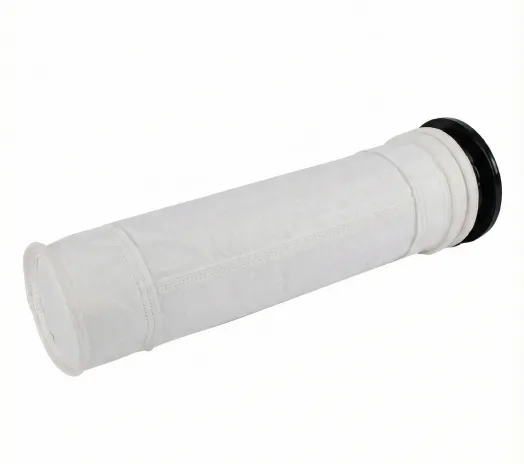
PTFE membrane structural specifications
High-performance PTFE membranes for WTE applications are produced by a biaxial stretching process that creates a three-dimensional microporous structure. Key performance indicators for a properly specified membrane include:
- Pore count of approximately 1×10⁹ pores per cm², providing the dense barrier needed for sub-5 mg/m³ outlet performance
- Open area ratio of 85–93%, which maintains high gas permeability and limits the energy required to overcome filter resistance
- Capability to capture particles down to approximately 1 µm in diameter
- Total filtration efficiency of 99.99% or higher under standard test conditions
The membrane is bonded to the substrate using a thermal compression lamination process that creates a permanent, three-dimensional bond. This is important: membranes that are adhesive-bonded rather than thermally laminated are susceptible to delamination at elevated temperatures and when exposed to acidic condensate.
Temperature and chemical resistance
PTFE as a polymer is chemically inert to virtually all acids, alkalis, and organic solvents encountered in WTE flue gas. Its continuous service temperature range covers operation up to approximately 240°C with short-duration peaks to 260°C — covering the full WTE operating envelope including thermal surge events.
For WTE facilities operating at the upper end of the temperature range, pure PTFE needle-felt filter bags provide an additional margin of safety over membrane-laminated alternatives, since the entire filter media structure — not just the surface layer — is chemically and thermally inert.
Where temperatures are slightly more moderate but acid gas concentrations remain high, PPS filter bags with PTFE membrane lamination offer a cost-effective alternative. PPS fiber provides excellent acid resistance up to approximately 190°C continuous, and the PTFE membrane surface layer delivers the sub-5 mg/m³ outlet performance required in stringent zones. Our detailed comparison of PPS+PTFE laminated filter bag applications outlines when this combination is the preferred specification.
Filter Media Selection Guide for WTE Bag Filters
| Operating Parameter | Specification Range | Implication for Media Selection |
|---|---|---|
| Normal inlet temperature | 160–200°C | Requires high-temp rated substrate; standard polyester excluded |
| Peak/surge temperature | Up to 260°C | PTFE membrane + PTFE or glass fiber substrate; aramid insufficient |
| Flue gas moisture | 20–60% by volume | Surface filtration essential; depth filtration media will blind |
| HCl concentration | Variable, up to several hundred ppm | Polyester excluded; PTFE, PPS, or glass fiber required |
| Particulate outlet target | ≤5 mg/m³ (stringent zones: ≤3 mg/m³) | PTFE membrane mandatory for consistent compliance |
| Dust median particle size | 20–30 µm, 50–60% below 30 µm | Surface filtration; membrane pore count ≥10⁹/cm² |
| Presence of dioxins/heavy metals | Yes | Bag integrity is a hazardous material containment issue |
Note: Specific media selection should always be confirmed against site-specific stack test data and the equipment manufacturer’s design parameters.
Case Study: 4 × 750 t/d MSW Incineration Facility
Project background. An ecological technology company operating a municipal solid waste incineration facility with four furnace lines, each rated at 750 tonnes per day of MSW input, required replacement of the bag filter media across all lines. The facility is located in a designated environmental control zone, where the regulatory particulate emission limit is 5 mg/m³ — a value tighter than the national standard applicable to facilities outside designated zones.
Flue gas characterization. The facility’s flue gas was characterized as containing SO₂, NOₓ, HCl, HF, dioxins, and heavy metal compounds in addition to particulate matter. Feed composition variability was high due to the mixed nature of collected MSW. Temperature variability and moisture content fluctuations were identified as primary risk factors for filter bag performance degradation.
Media selection rationale. Following a site-specific technical review, PTFE membrane-laminated filter bags were recommended. The selection was based on the following criteria: the presence of HCl and HF excluded all non-PTFE media options; the strict 5 mg/m³ outlet requirement in the designated control zone required surface filtration technology; and the high moisture content and temperature variability ruled out any media susceptible to condensation-driven blinding.
Measured performance results. Following installation and commissioning, the bag filter system was tested under normal operating conditions:
- Operating differential pressure: approximately 800 Pa — within the designed operating range and indicative of stable dust cake formation and effective pulse-jet cleaning
- Measured outlet particulate concentration: 2 mg/m³
- Regulatory limit: 5 mg/m³
- Performance margin: 60% below the regulatory limit
The facility reported full satisfaction with both the filtration performance and the stability of differential pressure over the initial operating period, indicating that the surface filtration mechanism was functioning as designed with consistent dust cake release.
Key Procurement Specifications for WTE PTFE Filter Bags
Plant engineers and procurement teams evaluating filter bags for waste-to-energy applications should require the following information from prospective suppliers:
- Membrane pore density and open area ratio. Ask for the specific values, not just a claim of “PTFE membrane.” A membrane with 10⁹ pores/cm² and 85–93% open area is significantly different in performance from a less refined product.
- Lamination method. Confirm thermal compression lamination. Adhesive-bonded membranes are a risk in high-temperature, high-humidity WTE environments.
- Substrate fiber specification. Confirm the substrate needle-felt material and its continuous and peak temperature ratings. Verify HCl and HF resistance data.
- Seam construction. In WTE applications, ultrasonic seam welding is the preferred construction method over conventional stitched seams. Stitched seams are potential leak paths; ultrasonic welded seams are hermetically sealed.
- Cage compatibility. The filter bag and bag cage must be specified together. In corrosive WTE environments, standard carbon steel cages are insufficient — stainless steel or surface-coated cages are required to prevent cage corrosion from becoming a source of bag abrasion and premature failure. Maintaining the pulse-jet cleaning system components is equally critical; our article on dust collector replacement parts covers the full maintenance picture.
- Measured filtration efficiency data. Request third-party test data at the particle sizes relevant to your application — specifically efficiency at 1 µm and 5 µm. Manufacturer claims of “99.99% efficiency” should be backed by test certificates citing the applicable standard.
- Service life expectation under your specific conditions. A qualified supplier will be able to provide a realistic service life estimate based on your gas composition, temperature profile, and cleaning system parameters. Be cautious of suppliers who cannot differentiate their service life predictions based on operating conditions.
Conclusion
Waste-to-energy bag filter applications represent some of the most technically demanding conditions that filter media will encounter in industrial service. High temperatures, aggressive acid gas chemistry, high moisture content, toxic co-contaminants, and stringent emission limits all converge to create a specification environment where only properly engineered PTFE filter bags consistently deliver compliant performance over an acceptable service life.
The verified case study above demonstrates that achieving outlet concentrations of 2 mg/m³ — well within the 5 mg/m³ limit required in designated environmental control zones — is achievable with the correct media specification, proper installation, and a well-maintained pulse-jet cleaning system.
At Omela Filtration, we provide PTFE membrane filter bags engineered for the specific chemical and thermal demands of waste-to-energy and hazardous waste incineration applications. Our technical team works directly with plant engineers to review process data, confirm media selection, and support installation and commissioning.
Contact Omela Filtration to discuss your WTE filter bag requirements.
Author

Jessica Ma – Senior Filtration Engineer, Omela Filtration
Jessica Ma is a senior filtration engineer at Omela Filtration, specializing in dust and liquid filtration. With over 15 years of experience, she focuses on optimizing baghouse performance, enhancing filtration efficiency, and developing high-performance solutions for industrial dust collectors and precision liquid filtration applications.