
Key Takeaways
- Regular maintenance of an industrial cartridge dust collector should cover filtration performance, pulse cleaning, compressed-air quality, dust discharge, fan operation, and system integrity. Preventive maintenance is more effective when the entire collection system is evaluated rather than focusing only on filter replacement.
- A practical inspection program includes daily operating observations, weekly or bi-weekly checks, monthly servicing, semi-annual reviews, and annual inspections. Actual intervals should follow the dust characteristics, operating hours, equipment instructions, and applicable safety requirements.
- Differential-pressure monitoring is one of the most useful maintenance tools because abnormal pressure-drop trends can reveal filter loading, poor cleaning recovery, or changes in system operation before serious airflow loss occurs.
- Effective pulse cleaning depends on correctly functioning diaphragm and solenoid valves, suitable pulse timing, adequate compressed-air pressure and volume, and clean, dry air. More frequent pulsing does not automatically produce better cleaning or longer cartridge life.
- Cartridge filter selection and service life depend on media characteristics, dust loading, filtration velocity, cleaning efficiency, and actual operating conditions. Replacement decisions should consider pressure-drop trends, filter integrity, and manufacturer limits rather than calendar age alone.
- Hopper discharge, access-door seals, ductwork, fans, and maintenance records should be included in the same program. Reliable operation requires collected dust to be captured, filtered, cleaned from the media, and discharged without unnecessary accumulation.
Why Cartridge Dust Collector Maintenance Should Be Preventive
A cartridge dust collector can continue operating long after its performance has started to deteriorate. The fan may still run normally, the pulse-cleaning controller may continue cycling, and dust may still enter the collector, even when filter resistance is gradually increasing or cleaning efficiency is declining.
For many facilities, maintenance begins only when operators notice weaker suction, unusual pressure readings, increased dust emissions, or unexpected downtime. By that point, the problem may have affected several parts of the system.
Preventive maintenance focuses on identifying these changes before they develop into major operating problems.
A cartridge dust collection system depends on several connected functions. Dust-laden air must enter the collector at the required airflow, particles must be retained by the filter media, pulse cleaning must release accumulated dust, and the hopper must discharge that material without allowing excessive buildup.
If any of these functions becomes unreliable, the entire system may be affected.
For example, insufficient compressed-air pressure can reduce pulse-cleaning effectiveness, allowing dust cake to accumulate and increasing differential pressure. An overloaded hopper can cause released dust to become re-entrained, while damaged cartridge seals may allow particulate to bypass the filter media.
A useful maintenance program therefore combines scheduled inspections with operating-condition monitoring rather than relying entirely on fixed cartridge replacement intervals.
Establish a Practical Cartridge Dust Collector Maintenance Schedule
The correct maintenance frequency depends on how the collector is used.
A system serving occasional welding operations may experience relatively low particulate loading, while equipment connected to continuous grinding, laser cutting, blasting, or powder handling may require more frequent inspection.
Operating hours, dust characteristics, cleaning-system design, and environmental conditions all influence maintenance requirements.
The following schedule provides a practical starting framework for industrial pulse-cleaned cartridge dust collectors.
| Inspection Interval | Recommended Maintenance Activities | Primary Objective |
|---|---|---|
| Daily / Each Shift | Record filter ΔP, check capture performance, observe emissions, review alarms, and check dust-bin level | Identify early operating changes |
| Weekly / Bi-weekly | Verify pulse sequence, solenoid and diaphragm operation, hopper discharge, and visible system condition | Detect cleaning and discharge problems |
| Monthly | Inspect compressed-air supply, moisture traps, regulators, fittings, access-door seals, and DP instrument lines | Prevent cleaning failures and leakage |
| Semi-annually | Review pulse duration and delay, cartridge condition, fan components, and maintenance history | Assess wear and long-term performance |
| Annually | Inspect structural supports, bolts, welds, corrosion, ductwork, and overall system operating requirements | Evaluate equipment integrity and future maintenance needs |
These intervals are general recommendations rather than universal requirements.
High-loading operations may require hopper checks several times per shift, while facilities with air permits may have specific daily monitoring obligations.
The manufacturer’s maintenance manual and applicable site requirements should always take priority.
A maintenance schedule should become more frequent when dust loading, operating intensity, or equipment condition increases the likelihood of failure.
Daily Inspections: Recognize Changes Before They Become Failures
Daily maintenance does not necessarily mean stopping the collector and opening the filter chamber.
In many installations, routine observations can be performed externally while the system operates under normal production conditions.
The main purpose is to establish whether the equipment is behaving consistently.
Operators should become familiar with the normal differential-pressure range, source-capture performance, pulse-cleaning activity, and dust-discharge frequency.
When these operating characteristics are recorded regularly, even relatively small changes become easier to recognize.
For example, a gradual pressure-drop increase over several shifts may indicate increasing filter loading or reduced cleaning recovery. A sudden change in airflow at one pickup point may indicate a duct or damper problem rather than a filter issue.
Visible dust emissions at the clean-air outlet deserve particular attention because they may indicate cartridge damage, improper seating, or sealing failure.
Daily inspections are most valuable when operating observations are recorded under comparable production conditions.
A differential-pressure reading taken when all production machines are operating should not be compared without qualification to a reading taken while only one machine is connected.
Differential Pressure: The Most Useful Indicator of Filter Condition
Differential pressure, or ΔP, measures resistance across the filtration section.
As dust accumulates on cartridge media, resistance generally increases. Pulse cleaning releases part of the accumulated dust cake and helps maintain filtration permeability.
However, some dust cake is normal, and the lowest possible pressure drop is not necessarily the best operating condition.
The objective is to maintain airflow while keeping resistance within the acceptable range specified for the collector.
The most useful reference is the collector’s established pressure-drop trend under normal production conditions.
A single differential-pressure reading provides limited information because actual resistance depends on airflow, media construction, accumulated dust, and operating conditions.
By comparing readings over time, maintenance personnel can identify whether the cleaning system is maintaining a stable operating range or whether residual resistance is gradually increasing.
| Differential-Pressure Observation | Possible Explanation | Recommended Maintenance Response |
|---|---|---|
| Gradual ΔP increase | Normal dust accumulation or developing residual loading | Compare cleaning recovery and long-term trend |
| High ΔP after pulse cleaning | Media blinding, ineffective cleaning, or excessive dust load | Check cartridges, pulse valves, compressed air, and hopper |
| Sudden ΔP decrease with visible emissions | Possible damaged media, failed seals, or bypass | Inspect filtration integrity and cartridge installation |
| Weak suction with normal filter ΔP | Possible duct restriction, fan limitation, or capture issue | Measure airflow and inspect the complete system |
| Unstable or implausible ΔP reading | Instrument problem, blocked sensing lines, or changing operating conditions | Verify measurement system and actual airflow |
This comparison helps avoid unnecessary cartridge replacement.
A high reading does not automatically prove that every cartridge is at the end of its service life, while a low reading does not guarantee that filtration integrity is satisfactory.
Why Pressure-Drop Trends Matter More Than Individual Readings
After new cartridges are installed, the system establishes an initial clean-filter baseline. During normal operation, a dust cake gradually develops, and differential pressure rises.
Pulse cleaning then removes part of that cake, allowing the collector to operate within a relatively stable range.
If the pressure baseline after cleaning continues to rise over several weeks, this may indicate that the media is retaining material that becomes increasingly difficult to release.
Possible causes include fine dust penetration, moisture contamination, sticky particles, insufficient cleaning energy, or excessive filtration velocity.
A sudden pressure-drop change after a production modification may indicate different dust characteristics or increased loading.
Differential-pressure history turns a simple pressure gauge into a useful maintenance and process-monitoring tool.
For reliable interpretation, the readings should be considered alongside production flow, operating hours, connected equipment, and cleaning-system activity.
Pulse Cleaning Maintenance: Check More Than the Controller
Pulse-jet cleaning allows many cartridge dust collectors to operate continuously without requiring frequent manual filter cleaning.
During filtration, particles accumulate on the outside of the cartridge media. A short burst of compressed air creates a reverse pressure wave that releases part of the dust cake, allowing it to fall toward the hopper.
The cleaning system must deliver sufficient energy to the correct cartridges at the appropriate intervals.
A controller may indicate that the cleaning sequence is active even when a solenoid valve, diaphragm valve, or blow tube is not functioning correctly.
In these situations, one cartridge row may receive inadequate cleaning while other rows continue operating normally.
This can lead to uneven filter loading, increasing differential pressure, and premature cartridge replacement.
Regular inspection should therefore include the complete compressed-air and cleaning arrangement.
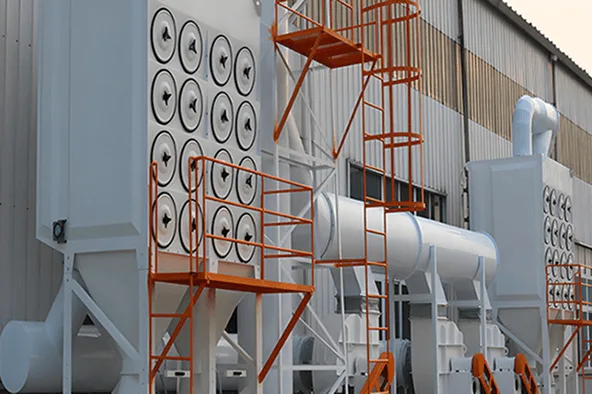
Pulse Cleaning, Compressed Air, and Hopper Inspection
The following table can be used during weekly or monthly maintenance, with the inspection frequency adjusted according to operating conditions.
| Component | What to Check | Why It Matters |
|---|---|---|
| Compressed-air header | Pressure and available air supply during cleaning | Insufficient pulse energy reduces dust release |
| Air dryer / moisture separator | Moisture, oil, and contamination | Wet air can worsen dust adhesion and blinding |
| Solenoid valves | Electrical operation and correct sequencing | Failed signals can leave cartridge rows uncleaned |
| Diaphragm valves | Correct opening, closing, and leakage condition | Damaged valves can reduce cleaning performance |
| Blow tubes / nozzles | Alignment, blockage, and mechanical condition | Poor pulse distribution causes uneven cleaning |
| Pulse controller | Duration, delay, and DP settings | Incorrect settings waste air or allow excessive loading |
| Hopper | Dust accumulation, bridging, and discharge flow | Poor discharge increases re-entrainment and loading |
| Dust bin / rotary valve | Filling level, sealing, and discharge operation | Overflow or leakage can disrupt collector performance |
These checks should be performed using the manufacturer’s approved inspection and maintenance procedures.
The system should not be opened or serviced while hazardous electrical, pneumatic, or mechanical energy remains uncontrolled.
Effective cleaning depends on the complete system, from the compressed-air supply to the final removal of released dust.
Compressed-Air Quality Has a Direct Effect on Filter Life
Compressed-air quality is often overlooked because the compressor is usually located outside the dust collector.
However, the pulse-cleaning system depends on that air supply.
Excessive moisture or oil can interfere with valves and make certain dusts more difficult to release from the media.
If moisture reaches a dry powder, the material may become sticky or form a more cohesive dust cake.
A cartridge that previously cleaned effectively can then develop increasing resistance even when the pulse sequence appears normal.
Maintenance personnel should therefore review compressed-air preparation, moisture separation, pressure regulation, air-line leakage, and the available air volume during cleaning.
Air pressure should be maintained according to the collector manufacturer’s specifications rather than using one fixed setting for every collector.
Increasing pulse frequency cannot reliably compensate for wet compressed air, failed valves, unsuitable media, or permanently blinded cartridges.
Hopper Maintenance: Cleaning Is Not Complete Until Dust Is Discharged
Pulse cleaning removes dust from the cartridge surface, but that material must still leave the collector.
Released dust normally falls into a hopper and then moves into a drawer, drum, rotary airlock, screw conveyor, or another discharge arrangement.
If the discharge system becomes blocked or the container is allowed to overfill, accumulated dust may rise toward the filter section.
This can cause material to become re-entrained during subsequent cleaning cycles and may increase cartridge loading.
An overfilled dust bin can also create sealing problems where negative pressure draws unwanted air through a poorly closed container.
The hopper is a transfer component, not a long-term storage area.
For heavy-loading applications, dust-discharge capacity and emptying frequency are therefore important maintenance considerations.
Where combustible or hazardous dust is involved, collection containers should be inspected and emptied according to the facility’s approved handling procedures.
When Should Filter Cartridges Be Replaced?
Cartridge replacement is a significant operating expense for many industrial dust collection systems.
Replacing filters unnecessarily increases consumable, labor, and disposal costs. Keeping damaged or overloaded cartridges in service can reduce capture airflow or compromise filtration integrity.
The most useful replacement decision combines pressure-drop trends, physical cartridge condition, cleaning recovery, and the operating limits established for the system.
A cartridge that appears covered with dust may still be operating correctly if the dust cake remains cleanable and differential pressure is stable.
Conversely, a cartridge that appears relatively clean may have embedded fine particulate that creates excessive resistance.
Physical damage provides another reason for replacement. Torn media, damaged end caps, deteriorated gaskets, or improper cartridge seating can allow particulate to bypass the filtration surface.
Cartridges should be replaced when their operating condition or filtration integrity no longer meets the system requirements, not simply because a fixed number of months has passed.
Where the equipment manufacturer, operating permit, or site safety procedure requires a defined replacement interval, that requirement should also be followed.
Cartridge Installation and Sealing Should Be Verified
Installing replacement cartridges correctly is just as important as selecting the correct media.
Cartridge dimensions, mounting style, end-cap configuration, gasket material, and mechanical retention must match the collector.
Poor sealing can allow dust-laden air to bypass the filter media and reach the clean-air chamber.
Before installation, sealing surfaces should be inspected for damage, dust accumulation, and corrosion.
Replacement cartridges should also be checked for shipping damage, especially where pleated media or end caps may have been deformed.
After installation, the collector should be returned to service according to the manufacturer’s instructions, and the initial pressure drop and emission condition should be recorded.
This establishes a reference for future maintenance comparisons.
Fan, Ductwork, and Access-Door Maintenance
Filter cartridges are only one part of a dust collection system.
The fan and ductwork determine how effectively contaminated air reaches the collector.
Over time, ductwork may develop material buildup, abrasive wear, damaged flexible connections, or poorly sealed joints.
Fan components may experience vibration, bearing wear, impeller buildup, or drive-related problems.
These conditions can reduce airflow even when the filter cartridges are operating normally.
Access-door seals and collector panels should also be inspected because leakage on the negative-pressure side can draw ambient air into the system, reducing useful airflow at the source.
A collector may have clean cartridges and a correctly operating pulse system while the complete extraction system still delivers inadequate airflow.
Maintenance should therefore include the condition of the fan, ductwork, connections, structural supports, and source-capture arrangements.
Published Cartridge Dust Collector Maintenance Lessons
Case 1: Long Filter Life in a Metal Fabrication Facility
A published metalworking application involved a sheet-metal manufacturer operating six cartridge filtration modules with six cartridges in each unit.
The system served grinding and powder-coating-related operations, where frequent filter replacement had previously contributed to maintenance costs.
The facility installed 36 surface-loading filter cartridges designed to retain particulate near the media surface and support effective pulse cleaning.
The published application reported that the cartridges remained in service for four years without replacement while maintaining satisfactory filtration performance and relatively low pressure drop.
This was a specific application result and should not be interpreted as a universal cartridge replacement interval.
Lesson: Cartridge life depends on media cleanability, dust characteristics, cleaning efficiency, and operating conditions. Long service life is most meaningful when supported by stable pressure drop and reliable filtration performance.
Case 2: Better Cartridge Access Reduced Maintenance Difficulty
A published abrasive-blasting application involved an aging dust collection system that required frequent maintenance and difficult filter replacement.
The existing vertical cartridge arrangement required maintenance personnel to enter the collector during cartridge changes, increasing service time and complexity.
The replacement system used an externally accessible downflow cartridge configuration intended to simplify maintenance.
After installation, the reported operating schedule was approximately 20 hours per day, four days per week, with differential pressure maintained around 1.9–2.4 inches of water column.
The case reported improved maintenance access, reduced production downtime, and more consistent operating performance.
Lesson: Filter accessibility is an important design and maintenance consideration. A dust collector should allow safe, practical inspection and replacement without unnecessary disassembly or difficult internal access.
Case 3: Monitoring Multiple Collectors Improved Maintenance Coordination
A published industrial surface-coating application involved a manufacturing facility operating 12 dust collectors, nine of which were considered critical to production.
The maintenance team had previously relied heavily on manual inspections and written operating records.
The facility introduced centralized monitoring to observe differential pressure, compressed-air conditions, airflow, and other relevant operating parameters.
This allowed maintenance personnel to identify abnormal conditions more efficiently and compare equipment performance across different collectors.
The monitoring approach also helped identify operational issues, including the need to confirm that pulse cleaning had been reactivated following maintenance.
The published application covered multiple industrial collectors and did not establish that every monitored unit used cartridge filters.
Lesson: Condition-based monitoring can support scheduled maintenance by providing a more complete operating history, especially where several collectors are installed across a large production facility.
Maintenance Records: Turn Routine Checks into Useful Data
A maintenance program becomes more effective when recorded observations can be compared over time.
A useful log should include the inspection date, collector identification, operating hours, connected production processes, filter differential pressure, compressed-air pressure, pulse-cleaning status, dust-discharge condition, and any abnormal emissions or mechanical observations.
Cartridge replacement dates, filter specifications, cleaning-system adjustments, and corrective actions should also be recorded.
This allows maintenance teams to connect changes in filtration performance with changes in equipment or production.
For example, a sudden pressure-drop increase after a new production process may indicate a different dust load rather than a filter defect.
Repeated loading on one cartridge row may suggest a pulse-valve or inlet-distribution problem.
An abnormal reading immediately after filter replacement may indicate an installation or sealing issue.
Maintenance records provide greater value when they connect operating conditions, measurements, and corrective actions rather than simply documenting that an inspection was completed.
Practical Cartridge Dust Collector Maintenance Checklist
The following checklist can be adapted for routine maintenance inspections.
- Filter condition and differential pressure: Confirm that ΔP is within the established operating range, compare trends with previous readings, and investigate unusual loading or visible media damage.
- Pulse cleaning and compressed air: Verify controller operation, pulse sequencing, valve condition, compressed-air pressure, air quality, and correct cleaning response.
- Hopper and dust discharge: Inspect dust accumulation, bin level, discharge equipment, container seals, and any evidence of bridging or re-entrainment.
- Airflow and system integrity: Check source capture, duct connections, access doors, seals, abnormal emissions, and any unexplained deterioration in system airflow.
- Fan and mechanical components: Review vibration, unusual noise, visible wear, structural condition, and maintenance requirements for the fan and associated equipment.
- Documentation and follow-up: Record measurements, cartridge changes, corrective actions, and unresolved issues requiring additional maintenance.
This checklist should be used alongside the manufacturer’s maintenance manual and the facility’s applicable safety procedures.
Maintenance Safety: Control Hazardous Energy Before Servicing
Cartridge dust collector maintenance can expose personnel to electrical energy, rotating machinery, stored compressed air, accumulated dust, and potentially combustible or hazardous materials.
Routine external observations may be performed while the collector is operating if the established procedure permits.
However, internal inspections, cartridge replacement, valve maintenance, and mechanical repairs require appropriate equipment shutdown and hazardous-energy control.
Electrical, pneumatic, and mechanical energy sources should be isolated according to the approved procedure before personnel access hazardous components.
For combustible dust applications, maintenance must also consider ignition-source control, safe dust handling, and the integrity of the system’s fire or explosion protection measures.
Filter replacement and internal collector servicing should never be treated as ordinary housekeeping activities when stored energy or hazardous dust is present.
How Preventive Maintenance Reduces Operating Costs
The cost of maintaining a cartridge dust collector includes more than replacement cartridges.
Compressed-air consumption, fan energy, maintenance labor, production downtime, dust disposal, and unexpected repairs all contribute to the total cost of operation.
Poor pulse-cleaning settings can waste compressed air and increase valve wear.
Excessive filter resistance can reduce airflow and may increase energy demand, depending on the fan-control arrangement.
Overfilled hoppers can increase dust re-entrainment and cartridge loading, while difficult filter access increases the labor and downtime associated with maintenance.
Preventive maintenance addresses these costs by keeping the filtration system operating within its intended conditions.
The objective is not to minimize inspection activity or delay cartridge replacement for as long as possible. It is to maintain reliable filtration with predictable service intervals and controlled operating costs.
Final Engineering View
Cartridge dust collector maintenance should be understood as a continuous equipment-management process rather than a periodic filter-changing task.
The complete filtration sequence is:
Dust Capture → Duct Transport → Cartridge Filtration → Pulse Cleaning → Hopper Discharge → Clean-Air Exhaust
Differential-pressure monitoring helps identify changes in filter resistance.
Pulse-cleaning inspections verify that accumulated dust can be released effectively.
Compressed-air maintenance supports cleaning performance, while hopper inspections ensure that released material leaves the collector rather than returning to the filtration section.
Filter inspection and replacement maintain filtration integrity, and fan and ductwork maintenance preserve the airflow required at the dust source.
A documented maintenance schedule connects these activities and provides the operating history needed to identify problems before they interrupt production.
The most useful maintenance question is therefore not:
“How often should we replace the filter cartridges?”
It is:
“What should we inspect, measure, and record to maintain reliable airflow, filtration efficiency, cleaning performance, and safe operation throughout the collector’s service life?”
Effective cartridge dust collector maintenance is not about replacing components as frequently as possible. It is about maintaining stable performance through the right inspections, reliable operating data, and timely corrective action.
Frequently Asked Questions
How often should a cartridge dust collector be inspected?
Inspection frequency depends on operating hours, dust loading, process conditions, manufacturer instructions, and applicable permit requirements. A practical program may include daily observations, weekly or bi-weekly checks, monthly servicing, semi-annual reviews, and annual structural inspections.
When should cartridge dust collector filters be replaced?
Cartridges should be replaced when differential-pressure behavior, physical condition, filtration integrity, or operating performance no longer meets the system requirements. Visible damage, failed seals, excessive unrecoverable resistance, or particulate bypass may require corrective action.
What differential pressure is normal for a cartridge dust collector?
There is no universal normal pressure-drop value. The acceptable range depends on the collector, cartridge media, airflow, dust loading, and manufacturer limits. The most useful reference is the collector’s established operating trend.
How do I check whether pulse cleaning is working correctly?
Verify that the pulse sequence operates as intended and that solenoid and diaphragm valves function correctly. Compressed-air pressure and quality, blow-tube condition, pulse timing, and differential-pressure recovery should also be reviewed.
Why is hopper maintenance important?
The hopper receives dust released during pulse cleaning. Excessive accumulation or blocked discharge can cause dust re-entrainment, increased loading, unstable cleaning performance, and additional safety concerns.
Can preventive maintenance extend filter cartridge life?
Proper maintenance can help prevent premature failure by maintaining effective cleaning, suitable compressed-air quality, reliable dust discharge, and appropriate operating conditions. Actual service life still depends on dust characteristics, filter media, airflow, and production duty.
What should be included in a cartridge dust collector maintenance log?
A maintenance log should record inspection dates, operating hours, filter differential pressure, compressed-air pressure, pulse-cleaning condition, hopper status, fan observations, cartridge replacement history, corrective actions, and any changes in production conditions.
Author

Jessica Ma – Senior Filtration Engineer, Omela Filtration
Jessica Ma is a senior filtration engineer at Omela Filtration, specializing in dust and liquid filtration. With over 15 years of experience, she focuses on optimizing baghouse performance, enhancing filtration efficiency, and developing high-performance solutions for industrial dust collectors and precision liquid filtration applications.