
Key Takeaways
- Aluminum melting furnace filtration is a system-level dust and fume control process, involving hood capture, ducting, spark protection, cooling, baghouse filtration, pulse cleaning, and emission monitoring.
- Furnace exhaust may contain aluminum oxide dust, smoke, hot particles, flux fume, salt fines, VOCs, HCl, HF, and other corrosive components, especially in secondary aluminum melting, fluxing, tapping, and dross handling operations.
- The right dust collector filter bags should be selected by temperature, dust fineness, gas chemistry, moisture, spark risk, air-to-cloth ratio, and emission target, not by furnace type alone.
- For fine aluminum oxide smoke, PTFE membrane filter bags can help improve surface filtration, reduce dust penetration, support dust cake release, and stabilize pressure drop.
- Filter bag cages should be checked together with the bags because cage diameter, straightness, surface finish, corrosion resistance, and venturi fit can directly affect bag life, leakage, and cleaning performance.
- A reliable solution usually requires full operating data, including furnace type, scrap/feed condition, flux use, inlet temperature, gas chemistry, airflow, pressure-drop trend, bag size, cage condition, and current failure photos.
Why Aluminum Melting Furnace Dust Collection Is Different
Aluminum melting furnaces do not produce only ordinary dust. During melting, charging, fluxing, tapping, dross handling, and scrap remelting, the exhaust stream may contain fine aluminum oxide dust, visible smoke, hot particles, flux fume, carbonaceous particles, and gases from combustion or contaminated scrap.
A fume extraction article for aluminum melting furnaces describes common pollutants as fine aluminum oxide dust, hydrocarbon vapors from lubricated scrap, acid gases such as HCl and HF from salt fluxes, carbon monoxide, NOx, VOCs, and fugitive emissions from dross and salt cake handling. It also emphasizes that pollution control normally requires a connected system, not a single component.
For Omela, the practical point is simple: the filter bag is the final dust-capture surface, but it can only perform well when the upstream collection and protection system is designed correctly.
What Comes Out of an Aluminum Melting Furnace?
The exact dust and fume composition depends on furnace type, scrap quality, fuel, fluxing method, temperature, and whether the process handles clean ingot, oily scrap, coated scrap, dross, or mixed recycled aluminum.
EPA’s secondary aluminum AP-42 section notes that scrap pretreatment can generate metallic and nonmetallic particulates, organic vapors, chlorides, fluorides, sulfur oxides, and oxidized aluminum fines; it also notes that hot dross processing can generate mechanically produced dust and fluxing fumes.
In smelting and refining, EPA describes reverberatory furnace emissions as an important part of particulate and gaseous emissions in secondary aluminum operations. Fluxing can generate salts such as sodium chloride, potassium chloride, cryolite, aluminum chloride, and magnesium chloride, while certain demagging processes can produce corrosive chlorine- or fluoride-related emissions.
For filter bag selection, this means the question is not only “Is it aluminum dust?” The better question is: Is the gas dry or humid? Is the dust coarse or smoke-like? Are fluxes used? Are there hot particles? Is the baghouse inlet temperature stable?
Main Operating Challenges in Aluminum Furnace Baghouses
| Challenge | Why It Matters | What to Review |
|---|---|---|
| Fine aluminum oxide dust | Fine particles may penetrate ordinary felt and increase outlet emissions | PTFE membrane, fine fiber media, surface filtration |
| Smoke-like fume | Smoke behaves differently from coarse dust and may require higher collection efficiency | Media surface, dust cake behavior, leak testing |
| Hot particles and sparks | Can burn pinholes or damage filter media | Spark arrestor, drop-out chamber, inlet protection |
| Flux fume and salts | May create sticky, hygroscopic, or corrosive deposits | Gas chemistry, dew point, media compatibility |
| Temperature fluctuation | Startup, charging, tapping, and process upset can stress filter media | Continuous and peak temperature |
| Moisture and corrosive gas | May cause blinding, cage corrosion, or media degradation | Condensation control, cage coating, PTFE/PPS/PTFE review |
| High dust load variation | Sudden loading can raise pressure drop and shorten bag life | Air-to-cloth ratio, pulse cleaning, hopper discharge |
A separate aluminum furnace dust collector design article summarizes typical exhaust characteristics as fine and light dust, high exhaust temperature around 200°C, large dust-concentration fluctuation, and humidity/corrosiveness from natural gas combustion. It also warns that selecting a dust collector that is too small raises filtration velocity and shortens filter bag life.
The Collection System Comes Before the Filter Bag
A filter bag cannot capture fume that never reaches the baghouse. Aluminum melting furnace emission control normally starts at the hood or capture point. If the hood is too far from the furnace mouth, the airflow is too weak, or the duct layout causes leakage, smoke may escape into the workshop before it reaches the collector.
A practical aluminum melting furnace fume control system usually follows this logic:
- Hood or canopy capture
Capture smoke and hot fume near the furnace mouth, charging area, tapping area, or dross handling point. - Ducting and airflow control
Move the fume to the dust collector while maintaining enough velocity to avoid dust settlement. - Spark arrestor or drop-out chamber
Remove glowing particles, dross fragments, or heavy hot particles before they reach the filter bags. - Cooling or dilution when needed
Bring the gas into a temperature range that the selected filter media can safely handle. - Baghouse dust collection
Capture aluminum oxide dust, carbon particles, salt fines, and fine smoke using suitable filter bags and pulse cleaning. - Scrubbing or adsorption when gas pollutants are present
Acid gases and VOCs may require dry sorbent injection, wet scrubbers, or activated carbon depending on the process.
The reference fume-extraction article describes a similar chain: hood or duct capture, spark arrestor/drop-out chamber, dust collection with high-temperature baghouse or ceramic filter, then dry scrubber, wet scrubber, activated carbon, and ID fan/ducting where needed.
Which Filter Bag Media Can Be Used?
There is no single best filter bag for all aluminum melting furnaces. Media selection depends on temperature, dust fineness, moisture, gas chemistry, spark risk, abrasion, and emission target.
| Filter Bag Media | Typical Direction in Aluminum Furnace Dust Collection | Main Advantage | Watch Point |
| Polyester with PTFE membrane | Moderate-temperature, relatively dry aluminum oxide dust | Cost-effective surface filtration | Not suitable for high heat or severe chemistry |
| Aramid / Nomex | Hotter dry furnace fume or casting-shop dust | Medium-high temperature resistance | Sensitive to acid gas and hydrolysis |
| P84 | Fine fume, low-emission targets, demanding surface capture | Good fine-particle capture | Higher cost; chemistry must be reviewed |
| PPS with PTFE membrane | Moist or acidic gas conditions after proper temperature review | Acid and hydrolysis resistance | Oxidation risk at high oxygen/temperature |
| Fiberglass with PTFE finish or membrane | High-temperature dry gas and mineral/oxide dust | High thermal stability | Needs careful handling and cage condition |
| FMS composite media | Heat, abrasion, and mixed gas conditions | Composite high-temperature performance | Must match gas chemistry and cleaning method |
| PTFE filter bags | Severe chemical exposure or high-value emission control | Excellent chemical resistance | Higher cost; system design must justify it |
Omela’s metal-industry filtration article states that aluminum melting furnace dust collection may use polyester needle felt or polyester with PTFE membrane under moderate-temperature conditions, while aramid may be considered for higher-temperature areas and anti-static/system-level protection should be evaluated where combustible dust risk exists.
Omela’s dust filter bag page also lists polyester, acrylic, PPS, aramid, P84, PTFE, fiberglass, and FMS media, with different temperature and chemical-resistance ranges. This is why aluminum furnace filter bags should be selected by operating conditions, not only by industry name.
Why PTFE Membrane Is Often Considered
Aluminum oxide fume can include very fine particles that behave more like smoke than coarse dust. These fine particles can pass into the depth of needle felt and make pulse cleaning less effective. Over time, this may lead to higher pressure drop, unstable emissions, or internal blinding.
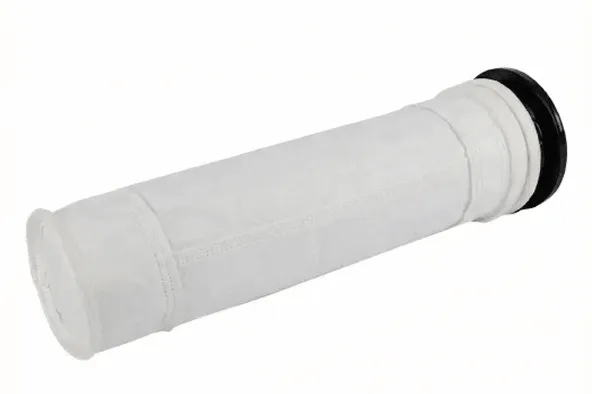
PTFE membrane changes the filtration mechanism by keeping more dust on the surface of the bag. This can help with fine particle capture, easier dust release, and lower penetration into the base felt, provided the baghouse design is suitable.
Omela’s non-ferrous smelting article explains that non-ferrous smelting can involve high temperature, acid gas, heavy metal fume, aerosol particles, moisture, and volatile compounds, and that PTFE or fiberglass with PTFE membrane may be practical when temperature, chemistry, and fine particle capture all matter.
For aluminum melting furnaces, PTFE membrane should be reviewed when the plant has visible smoke, outlet dust, fine oxide dust, fast pressure-drop increase, strict emission targets, or repeated blinding of standard felt bags.
Hot Particles, Sparks, and Dross Fragments
A filter bag can have the correct continuous temperature rating and still fail if glowing particles reach the bag surface. Hot particles often create pinholes, local burn marks, or sudden outlet dust after an otherwise normal operation period.
In aluminum melting, spark and hot-particle risk can come from dross, charging, tapping, skimming, flux reactions, and metal splash. The best solution is system-level protection before the baghouse, such as a spark arrestor, drop-out box, baffle design, controlled duct velocity, gas cooling, and temperature monitoring.
The reference fume-extraction article specifically includes a spark arrestor or drop-out chamber before the dust collection stage to protect downstream filters from glowing particles or dross fragments.
Omela’s engineering view is that filter bags should not be the only defense against sparks. The filter bag is the collection surface; the system should remove or cool dangerous particles before they reach the media.
Flux Fume, Moisture, and Corrosion Risk
Fluxes help aluminum processing, but they can complicate filtration. Salt fluxes and demagging-related chemistry may produce chloride or fluoride-containing emissions. Some compounds can be corrosive or hygroscopic, meaning they attract moisture and may cause sticky deposits or acid formation as gas cools.
EPA notes that aluminum chloride has high affinity for water and can form hydrochloric acid, while aluminum fluoride demagging may generate fluoride-containing emissions, including hydrogen fluoride and fluoride dusts. EPA also summarizes typical furnace effluent gases as including combustion products, chlorine, hydrogen chloride, metal chlorides, aluminum oxide, and various metal compounds depending on scrap quality.
This matters because a filter bag that performs well in dry aluminum oxide dust may fail early in a humid, chloride-rich, or fluoride-related gas stream. In these cases, filter media, cage coating, dew point control, and upstream scrubbing should be reviewed together.
Pressure Drop and Air-to-Cloth Ratio
High pressure drop is a common sign that the baghouse is overloaded, the media is blinded, the dust cake is not releasing, or the air-to-cloth ratio is too high.
In aluminum melting applications, pressure drop can rise quickly when fine oxide dust penetrates the media, flux particles create sticky deposits, moisture causes caking, or the collector has too little filtration area for the actual airflow and dust load.
The aluminum furnace dust collector design reference warns that if the dust collector capacity is too small, filtration velocity increases and filter bag life is greatly reduced; if capacity is too large, investment cost increases unnecessarily.
For Omela selection work, this means filter bag choice should be combined with airflow data. A higher-grade filter media may still fail if the collector is undersized or the pulse-cleaning system cannot keep up.
Field and Technical Lessons
| Source / Field Reference | What It Shows | Practical Lesson |
| EPA secondary aluminum standards | Secondary aluminum production facilities may emit HAP organics, inorganic HAPs such as HCl, HF, and chlorine, particulate HAP metals, particulate matter, and VOCs. | Aluminum furnace filtration is linked to compliance and process safety, not only housekeeping dust control. |
| EPA AP-42 secondary aluminum operations | Fluxing, dross processing, scrap pretreatment, reverberatory furnaces, and demagging can generate particulate, fumes, chlorides, fluorides, metal compounds, and corrosive gases. | Filter bag selection must consider scrap quality, flux chemistry, and upstream process conditions. |
| Aluminum melting furnace fume extraction reference | A complete system may include hood capture, spark arrestor/drop-out chamber, high-temperature baghouse, scrubber, activated carbon, and ID fan. | Filter bags work best when installed as part of a complete fume control chain. |
| Aluminum furnace baghouse design reference | Fine light dust, high temperature, fluctuating dust concentration, humidity, and corrosion affect baghouse sizing and filter bag life. | Collector capacity and filtration velocity can determine whether a filter bag survives. |
| Omela metal filtration guidance | Different metal processes need different media; aluminum melting furnace dust collection can use polyester with PTFE membrane under moderate conditions and aramid for hotter areas. | Omela selection should start from operating conditions, not a generic “aluminum plant” label. |
These lessons support one conclusion: aluminum furnace baghouse performance depends on the whole system, including fume capture, cooling, spark control, media selection, pulse cleaning, cages, and maintenance.
Common Problems and Practical Corrections
Visible smoke at the stack often points to fine fume penetration, bag leakage, poor sealing, or insufficient capture efficiency. In this case, the plant should check filter bag media, PTFE membrane options, snap band sealing, leak testing, and hood capture.
Fast pressure-drop rise often points to fine oxide blinding, sticky flux dust, moisture, high filtration velocity, or weak pulse cleaning. In this case, the plant should check air-to-cloth ratio, compressed air quality, pulse settings, dust cake behavior, and whether a surface filtration media is needed.
Burn holes or pinholes often point to hot particles, sparks, or dross fragments reaching the filter bag. The first correction should be upstream protection, not simply a higher-temperature bag.
Short bag life may come from wrong media, temperature peaks, chemical corrosion, abrasion, rough cages, or poor installation. The bag, cage, tubesheet, inlet design, and cleaning settings should be reviewed together.
Cage-line wear usually means the bag is rubbing on the cage during filtration and pulse cleaning. Bent, corroded, oversized, undersized, or rough cages should be replaced or upgraded before installing new bags.
How Omela Products Support Aluminum Furnace Dust Collection
Omela can support aluminum melting furnace dust collection through matched filter bags, filter media, filter bag cages, and diagnostic accessories.
For moderate-temperature dry aluminum oxide dust, polyester with PTFE membrane may help improve surface filtration and dust release. For hotter or more demanding gas, aramid, P84, fiberglass, FMS, PTFE, or composite media may be reviewed. For chemically aggressive gas, PTFE or fiberglass with PTFE membrane may be considered depending on temperature and gas composition.
For cages, Omela can review carbon steel, galvanized steel, stainless steel, silicone-coated, or other cage options based on corrosion, temperature, moisture, and cleaning intensity. Cage diameter, length, ring spacing, wire smoothness, venturi fit, and coating quality should match the filter bag and baghouse design.
For commissioning and troubleshooting, fluorescent tracer powder can help confirm whether outlet dust is caused by broken bags, collar leaks, tubesheet bypass, or structural leakage after installation.
To Request a Quote
For aluminum melting furnace filter bags, please send:
- Furnace type: rotary, reverberatory, tilting, induction, holding furnace, dross furnace, or other
- Process section: melting, charging, fluxing, tapping, dross handling, casting, or secondary fume extraction
- Scrap or feed condition: clean ingot, oily scrap, coated scrap, mixed recycled scrap, dross, or salt cake
- Dust and fume type: aluminum oxide dust, smoke, flux fume, dross fines, carbon dust, salt fines, or mixed dust
- Continuous operating temperature and peak temperature at baghouse inlet
- Gas chemistry: moisture, HCl, HF, chlorine, fluoride, chloride, VOCs, oil vapor, NOx, SOx, or corrosive components
- Spark or hot-particle risk
- Air volume, air-to-cloth ratio, and pressure-drop trend, if available
- Current filter bag material, diameter, length, top style, and bottom design
- Cage material, diameter, length, coating, venturi type, and cage photos
- Main problem: visible smoke, high pressure drop, short bag life, burn holes, blinding, corrosion, dust leakage, or emission failure
- Required emission target, quantity, and delivery destination
- Photos of used bags, dust cake, cages, tubesheet, hopper dust, and failure points
With this information, Omela can help compare polyester with PTFE membrane, aramid, PPS/PTFE, P84, PTFE, fiberglass, FMS, composite filter media, and matched cage options.
Omela Engineering View
Aluminum melting furnace filter bag selection should start from the real dust and fume source.
A clean aluminum holding furnace, a scrap remelting furnace, a salt-flux rotary furnace, a dross processing unit, and a secondary aluminum recycling line may all need different filtration strategies. The filter bag must match not only the furnace temperature, but also the dust fineness, flux chemistry, moisture, spark risk, gas cooling method, air-to-cloth ratio, and emission target.
The best solution is not always the most expensive media. It is the combination that keeps smoke under control, captures fine aluminum oxide dust, resists flux-related chemistry, avoids hot-particle damage, maintains stable pressure drop, and supports predictable bag life.
For Omela Filtration, a reliable aluminum furnace baghouse solution means matching the filter bag, cage, inlet protection, cleaning method, and commissioning checks so the system controls emissions instead of repeating the same failure cycle.
FAQ
What filter bag material is suitable for aluminum melting furnaces?
There is no single material for all aluminum melting furnaces. Polyester with PTFE membrane may be suitable for moderate-temperature dry aluminum oxide dust. Aramid, P84, fiberglass, FMS, PTFE, or composite media may be needed for higher temperature, fine smoke, flux fume, moisture, corrosion, or stricter emission targets.
What dust is produced by aluminum melting furnaces?
Aluminum melting furnaces may produce aluminum oxide dust, smoke, hot particles, dross fines, flux fume, salt particles, carbonaceous particles, and combustion-related byproducts. Scrap quality, fluxing method, furnace type, and operating temperature all affect the dust stream.
Why do aluminum furnace filter bags fail early?
Common causes include hot particles, spark damage, high temperature peaks, fine dust blinding, sticky flux deposits, moisture condensation, corrosive gases, high air-to-cloth ratio, weak pulse cleaning, damaged cages, or wrong filter media.
Is PTFE membrane useful for aluminum oxide dust?
Yes. PTFE membrane can be useful when fine aluminum oxide dust behaves like smoke and penetrates ordinary felt. The membrane helps keep more dust on the surface, improving dust release and reducing internal media blinding when the baghouse design is suitable.
How can hot particles be controlled before the baghouse?
Hot particles should be controlled with upstream protection such as spark arrestors, drop-out chambers, inlet baffles, proper duct design, cooling, and temperature monitoring. Filter bags should not be the only protection against sparks or glowing dross particles.
How does flux fume affect filter bag selection?
Flux fume may contain chloride, fluoride, salt particles, or corrosive components. These can increase corrosion, blinding, sticky deposits, or chemical attack. Media, cage coating, dew point control, and upstream gas treatment should be reviewed together.
What information is needed to quote aluminum melting furnace filter bags?
Provide furnace type, process section, scrap condition, dust composition, continuous and peak temperature, gas chemistry, spark risk, air volume, current bag size, cage condition, pressure-drop trend, failure photos, emission target, quantity, and delivery destination.
Author

Jessica Ma – Senior Filtration Engineer, Omela Filtration
Jessica Ma is a senior filtration engineer at Omela Filtration, specializing in dust and liquid filtration. With over 15 years of experience, she focuses on optimizing baghouse performance, enhancing filtration efficiency, and developing high-performance solutions for industrial dust collectors and precision liquid filtration applications.