
Key Takeaways
- One laser cutting dust collector can sometimes serve different metals, but it must be designed for the most demanding regular material, not only the easiest cutting job.
- Carbon steel, stainless steel, aluminum, and galvanized sheet generate different smoke volume, fine fume, oxide particles, sparks, sticky residues, and safety concerns.
- Cartridge dust collectors are commonly used for laser cutting fume, but filter area, pulse cleaning, spark control, and cartridge media must match the dust stream.
- Filter cartridges should not be selected only by size or efficiency. Metal type, particle behavior, moisture, oil, coating residue, and pressure-drop trend all affect service life.
- The best design balances source capture, duct layout, airflow, filter cartridge area, spark protection, pressure drop, dust discharge, and maintenance cost.
Can One Dust Collector Handle Different Metals?
Many metal fabrication workshops cut more than one material on the same laser machine. A typical shop may cut carbon steel in the morning, stainless steel in the afternoon, and aluminum or galvanized sheet when a special order arrives.
This creates a practical question:
Can one laser cutting dust collector handle all these metals?
The answer is: sometimes yes, but not automatically.
A dust collector does not only need enough airflow. It must also handle the type of smoke, particle size, dust loading, spark risk, coating residue, filter cartridge behavior, and maintenance requirements created by each material.
If the collector is selected only for clean carbon steel, it may struggle when the same machine cuts aluminum, oily sheet, galvanized material, or stainless steel for long shifts. If the system is designed for the most demanding regular condition, one collector can often support mixed-metal cutting more reliably.
Start with the Dust Stream, Not the Metal Name
Metal names are useful, but the dust collector does not “see” a material label. It receives a dust stream.
That dust stream may contain fine metal fume, oxide particles, smoke, sparks, hot slag, oil mist, coating residue, zinc-containing fumes, or sticky contamination.
The same laser cutting table may need different filtration behavior depending on what enters the ductwork.
A 3 mm carbon steel job and a thick aluminum job may both use the same laser machine, but the fume volume, spark pattern, and filter loading can be very different. A stainless steel job may create fine fume that needs careful capture and filtration. Galvanized sheet may add coating-related fumes and residues.
For this reason, mixed-metal cutting should be reviewed as a system problem, not only a collector model problem.
Carbon Steel: Usually the Baseline, But Still Dusty
Carbon steel is often the baseline material for laser cutting dust collector selection. It commonly produces visible smoke, iron oxide dust, fine particles, and sparks. In many workshops, carbon steel is the highest-volume daily material, so the collector must handle its normal production load.
For carbon steel, the main concerns are usually:
- Smoke capture at the cutting table
- Fine oxide dust loading
- Sparks and hot particles
- Cartridge clogging over long shifts
- Pressure-drop rise as dust builds up
- Dust discharge from the hopper or drawer
Carbon steel may look like a standard application, but high production hours can still overload filter cartridges.
If the dust collector has enough airflow at startup but pressure drop rises quickly after several days, the issue may be filter area, pulse cleaning, dust loading, or airflow per cartridge. The correction is not always a larger fan. Often, the system needs better filtration area, better pulse cleaning, or improved dust discharge.
Stainless Steel: Fine Fume and Air Quality Concerns
Stainless steel cutting can create fine metal fume and requires more careful review than ordinary carbon steel. Stainless steel contains alloying elements such as chromium and nickel, and the fume behavior may be different from mild steel.
For dust collector design, stainless steel cutting usually requires attention to:
- Fine particle capture
- Stable source extraction
- Filter cartridge efficiency
- Pressure-drop monitoring
- Clean-side sealing
- Worker air quality
- Exhaust or recirculation policy
Stainless steel cutting should not be treated as only “another steel job.” Fine fume capture and system sealing are especially important.
If the collector leaks dust, if cartridge seals are poor, or if airflow is weak at the table, fine fume may escape into the workshop. For shops cutting stainless steel regularly, pressure drop, filter cartridge condition, and local safety requirements should be checked more closely.
Aluminum: Sparks, Fine Dust, and Safety Review
Aluminum cutting often raises different concerns. It can generate fine aluminum particles, bright sparks, hot fragments, and light dust that may travel easily through the extraction path. In some applications, aluminum dust also requires a combustible dust safety review.
For aluminum laser cutting, the system should pay attention to:
- Spark and hot-particle control
- Dust accumulation inside ducts and collectors
- Filter cartridge burn marks
- Anti-static or conductive design where required
- Safe dust discharge and housekeeping
- Compatibility with mixed-metal dust collection
Aluminum cutting should be reviewed for spark control before filter cartridge selection.
A filter cartridge should not be the first defense against hot particles. If sparks enter the collector too directly, they can create burn marks, pinholes, or cartridge damage. Spark traps, inlet baffles, drop-out space, pre-separation, and duct layout may be needed before the filtration stage.
When a workshop cuts aluminum only occasionally, operators may assume the existing collector is enough. But if aluminum cutting becomes frequent or continuous, the dust collection design should be reviewed again.
Galvanized Sheet: Coating Fumes and Sticky Residues
Galvanized sheet is different because the zinc coating becomes part of the dust and fume stream. Laser cutting galvanized material can create zinc-containing fumes and coating-related residues, and the smoke behavior may be more irritating or difficult to manage than plain carbon steel.
For galvanized sheet, the main dust collector concerns are:
- Strong source capture
- Fume control near the cutting zone
- Filter loading from coating residue
- Sticky deposits on cartridge media
- Pressure-drop rise
- Proper ventilation and discharge strategy
Galvanized sheet may create coating-related fumes and residues that affect both air quality and cartridge life.
If filters become dark, glazed, or sticky after cutting galvanized or coated material, the problem may not be simple dust loading. Coating residue can change dust cake behavior and make pulse cleaning less effective.
Metal Comparison for Dust Collector Selection
| Metal Type | Main Dust/Fume Behavior | Key Collector Concern | Practical Direction |
|---|---|---|---|
| Carbon steel | Visible smoke, iron oxide dust, sparks | Dust loading and pressure drop | Size for daily production load |
| Stainless steel | Fine metal fume, alloy-related particles | Fine fume capture and sealing | Review capture, filtration, and exhaust policy |
| Aluminum | Fine light dust, sparks, hot particles | Spark control and dust safety | Add upstream spark protection and safety review |
| Galvanized sheet | Coating fumes, zinc-related particles, residue | Fume control and sticky loading | Improve source capture and monitor cartridge condition |
This table should not be used as a fixed rule. Plate thickness, cutting speed, laser power, assist gas, surface oil, coating, duty cycle, and ventilation layout can all change the final dust collector requirement.
What Changes When One Collector Handles Multiple Metals?
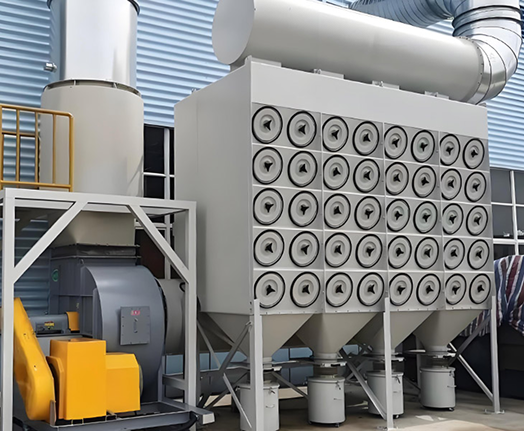
When one dust collector serves multiple metals, the system should be designed for the worst regular condition, not the easiest material.
For example, if a shop mainly cuts carbon steel but also cuts aluminum every week, spark control should be included. If it regularly cuts stainless steel, fine fume capture and filter sealing become more important. If galvanized sheet or coated material is common, sticky residue and cartridge cleaning performance should be reviewed.
Mixed-metal cutting increases the need for conservative system design and better maintenance tracking.
One collector may work well, but only if the following points are checked:
- Active cutting table capture
- Duct velocity and dust settlement risk
- Spark-control path
- Filter cartridge media
- Total filter area
- Pulse-cleaning performance
- Differential pressure trend
- Dust bin or hopper cleaning
- Material-specific maintenance notes
Without these checks, the collector may work for one material and fail on another.
Filter Cartridges: Same Housing, Different Performance
Many laser cutting dust collectors use pleated filter cartridges because they provide large filtration area in a compact structure. But cartridge performance depends heavily on dust behavior.
Fine fume can penetrate deeply into media. Sticky residue can block pleats. Sparks can damage the surface. Heavy dust loading can increase pressure drop quickly.
A cartridge that works well for dry carbon steel dust may not perform the same with oily sheet, galvanized coating residue, stainless fine fume, or aluminum sparks.
Filter media may need to consider:
- Fine-particle capture
- Dust release during pulse cleaning
- Flame-retardant properties where required
- Anti-static properties where required
- Moisture or oil resistance
- Mechanical strength
- Seal design and gasket compression
For mixed-metal laser cutting, the safest approach is to evaluate the cartridge based on the most difficult recurring material.
Airflow and Pressure Drop Still Matter
Airflow must capture smoke at the source before it spreads. But airflow alone does not solve every problem. If airflow is too low, smoke escapes. If airflow is too high, it may load cartridges faster and increase energy cost.
Pressure drop shows how much resistance the filter cartridges are creating. When filters load with dust, pressure drop rises. Pulse cleaning should reduce part of this resistance and keep suction stable.
A stable pressure-drop trend is one of the clearest signs that the collector, filter cartridges, pulse cleaning, and dust load are matched correctly.
When switching between materials, pressure-drop behavior may change. Aluminum, galvanized sheet, coated material, or stainless steel may load filters differently from carbon steel. Operators should record which material was being cut when pressure drop changed.
Spark Control Should Be Material-Specific
Spark control is important in all laser cutting, but it becomes more critical with aluminum, mixed metals, thick plates, oily sheets, and high-power cutting.
Possible spark-control measures include:
- Downdraft table drop-out space
- Inlet baffles
- Spark traps
- Pre-separation
- Short and safe duct routing
- Temperature monitoring where needed
- Regular dust discharge
- Fire and combustible dust safety review
The filter cartridge should not be the first spark arrestor.
If burn marks appear on cartridges, replacing filters alone will not solve the root problem. The spark path should be reviewed before changing filter media.
Omela Filtration Application Lessons
Case 1: Carbon Steel System Later Used for Aluminum
A workshop originally selected its dust collector for carbon steel cutting. Later, aluminum cutting became more frequent. The system still captured smoke, but several cartridges showed localized burn marks.
The review focused on spark path, inlet protection, and dust discharge instead of only changing cartridge media.
Lesson: When the material mix changes, spark-control requirements may change too.
Case 2: Stainless Steel Cutting with Workshop Haze
A fabrication shop noticed haze during stainless steel cutting, even though the collector worked well for carbon steel. The issue was linked to fine fume behavior, table capture, and filter loading.
The review focused on source capture, cartridge sealing, pressure-drop trend, and airflow balance.
Lesson: Stainless steel may require closer attention to fine fume capture and clean-side sealing.
Case 3: Galvanized Sheet Causing Sticky Filter Loading
A shop cutting galvanized and coated sheet found that cartridges became dark and difficult to clean. Pulse cleaning did not recover airflow as expected.
The review focused on coating residue, dust cake behavior, media cleanability, and upstream loading.
Lesson: Coated metals can change dust from dry and cleanable to sticky and difficult to pulse-clean.
Case 4: One Collector for Mixed-Metal Production
A workshop used one collector for carbon steel, stainless steel, and occasional aluminum. The system became more stable after the team tracked pressure drop by material type and improved maintenance timing.
Lesson: Mixed-metal cutting can work, but it needs material-specific operating records and maintenance decisions.
Practical Selection Checklist
Before using one laser cutting dust collector for different metals, confirm:
- Which metal is cut most often
- Which metal creates the heaviest smoke
- Which metal creates the most sparks
- Whether stainless steel or galvanized sheet is cut regularly
- Whether aluminum dust requires additional safety review
- Whether material surfaces contain oil, coating, film, or paint
- Cutting table size and active extraction area
- Laser power, plate thickness, and cutting speed
- Filter cartridge size, media, quantity, and service life
- Pressure-drop trend by material type
- Spark history, burn marks, and dust discharge condition
This information helps determine whether one collector is enough or whether the system needs upgraded cartridges, spark control, pre-separation, duct changes, or separate extraction strategy.
Final Engineering View
One laser cutting dust collector can sometimes handle carbon steel, stainless steel, aluminum, and galvanized sheet. But it should not be selected as if all metals create the same dust.
Carbon steel mainly challenges dust loading and pressure drop. Stainless steel raises fine fume and air quality concerns. Aluminum requires closer spark and dust safety review. Galvanized sheet can create coating-related fumes and sticky filter loading.
The best mixed-metal laser cutting dust collection system is designed for the most demanding regular material, not the easiest job.
For metal fabrication workshops, a reliable system should capture smoke at the source, protect filter cartridges from sparks, control pressure drop, handle material-specific dust behavior, and keep maintenance predictable.
FAQ
Can one laser cutting dust collector handle carbon steel, stainless steel, aluminum, and galvanized sheet?
Yes, in many workshops one system can handle multiple metals, but it must be designed for the most demanding regular material and include proper airflow, filter area, spark control, pulse cleaning, and maintenance planning.
Which metal creates the biggest dust collector challenge?
It depends on the process. Carbon steel may create heavy daily dust loading, stainless steel may create fine fume, aluminum may create spark and combustible-dust concerns, and galvanized sheet may create coating-related fumes and sticky residue.
Is aluminum dust more difficult for laser cutting dust collectors?
Aluminum can be more challenging because it may create fine light particles, sparks, and hot fragments. Some aluminum dust streams require combustible dust and fire-safety review.
Why does galvanized sheet affect filter cartridge life?
Galvanized sheet has a zinc coating that becomes part of the fume and dust stream during cutting. Coating residue may make dust more difficult to clean from cartridge media and may increase pressure drop.
Should stainless steel cutting use the same filter cartridges as carbon steel?
Not always. Stainless steel cutting may create finer fume and may require closer review of filter efficiency, sealing, exhaust policy, and maintenance practices.
What should be checked before using one collector for mixed metals?
Check material mix, cutting hours, smoke volume, spark risk, surface oil or coating, table extraction, duct layout, filter cartridge media, pressure-drop trend, and used cartridge condition.
Author

Jessica Ma – Senior Filtration Engineer, Omela Filtration
Jessica Ma is a senior filtration engineer at Omela Filtration, specializing in dust and liquid filtration. With over 15 years of experience, she focuses on optimizing baghouse performance, enhancing filtration efficiency, and developing high-performance solutions for industrial dust collectors and precision liquid filtration applications.