
Key Takeaways
- A laser cutting dust collector RFQ should include more than laser power. Suppliers need cutting table data, material type, airflow conditions, spark risk, duct layout, filter cartridge information, and pressure-drop expectations.
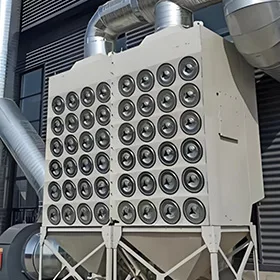
- Cartridge dust collectors are commonly used for laser cutting fume, but the collector must be sized by real dust loading, active extraction area, fan static pressure, pulse cleaning, and maintenance target.
- Filter cartridges should be selected by fine fume behavior, media area, dust release, sealing, moisture or oil exposure, spark risk, and expected cartridge life.
- The most useful RFQ data includes cutting table size, active zone design, material type, plate thickness, laser power, cutting duty, smoke condition, duct length, airflow requirement, pressure drop trend, spark history, and photos or videos.
- A complete RFQ helps avoid undersized systems, weak suction, fast cartridge clogging, unstable pressure drop, excessive maintenance cost, and poor workshop air quality.
Why RFQ Data Matters Before Choosing a System
Many laser cutting dust collector quotations start with a very simple message: “We need a dust collector for a laser cutting machine. Please quote.”
That is not enough for reliable selection.
Laser cutting dust collection is not only about choosing a collector cabinet. The system must capture smoke at the cutting table, move air through ductwork, protect filters from sparks, provide enough cartridge area, maintain airflow as filters load, and keep pressure drop within a workable range.
A good RFQ should describe the real cutting condition, not only the machine name.
Two workshops may both use fiber laser cutting machines, but their dust collection needs can be completely different. A small enclosed machine cutting thin stainless steel for short batches is different from a large flatbed cutting carbon steel and aluminum all day. The dust collector must be selected from the actual process.
Start with the Cutting Table
The cutting table is the first place to review because smoke capture begins at the source. If the table cannot guide smoke toward the extraction path, even a larger collector may not solve the problem.
Important table data includes:
- Table length and width
- Enclosed or open cutting structure
- Downdraft table or side extraction design
- Number of extraction zones
- Size of the active extraction zone
- Number of dampers open at one time
- Table leakage around doors, slats, and side gaps
- Duct connection position
- Existing smoke escape points
Laser cutting dust collector sizing should start from the active extraction area, not only from total table size.
A well-zoned table can concentrate airflow near the cutting head. A poorly zoned table may require much more airflow and still allow smoke to escape from inactive areas. This is why photos, videos, or drawings of the cutting table are very useful in an RFQ.
Airflow: CFM and m³/h Are Only the Beginning
Airflow is usually expressed as CFM or m³/h. It tells how much air the system needs to move. But airflow is only useful if the fan can deliver it under real resistance.
The RFQ should clearly state whether the airflow value is:
- Required by the laser machine supplier
- Measured from an existing system
- Estimated from previous equipment
- Expected by the customer
- Unknown and needs supplier calculation
A high airflow number is not enough if static pressure is ignored.
The fan must overcome the resistance from the cutting table, dampers, ductwork, elbows, spark-control devices, filter cartridges, dust cake, outlet duct, and final exhaust path. A collector may look large on paper but still provide weak capture if it cannot maintain airflow under installed conditions.
Material Type and Cutting Duty
Material type has a strong influence on smoke volume, fine fume behavior, spark risk, and filter loading. The RFQ should not simply say “metal cutting.” It should list the actual materials and how often they are cut.
Useful material data includes:
- Carbon steel, stainless steel, aluminum, galvanized sheet, coated metal, or mixed metals
- Plate thickness range
- Main material by percentage of work
- Maximum thickness cut regularly
- Cutting speed or production intensity
- Laser power
- Assist gas if known
- Daily working hours
- Number of shifts
- Occasional vs continuous cutting
The system should be designed for the most demanding regular material, not only the easiest cutting job.
Carbon steel may create heavy oxide dust and sparks. Stainless steel may produce fine fume and requires careful capture. Aluminum may create sparks and light dust that need safety review. Galvanized or coated sheet may introduce coating residue that affects cartridge cleaning.
Filter Cartridge Information
Many laser cutting dust collectors use pleated filter cartridges because they provide large filtration area in a compact structure. However, cartridge performance depends on fine fume behavior, media type, dust release, airflow per cartridge, and pulse cleaning.
If the RFQ is for a replacement or upgrade, provide:
- Cartridge size
- Cartridge quantity
- Filter media type if known
- Current service life
- Clean-filter pressure drop
- Final replacement pressure drop
- Whether cartridges show burn marks
- Whether cartridges look oily, damp, glazed, or heavily packed
- Whether dust leaks after replacement
- Photos of used cartridges
Used filter cartridges often reveal the real operating problem.
Dark glazed media may suggest oil or coating residue. Burn marks may indicate spark carryover. Heavy dust between pleats may suggest high loading or weak cleaning. Uneven dust patterns may point to poor inlet airflow distribution.
Spark Control and Hot Particle Risk
Laser cutting can produce sparks, hot particles, and small molten fragments. These should be controlled before they reach the filter cartridges.
An RFQ should mention:
- Whether sparks are visible in the duct or collector inlet
- Whether cartridges have burn marks
- Whether aluminum, coated sheet, or thick plate is cut
- Whether the existing system has a spark trap, baffle, or drop-out section
- Whether dust is dry, oily, mixed, or potentially combustible
- Whether the collector is installed indoors or outdoors
- Local safety requirements if known
The filter cartridge should not be the first defense against sparks.
Spark-control devices may add resistance, so they must be included in sizing. If this resistance is ignored, the fan may not deliver enough airflow after installation.
Pressure Drop and Pulse Cleaning Data
Pressure drop is one of the most important operating signals in a dust collector. It shows resistance across the filter cartridges.
The RFQ should provide:
- Current operating pressure drop
- Clean-filter pressure drop
- Pressure drop after several days or weeks
- Pulse-cleaning pressure
- Pulse interval or demand-cleaning setting
- Compressed-air quality
- Whether compressed air contains water or oil
- Whether pressure drop falls after pulse cleaning
- Replacement pressure limit
Pressure drop data helps separate airflow problems from filter loading and cleaning problems.
If pressure drop rises quickly, the collector may have too little filter area, unsuitable media, high dust loading, moisture, oil mist, or weak pulse cleaning. If pressure drop does not fall after pulsing, the issue may be embedded dust, sticky residue, wet compressed air, or damaged pulse valves.
Ductwork and Installation Conditions
Ductwork affects static pressure, airflow balance, dust settlement, and spark movement. A collector cannot be selected accurately without understanding the duct route.
Important duct data includes:
- Duct diameter
- Duct length
- Number of elbows
- Vertical and horizontal sections
- Connection from cutting table to collector
- Existing fan location
- Indoor or outdoor installation
- Exhaust to indoor return or outdoor discharge
- Available floor space
- Available power supply
- Compressed-air connection
- Distance from collector to cutting table
A short, direct duct path is very different from a long duct route with multiple elbows and transitions.
If duct resistance is underestimated, the selected fan may not maintain capture airflow at the table. If duct velocity is too low, dust may settle inside the duct and create maintenance or safety problems.
New System RFQ Checklist
For a new laser cutting dust collector, send the following information:
| RFQ Item | Why It Matters |
|---|---|
| Laser power and machine model | Helps understand cutting capacity and process intensity |
| Cutting table size | Defines the physical capture area |
| Active extraction zone size | Determines practical airflow demand |
| Material type and thickness | Affects fume, sparks, and dust loading |
| Daily working hours | Affects cartridge life and dust loading |
| Required airflow if known | Gives an initial sizing reference |
| Duct layout | Affects static pressure and fan selection |
| Spark history or material risk | Determines protection before filters |
| Indoor or outdoor installation | Affects layout, discharge, and access |
| Emission or air-quality target | Helps define filtration expectations |
This checklist helps suppliers move from a rough quotation to a more reliable system proposal.
Existing System Troubleshooting Checklist
If the RFQ is for replacing or improving an existing collector, include:
- Current collector model or photos
- Fan power and airflow if known
- Filter cartridge size and quantity
- Current cartridge media
- Cartridge service life
- Pressure-drop trend
- Smoke escape location
- Pulse-cleaning condition
- Compressed-air pressure and quality
- Burn marks, sticky dust, or damp filters
- Duct layout and dust buildup
- Recent process changes
For troubleshooting, symptoms are as important as specifications.
A supplier needs to know whether the problem is weak suction, clogged filters, high pressure drop, spark damage, poor pulse cleaning, dust leakage, or short cartridge life.
Omela Filtration Application Lessons
Case 1: Large Table, Incomplete Zone Data
A customer requested a collector for a large fiber laser cutting table but only provided laser power. After reviewing table photos, the main issue was the active extraction zone and damper arrangement.
Lesson: Laser power alone cannot define airflow. Table zoning must be reviewed.
Case 2: Fast Cartridge Clogging After Installation
A workshop reported that new cartridges clogged quickly. The RFQ did not originally include material surface condition. Later review showed that coated and slightly oily sheets were part of normal production.
Lesson: Material surface condition affects dust release and cartridge life.
Case 3: Smoke Escape Despite High Fan Power
A system had a strong fan, but smoke still escaped from one side of the cutting table. The review focused on duct leakage, table gaps, and poor airflow distribution.
Lesson: High fan power does not guarantee good source capture.
Case 4: Burn Marks on Filter Cartridges
A cutting line showed burn marks on cartridge media after aluminum and thick carbon steel cutting. The original system had limited spark-control protection before the filters.
Lesson: Spark-control design should be included before cartridge damage appears.
Common RFQ Mistakes
Avoid these mistakes when requesting a quotation:
- Sending only the laser power
- Ignoring cutting table size and active zones
- Not listing all materials
- Forgetting plate thickness and working hours
- Giving airflow without static pressure conditions
- Leaving out duct length and elbows
- Not mentioning sparks or hot particles
- Not sharing pressure-drop data
- Not sending photos of existing filters
- Choosing only by lowest price
Incomplete RFQ data often leads to a quotation that looks cheaper but does not match the real application.
A precise RFQ may take more time at the beginning, but it can reduce sizing mistakes, installation changes, and maintenance problems later.
Final Engineering View
A laser cutting dust collector RFQ is not only a purchasing document. It is the technical basis for system sizing.
The more clearly the cutting condition is described, the more accurately the collector can be selected. Good RFQ data helps define capture airflow, fan static pressure, filter cartridge area, pulse-cleaning design, spark-control method, duct layout, pressure-drop target, and maintenance strategy.
The best quotation is not always the fastest or cheapest one. It is the one based on enough real process data to keep smoke capture stable, filters protected, pressure drop controlled, and maintenance predictable.
Before choosing a laser cutting dust collector, send the table data, material information, airflow requirement, duct layout, spark condition, filter cartridge details, pressure-drop trend, and photos or videos of the process. That information gives the supplier a much better chance to recommend a system that works in real production.
FAQ
What information is needed to quote a laser cutting dust collector?
Provide laser power, cutting table size, active extraction zone, material type, plate thickness, cutting speed, working hours, airflow requirement, duct layout, spark risk, filter cartridge details, pressure-drop trend, and photos or videos.
Is laser power enough to size a laser cutting dust collector?
No. Laser power is useful, but it is not enough. Table size, active extraction area, material type, cutting thickness, duty cycle, duct resistance, filter area, spark control, and pressure drop also affect sizing.
Why is cutting table size important in an RFQ?
Cutting table size and active extraction zone determine how much air must be captured at the source. A well-zoned table may need less airflow than a poorly zoned full-table extraction system.
Why should material type be included in the RFQ?
Different metals produce different fume, dust loading, sparks, oxide particles, and coating residues. Carbon steel, stainless steel, aluminum, galvanized sheet, and coated materials may require different design considerations.
Why is pressure drop important before selecting a collector?
Pressure drop shows filter resistance and system health. It helps determine whether airflow, filter area, media, dust loading, and pulse cleaning are matched correctly.
What photos should be sent for a laser cutting dust collector RFQ?
Send photos or videos of the cutting table, active zones, ductwork, collector, fan, filter cartridges, dust bin, smoke escape points, used filters, and any burn marks or dust buildup.
Author

Jessica Ma – Senior Filtration Engineer, Omela Filtration
Jessica Ma is a senior filtration engineer at Omela Filtration, specializing in dust and liquid filtration. With over 15 years of experience, she focuses on optimizing baghouse performance, enhancing filtration efficiency, and developing high-performance solutions for industrial dust collectors and precision liquid filtration applications.