
Of all the industrial applications I work with, hazardous and solid waste incineration is the one where I see the most filter bag failures caused by a single root problem: the specification was done against the temperature, not against the chemistry.
Temperature matters. Waste incineration baghouses typically see continuous operating temperatures in the 160–240°C range after acid gas treatment, with surge potential beyond 260°C during process upsets. That already rules out most conventional filter materials. But the temperature is almost the easy part. What makes waste incineration genuinely different from every other high-temperature industrial dust collection application is the simultaneous presence of multiple corrosive species: hydrochloric acid (HCl), hydrogen fluoride (HF), sulfur dioxide and sulfur trioxide (SO₂/SO₃), heavy metals including mercury, cadmium, and lead, and in municipal solid waste incineration specifically, the dioxin and furan compounds (PCDD/F) that are subject to the strictest regulatory limits of any industrial pollutant.
A filter bag that handles temperature but not this chemistry will fail chemically. A bag that handles temperature and chemistry but can’t achieve the required filtration efficiency for PM2.5 and sub-micron particles won’t keep a plant in compliance. And a bag that checks all three boxes but is built with poor seam construction or mismatched cage dimensions will fail mechanically well ahead of schedule.
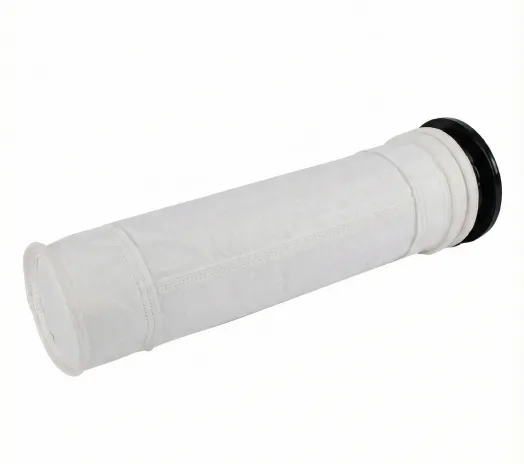
PTFE filter bags address all three requirements — and in waste incineration, there really isn’t a comparable alternative for the most demanding applications. Let me walk through the engineering behind that statement, the product grades available, and what verified results look like in real installations.
The Specific Challenges of Waste Incineration Baghouse Filtration
Multi-Pollutant Corrosive Chemistry
In a typical hazardous or solid waste incineration system, the flue gas entering the baghouse has already passed through acid gas scrubbing — dry or semi-dry desulfurization that partially neutralizes SO₂ and HCl — but residual concentrations of both remain. HCl is particularly aggressive toward organic filter materials at elevated temperatures. HF, present in lower concentrations but highly corrosive, attacks both organic and inorganic filter media. At the same time, the gas carries heavy metal compounds in particulate and vapor form, and in MSW incineration, the products of incomplete combustion that include the dioxin precursors that make this application subject to its own specialized regulatory framework.
PPS filter bags — which perform excellently in coal power and high-sulfur flue gas — have some vulnerability to oxidizing environments. In hazardous waste incineration where the flue gas can contain elevated chlorine species and oxidizing compounds simultaneously, PPS service life can be reduced. PTFE is chemically inert to virtually all acids, alkalis, and oxidizing agents encountered in waste incineration. It doesn’t hydrolyze. It doesn’t react with HCl or HF. Its surface is inert across the full pH spectrum from 0 to 14. That chemical stability is what justifies PTFE’s higher cost in this application — it’s not a premium for its own sake, it’s the engineering requirement.
Temperature Range and Surge Events
Normal operating temperature after acid gas scrubbing and cooling typically ranges from 160°C to 200°C. The critical specification parameter, however, is the surge temperature — the peak that occurs when combustion is incomplete, when waste feed composition changes sharply, or when the scrubbing system is temporarily offline. These events push inlet temperatures to 240°C or above, sometimes briefly exceeding 260°C. Omela’s PTFE filter bags are rated to 240°C continuous and 260°C peak — precisely matching the thermal envelope of waste incineration applications, with no degradation in chemical resistance at the upper limit of the operating range.
Sub-Micron Particle Capture and Dioxin Control
MSW and hazardous waste incinerators are subject to particulate emission limits of 10–20 mg/Nm³ in most regulatory jurisdictions, and in European or stringent-zone applications, 5 mg/Nm³ or below. Dioxin/furan limits are typically expressed in toxic equivalency (ng-TEQ/Nm³), with the most stringent standards requiring PCDD/F below 0.1 ng-TEQ/Nm³.
Dioxin control in baghouse systems relies on activated carbon injection (ACI) upstream of the bag filter. Activated carbon particles adsorb dioxin compounds from the gas phase, and the filter bags then capture both the particulate dust and the carbon-laden with adsorbed dioxins. This requires filter bags that capture activated carbon particles at very high efficiency — which PTFE membrane construction achieves, with filtration efficiency above 99.99% on 0.3 μm particles. The smooth, non-stick PTFE surface also prevents activated carbon particles from embedding in the filter structure, maintaining consistent adsorption layer behavior and predictable cleaning performance throughout the bag’s service life.
High-Strength Abrasion Resistance
Hazardous waste streams often contain inorganic material with high hardness — silica, metals, ceramics — that produces abrasive particulate under combustion and shredding. The filter media needs to maintain its structural integrity and filtration efficiency under this abrasive particle load over a multi-year service life. PTFE fiber has excellent abrasion resistance, and the multi-layer composite construction of Omela’s PTFE filter bags — combining the filtration membrane with a high-quality stable substrate and reinforced seam construction — provides the mechanical strength needed for continuous operation under abrasive dust conditions.
PTFE Membrane Technology: What’s Actually Happening at the Filter Surface
The performance advantage of PTFE membrane filter bags over standard PTFE needle felt — or over other high-temperature materials — comes from the biaxially-stretched microporous membrane structure applied to the filtration surface.
A standard PTFE needle felt filters through the depth of the material — particles are captured at various depths within the fiber structure. This creates an initial break-in period where emissions are higher until a dust cake develops, and a blinding risk as fine particles migrate into the fiber structure and resist cleaning. Cleaning efficiency is also inherently variable because the retained dust is distributed through the felt depth rather than sitting cleanly on the surface.
The PTFE membrane changes this entirely. The biaxially-stretched PTFE membrane has a pore count reaching 1×10⁹ pores per cm² — uniform, controllable, with a pore size that intercepts particles at the surface before they enter the substrate. This means:
- Filtration starts from day one — no break-in period with elevated emissions before the dust cake establishes
- Dust cake forms on the membrane surface and releases cleanly during pulse-jet cleaning, because PTFE’s inherently low surface energy prevents particle bonding
- Pressure drop is stable and lower than depth-filtration alternatives, because the membrane pore structure doesn’t blind progressively over time
- Sub-micron capture — the membrane’s 85–93% open porosity allows high filtration velocity at low energy while still capturing particles down to approximately 1 μm
The three-dimensional structure formed by thermal bonding of the PTFE membrane to the substrate adds mechanical integrity to the filtration composite — preventing membrane delamination under the repeated pressure differentials of pulse-jet cleaning and maintaining consistent performance across the full service life.
Omela PTFE Filter Bag Product Grades for Waste Incineration
Three PTFE series are available for waste incineration and hazardous waste processing applications, selected based on operating temperature profile and emission target:
| Series | Model | Continuous Temp | Peak Temp | Emission Target |
|---|---|---|---|---|
| PTFE | OMPT175 | ≤240°C | ≤260°C | ≤10 mg/Nm³ |
| PTFE | OMPT180 | ≤240°C | ≤260°C | ≤10 mg/Nm³ |
| PTFE | OMPT380 | ≤240°C | ≤260°C | ≤20 mg/Nm³ |
OMPT175 is the high-precision grade with the finer PTFE membrane structure, optimized for applications requiring the lowest achievable particulate emissions — sub-5 mg/Nm³ targets in designated environmental control zones or EU BAT-compliant installations.
OMPT180 is the standard high-performance grade for waste incineration applications targeting ≤10 mg/Nm³. The membrane porosity is 85–93%, and the substrate weight supports the mechanical demands of continuous pulse-jet cleaning in large compartmentalized baghouse systems typical of rotary kiln and grate incinerator configurations.
OMPT380 provides a lower-cost option where the emission target is ≤20 mg/Nm³ and operating conditions are at the less aggressive end of the waste incineration spectrum. Appropriate for some solid waste pre-processing (shredding, screening) operations rather than direct incinerator applications.
For a full technical overview of how PTFE membrane filter bags are applied across the waste-to-energy sector, our article on the application of PTFE needle-punched filter felt in waste-to-energy plants covers the process engineering context in detail.
Fabrication Quality: Where Specifications Become Real-World Performance
A well-specified PTFE filter bag can still fail early if the fabrication quality doesn’t match the operating environment. In hazardous waste incineration specifically, where bag replacement requires specialized handling procedures and potential facility downtime, premature failure is particularly costly.
Seam Construction
Omela’s PTFE filter bags use three seam construction options matched to the application and bag geometry. Seamless tube construction eliminates the seam failure mode entirely for applicable geometries. Adhesive-bonded closure provides a hermetically sealed seam for bags where tube construction isn’t feasible. Mechanical tap closure is used for specific installation configurations. All seam options are paired with double-layer reinforcement at the snap-band and cage interface zones — the mechanical stress concentrations that cause early seam failures in pulse-jet systems.
Every production batch passes twelve quality control checkpoints covering membrane weight, air permeability, membrane integrity, seam strength, and dimensional verification before shipment. This matters in waste incineration applications where a failed bag doesn’t just mean elevated emissions — it can mean regulatory non-compliance notifications, potential facility shutdowns, and the logistical complexity of emergency bag replacement in a hazardous material handling environment.
Cage Compatibility and Dimensional Verification
PTFE filter bags are custom-manufactured to match the cage dimensions of each specific baghouse installation. Diameter, length, snap-band type, and closure mechanism are verified against the customer’s cage specification before production. In replacement applications — where the existing cage is retained and only the bags are changed — cage dimensions are confirmed against measured rather than nominal specifications, because dimensional drift in cages over years of thermal cycling can affect bag fit and sealing performance.
PTFE Filter Bag Selection: Industry Evidence
The performance claims for PTFE filter bags in waste incineration are well-supported by documented project evidence across multiple operators and geographies. A few reference points that illustrate what verified results look like:
MSW incineration, 500 TPD capacity with aggressive HCl/HF flue gas and activated carbon injection for dioxin control. PTFE felt bags with expanded membrane: particulate emissions below 5 mg/Nm³, dioxin/furan (PCDD/F) below 0.1 ng-TEQ/Nm³, with 48-month service life and zero mid-cycle replacements. This result — dioxins below 0.1 ng-TEQ/Nm³ — meets the EU Industrial Emissions Directive (IED) BAT-Associated Emission Level for large waste incinerators.
Energy-from-waste facility, Kochi, Japan. Catalytic filter bags handling 70,000 Nm³/hr at 200°C operating temperature. Emissions below 20 mg/m³, differential pressure 1,500 Pa, documented 7-year service life. This case illustrates how the right filter selection — matched to operating conditions and cleaning system parameters — delivers service life well beyond the 2–3 year norm for demanding incineration applications.
Our own verified case: At a WTE plant requiring compliance with the 5 mg/Nm³ limit applicable in designated environmental control zones, PTFE membrane filter bags achieved outlet concentrations of 2 mg/Nm³ — detailed in our PTFE filter bags for waste-to-energy plants case article.
These results share a common pattern: the bags were correctly specified for the actual gas chemistry and temperature profile, the cage dimensions were verified, the cleaning system parameters were reviewed pre-installation, and post-installation performance was measured rather than assumed. Specification quality determines real-world performance more than brand selection does.
For a broader technical review of PTFE membrane filter performance in demanding industrial applications, our article on optimized dust control with PTFE filter bags in hazardous waste facilities provides additional engineering context.
How to Specify PTFE Filter Bags for Hazardous or Solid Waste Incineration
The specification process for waste incineration filter bags should start with process data, not product selection. The parameters that drive the specification:
Flue Gas Chemistry and Acid Loading
HCl concentration (after scrubbing), SO₂ concentration, presence of HF, heavy metal loading, and moisture content. These determine whether standard PTFE construction is sufficient or whether a heavier substrate weight or enhanced membrane specification is required. For hazardous waste streams with variable composition — which is most hazardous waste operations — the specification should be based on the worst-case chemistry profile, not the average.
Temperature Profile
Continuous operating temperature, known peak temperatures during process upsets, and the frequency and duration of those excursions. The gap between PT175/PT180 and PT380 lies primarily in this parameter.
Cleaning Mechanism and Air-to-Cloth Ratio
Most large waste incineration baghouses use pulse-jet cleaning. The air-to-cloth ratio, pulse pressure, and cleaning cycle frequency need to be reviewed against the bag specification — PTFE membrane bags require lower pulse pressure than standard needle felt to avoid membrane delamination, and cleaning cycles should be set by differential pressure feedback rather than on a fixed timer.
Activated Carbon Injection Configuration
If ACI is part of the dioxin control system, the injection point relative to the baghouse inlet, carbon injection rate, and carbon particle size distribution affect the filter bag specification. The PTFE membrane surface needs to be sized for the combined dust and carbon loading, not just the raw flue gas particulate.
Emission Compliance Target
The gap between a ≤10 mg/Nm³ target and a ≤5 mg/Nm³ or ≤2 mg/Nm³ target is meaningful in terms of which product grade is appropriate. For EU IED-compliant installations or plants in Chinese ultra-low emission zones, PT175 is typically the right starting point.
For full details on our waste-to-energy dust filtration solutions, visit our application page or contact our engineering team to discuss your specific facility requirements.
Frequently Asked Questions
Why are PTFE filter bags preferred over PPS for hazardous waste incineration?
PPS (polyphenylene sulfide) performs excellently in coal power and high-sulfur flue gas applications. However, in waste incineration flue gas — particularly hazardous waste streams — the simultaneous presence of elevated chlorine species, HF, oxidizing compounds, and heavy metals creates a chemical environment that can reduce PPS service life compared to coal power applications. PTFE is chemically inert across the full pH range and resistant to all acidic and oxidizing species encountered in waste incineration, which is why it’s the preferred material for these applications despite its higher cost. For applications where the gas chemistry is less aggressive — some solid waste pre-processing applications — PPS may still be appropriate, and the specification decision should be made based on actual process chemistry data.
How long do PTFE filter bags last in waste incineration applications?
In well-maintained waste incineration baghouses with proper temperature control and pulse-jet cleaning parameters, PTFE filter bags typically achieve 3 to 5 years of service life. In some documented installations — particularly those with good combustion stability and consistent feed composition — service lives of 4 to 6 years have been verified. The factors that most commonly shorten PTFE bag life in waste incineration are repeated high-temperature excursions above 260°C during combustion upsets, excessively high pulse-jet pressure (which risks membrane delamination), and abrasive particulate from inorganic waste components.
Can PTFE filter bags help achieve dioxin emissions below 0.1 ng-TEQ/Nm³?
Yes — when PTFE membrane filter bags are combined with activated carbon injection (ACI) upstream of the baghouse, the combination can achieve PCDD/F (dioxin/furan) emissions below 0.1 ng-TEQ/Nm³, which is the EU BAT-Associated Emission Level for large waste incinerators and the most stringent standard applied globally. The PTFE membrane provides an excellent surface for activated carbon adsorption layer formation, because the smooth, non-stick PTFE surface allows carbon particles to form a uniform adsorption layer without embedding into the filter structure. This maintains consistent dioxin removal efficiency throughout the bag’s service life.
What is the difference between PT175, PT180, and PT380?
All three grades share the same temperature ratings — 240°C continuous, 260°C peak — but differ in membrane structure, substrate weight, and emission performance target. PT175 uses the finest membrane structure and is specified for the most stringent emission targets (sub-5 mg/Nm³). PT180 is the standard high-performance grade for ≤10 mg/Nm³ applications, representing the best-value choice for most waste incineration installations. PT380 provides a more economical option where the emission target is ≤20 mg/Nm³ and the gas chemistry is at the less aggressive end of the waste incineration spectrum. The right grade is determined by reviewing actual operating temperature, gas chemistry, and the regulatory emission limit that applies to the facility.
How should pulse-jet cleaning be configured for PTFE membrane filter bags?
PTFE membrane filter bags generally require lower pulse pressure than standard needle felt bags — typically 3 to 4 bar versus 4 to 6 bar for conventional felt. Excessive pulse pressure risks membrane delamination, which permanently compromises filtration efficiency. Cleaning should be triggered by differential pressure feedback (clean-on-demand) rather than on a fixed timer, which reduces unnecessary cleaning cycles and extends both membrane life and the service life of pulse valves and diaphragms. The pulse duration and cycle interval should be set to achieve complete dust cake release without over-pulsing. If you’re replacing standard felt bags with PTFE membrane bags, cleaning system parameters should be reviewed and adjusted before the new bags are put into service.
How is service life quality guaranteed?
Every Omela PTFE filter bag production batch passes twelve quality control checkpoints: fabric weight, air permeability, membrane integrity, seam strength, dimensional verification, and surface treatment uniformity. Bags are produced to the exact dimensional specifications of the customer’s cage configuration — not nominal standard dimensions — which ensures proper fit and sealing performance in the installed system. Installation guidance and commissioning support are available for new installations and replacement projects. For applications with strict dioxin or heavy metal compliance requirements, we recommend post-installation fluorescent powder leak testing to verify bag and seam integrity before returning the baghouse to service.
Author

Jessica Ma – Senior Filtration Engineer, Omela Filtration
Jessica Ma is a senior filtration engineer at Omela Filtration, specializing in dust and liquid filtration. With over 15 years of experience, she focuses on optimizing baghouse performance, enhancing filtration efficiency, and developing high-performance solutions for industrial dust collectors and precision liquid filtration applications.