
If you’re managing dust collection on a coal-fired power plant or a district heating facility with circulating fluidized bed boilers, you’ve probably lived this scenario: filter bags that are supposed to last two years are gone in eight months. Maintenance costs keep climbing. Your team is doing changeouts more often than anyone planned for. And somewhere in the background, there’s an emission compliance target that’s only getting stricter.
This isn’t bad luck. It’s a material selection problem — and it’s one of the most consistently mishandled decisions in industrial dust filtration.
The flue gas coming out of a coal-fired boiler or CFB heating system isn’t just hot. It’s chemically aggressive. High sulfur dioxide concentrations, acid dew point risk during transient operating conditions, moisture from the combustion process, fine fly ash that’s abrasive under repeated pulse-jet cleaning — the combination puts enormous stress on conventional filter media. Standard polyester bags aren’t designed for it. They hydrolyze and corrode. And even materials that handle the chemistry sometimes fall short on the emissions side, especially as regulatory thresholds push toward 10 mg/Nm³ and below.
PPS (polyphenylene sulfide) filter bags are the right engineering answer for these applications. Not universally — there are conditions where other materials are more appropriate — but for the temperature range and gas chemistry typical of coal power and heating boiler dust collection, PPS hits the sweet spot of performance, service life, and cost-effectiveness.
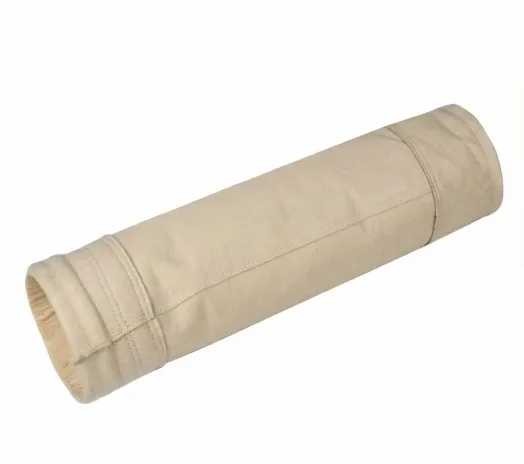
Here’s what makes it different, and what the results look like in practice.
Why Standard Filter Bags Fail in Coal Power and Heating Applications
The three failure mechanisms that dominate in these environments are worth understanding clearly, because they shape what you actually need from a filter material.
Acid Hydrolysis
Polyester fiber has ester linkages in its polymer backbone that are chemically vulnerable to acid attack, particularly in the presence of moisture. In flue gas environments with SOx content, especially during startup and shutdown cycles when temperatures transition through the acid dew point, sulfuric acid mist condenses on the filter surface. Polyester bags exposed to this chemistry degrade from the outside in — tensile strength drops, the fiber structure weakens, and bags fail structurally well ahead of schedule. Understanding what actually drives filter bag service life is the first step toward preventing premature failure.
Thermal Degradation
Coal-fired and CFB boiler systems commonly run continuous operating temperatures in the 120–150°C range, with transient peaks reaching 160°C or above during upsets or load changes. Polyester becomes unreliable above 130°C in continuous service. Even aramid fibers — which handle the temperature — can be vulnerable to acid attack depending on the specific chemistry.
Insufficient Filtration Efficiency for Current Emission Standards
Many older plants were designed around 20–50 mg/Nm³ emission targets. Regulations in most markets have moved to 10 mg/Nm³ or stricter, with some ultra-low emission requirements pushing to 5 mg/Nm³ or below. Conventional depth-filtration needle felt doesn’t reliably deliver at those levels. You need surface filtration — a precisely engineered fine-fiber layer that captures particles at the bag surface rather than through the depth of the fabric. If you’re unsure how to evaluate your current system’s performance, our article on baghouse pressure differential monitoring is a useful starting point.
What PPS Fiber Delivers
PPS — polyphenylene sulfide — is a semi-crystalline thermoplastic with an aromatic polymer backbone that gives it a fundamentally different chemical stability profile from organic filtration materials.
High Temperature Resistance
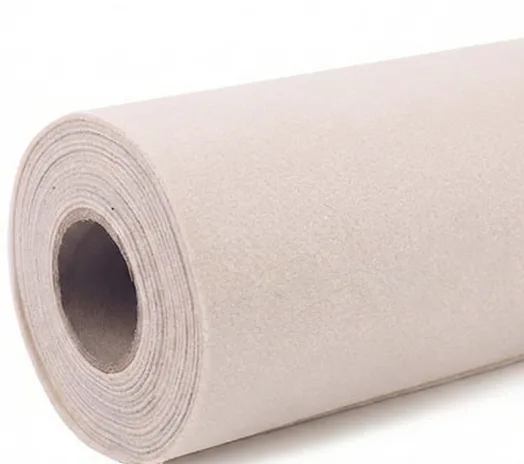
Omela PPS needle-punched felt supports continuous operation at 160°C, with short-term peak tolerance to 190–200°C depending on the specific product grade. For the operating profiles typical of coal power and district heating applications, this provides a real safety margin rather than running near the material’s limit.
Acid and Chemical Resistance
PPS has no hydrolyzable bonds. It resists sulfuric acid, hydrochloric acid, alkalis, and most organic solvents at elevated temperatures. In high-sulfur flue gas environments where acid condensation is a risk during temperature transitions, this translates directly to longer service life. The chemical degradation mechanism that kills polyester bags simply does not apply to PPS.
Hydrolysis Resistance
In environments with high moisture content, elevated humidity, or flue gas containing significant water vapor from combustion, PPS maintains its structural integrity. This is particularly relevant in CFB boiler applications where the combustion chemistry produces more moisture than dry pulverized coal combustion.
Surface Filtration Efficiency Above 99.99%
Omela’s PPS needle felt is manufactured using a mixed-carding and cross-lapping process that produces a uniform, dense superfine fiber layer across the filtration surface. The result is surface filtration efficiency above 99.99%, with demonstrated emission performance at 10 mg/Nm³ and below. Our OM-PPS160D and OM-PPS160E grades are specifically engineered for ultra-low emission targets of 10 mg and 5 mg respectively. For a broader overview of how different filter media types compare on efficiency, see our guide to baghouse filter media.
Mechanical Strength Under Pulse-Jet Cleaning
PPS fiber maintains high tensile strength under the mechanical stress of repeated pulse-jet cleaning cycles — warp tensile strength above 900 N and weft strength above 1,200 N. Dimensional stability measured by 24-hour heat shrinkage below 1.5% in both directions. These specs matter for real-world service life in high-frequency cleaning systems. For more on how cleaning cycles interact with bag life, our pulse-jet cleaning mode manual covers the operational parameters worth knowing.
Omela PPS Filter Bag Product Grades
| Model | Working Temp (°C) | Peak Temp (°C) | Emission Target (mg) | Weight (g/m²) | Thickness (mm) |
|---|---|---|---|---|---|
| OM-PPS160N | 160 | 190 | — | 550±5% | 2.0±10% |
| OM-PPS160T | 160 | 190 | — | 550±5% | 2.0±10% |
| OM-PPS160D | 160 | 190 | 10 | 580±5% | 2.2±10% |
| OM-PPS160E | 160 | 190 | 5 | 530±5% | 1.9±10% |
| OM-PPS170D | 170 | 200 | — | 650±5% | 2.0±10% |
All grades: tensile strength warp ≥900 N / weft ≥1,200 N · tensile elongation warp ≤25% / weft ≤50% · 24-hour heat shrinkage warp ≤1.5% / weft ≤1.0%
Post-processing options include heat setting, singeing, and PTFE membrane lamination — selected based on the specific gas chemistry and emission requirements of each application. For a detailed look at when PTFE membrane lamination on a PPS substrate makes sense versus standard PPS construction, see our PPS + PTFE laminated bag application article.
Fabrication Quality: Why Construction Details Matter
The filtration media is only one part of the equation. A bag made from excellent PPS felt can still fail early if the seam construction is wrong, the cage interface isn’t properly matched, or the finishing treatments aren’t appropriate for the application chemistry.
Seam Construction Options
Our PPS bags are available in three seam construction configurations. Seamless tube construction eliminates the leak paths that develop at stitched seams over time. Adhesive-bonded closure provides a reliable hermetic seal for applications that require it. Mechanical tap closure is used where bag geometry or operating conditions call for it. All construction options are paired with double-layer reinforcement at the snap-band and cage contact zones to distribute pulse-jet mechanical load and resist the abrasion that causes early structural failures in high-velocity systems.
Surface Treatments for Aggressive Chemistries
For applications with acid dew point risk, high moisture content, or particularly fine particulate, surface treatments including PTFE membrane lamination are matched to the actual gas chemistry of each specific installation — not applied as a default. Getting this right at the specification stage is a large part of what determines whether a bag achieves its rated service life in your system rather than failing ahead of schedule.
Case Study 1: Large Coal-Fired Thermal Power Plant
Application: Single large baghouse handling 260,000 m³/h of flue gas from a coal-fired thermal plant burning a mixed fuel blend of approximately 10% sludge and 90% coal.
The Problem
The existing system ran standard filter bags that lasted an average of eight months before requiring replacement. The driving factors: high sulfur content in the flue gas, continuous operating temperatures of 120–130°C, transient peaks reaching 160°C. Cleaning configuration: online pulse-jet. Annual maintenance costs had exceeded seven figures due to the frequency of changeouts and associated labor. The plant was also under regulatory pressure to demonstrate emissions below 10 mg/Nm³ — and struggling to do it consistently with the bags they had.
What We Did
After reviewing the operating conditions — flue gas volume, temperature profile, sulfur loading, cleaning system configuration, and cage dimensions — we specified Omela PPS high-temperature corrosion-resistant filter bags with a surface treatment matched to the acid environment. The specification also covered air-to-cloth ratio and pulse-jet system parameters to ensure the bag was correctly matched to how the system actually operates, not just to the nameplate conditions.
Results
Filter bag service life extended from eight months to three years — reducing replacement frequency by roughly 75%. Annual maintenance savings measured in the tens of thousands. One month after installation, independent third-party testing measured actual dust emission concentrations of less than 1.2 mg/Nm³ — well inside the 5 mg/Nm³ regulatory target, and far below the 10 mg/Nm³ threshold. The system has continued operating at this performance level. For more on what this type of thermal power plant application looks like from a dust control perspective, see our coal-fired power plant dust filtration overview.
Case Study 2: Regional District Heating — Five CFB Boiler Lines
Application: Regional district heating company running five circulating fluidized bed boilers rated at 75–130 T/H steam output, each paired with a dedicated baghouse dust collector. Required emission standard: below 3 mg/Nm³.
Operating Conditions — Two Units in Detail
CFB boiler applications present a different filtration challenge from conventional pulverized coal combustion. The combustion chemistry is different, particle size distribution is different, and cleaning system configurations vary by unit. Two units from this project illustrate the range:
Unit 3 — Process flow: SNCR + in-furnace dry method + semi-dry method outside the furnace + bag filter
- Gas volume: 230,000 m³/h
- Cleaning: offline, air-to-cloth ratio 1.03 m/min
- Operating temperature: 70–90°C continuous, 145°C transient peak
- Required emission: <3 mg/Nm³
Unit 5 — Process flow: Low-nitrogen combustion + SNCR + semi-dry method + electrostatic-bag hybrid filter + PPCP
- Gas volume: 138,000 m³/h
- Cleaning: rotary blowback, air-to-cloth ratio <0.65 m/min
- Operating temperature: 80–100°C continuous, 160°C transient peak
- Required emission: <3 mg/Nm³
What We Did
On-site survey and flue gas analysis were completed before recommending any product. The engineering analysis indicated that high-precision PPS filter bags — correctly specified for each unit’s cleaning mechanism and air-to-cloth ratio — would deliver the required sub-3 mg/Nm³ performance at better cost-effectiveness than the alternative materials being considered. We took on filter bag installation, full baghouse inspection, and system commissioning as part of the scope, making us accountable for the result rather than just the product supply.
Results
Independent third-party testing at the baghouse outlet measured actual dust concentrations of less than 2 mg/Nm³ across both units — near-zero emission performance against a 3 mg/Nm³ target. Both systems have continued to operate stably at this level since commissioning.
How to Select the Right PPS Bag for Your Application
PPS is a material platform, not a single product. The specification needs to be correctly matched to your operating conditions. Here are the key parameters that drive the selection:
Continuous Operating Temperature
This determines whether standard PPS grades are appropriate or whether a higher-weight fabric or additional surface treatment is needed for thermal margin. Our OM-PPS170D grade provides a higher continuous service rating of 170°C for applications running closer to PPS’s upper limits.
Sulfur and Acid Loading
High SO₂ concentrations combined with any moisture ingress create acid dew point risk during temperature transitions — particularly during startup and shutdown. Surface treatment selection and sometimes fabric weight need to account for this. It’s one of the most underestimated variables in coal power filter bag specifications.
Cleaning Mechanism
Pulse-jet, reverse air, and rotary blowback systems each impose different mechanical demands on the bag. Fabric weight and construction method are adjusted accordingly. The two CFB boiler units in Case Study 2 used different cleaning systems and received different bag specifications — this is normal and expected, and why on-site review matters. Our article on air-reverse cleaning mechanisms covers the fundamentals if you want to understand how cleaning method affects bag loading.
Emission Target
If you’re working toward sub-5 mg/Nm³ targets, surface filtration via a precision-engineered fine-fiber layer is required. Depth-filtration needle felt won’t deliver consistently at that level. Our OM-PPS160E grade is specifically engineered for this range. You might also want to review our article on next-generation PPS filter bags for power plants for more detail on how precision fiber engineering delivers ultra-low emission performance.
Cage Compatibility and Installation
Bag diameter, length, and collar or snap-band configuration must match your existing cage dimensions if you’re replacing bags without system modification. Dimensional verification is handled during our engineering review phase, before any order is confirmed. For context on what a proper replacement process looks like from an installation and system protection standpoint, that article is worth reviewing before any changeout.
For a full overview of our power plant dust filtration solutions or to discuss your specific application, visit our PPS filter bags product page or contact our engineering team directly.
Frequently Asked Questions
How long do PPS filter bags last in high-sulfur flue gas environments?
In typical high-sulfur flue gas conditions — continuous temperatures in the 120–150°C range with standard sulfur dioxide loading — properly specified PPS filter bags reach service lives of 2 to 3 years. The exact lifespan depends on flue gas composition, peak temperature excursions, moisture content, and cleaning system operating parameters. Compared to standard polyester bags that commonly fail at 8–12 months in these environments, the total cost of ownership for PPS is typically favorable despite the higher initial material cost. For unusually aggressive chemistry, we conduct a detailed condition review and can recommend surface treatments or higher-grade specifications to extend service life further.
Can PPS filter bags achieve emissions below 10 mg/Nm³?
Yes — when manufactured with a precision fine-fiber surface layer, PPS filter media achieves dust emission concentrations well below 10 mg/Nm³. Our documented project results include independent third-party test measurements below 1.2 mg/Nm³ on a coal-fired power plant and below 2 mg/Nm³ on district heating CFB boiler systems. Sub-5 mg/Nm³ performance is achievable with our OM-PPS160E grade. Standard depth-filtration needle felt will not reliably deliver at these levels.
Are PPS filter bags compatible with my existing baghouse equipment?
In most cases, yes. PPS filter bags can be manufactured to match the dimensional specifications of your existing filter bag cages — diameter, length, and collar or snap-band configuration. Before confirming a replacement specification, we review the existing cage dimensions, cleaning system type, and air-to-cloth ratio to ensure the new bags are correctly engineered for how your system actually operates. On-site installation and baghouse commissioning services are available — details on our filtration services page.
What temperature range can PPS filter bags handle?
Omela PPS filter bags support continuous operation at 160°C (170°C for the OM-PPS170D grade), with short-term peak tolerance reaching 190–200°C. This provides a meaningful safety margin for coal power applications where continuous operating temperatures typically run 120–150°C and transient peaks reach 160°C. For applications with sustained temperatures above 170°C, P84 polyimide filter bags or fiberglass composite materials may be more appropriate.
How does PPS compare to PTFE membrane filter bags?
PPS needle felt with a precision fine-fiber surface layer delivers filtration efficiency above 99.99% at generally lower cost than full PTFE filter bag construction, and is often the better-value choice for coal power and heating boiler applications where the primary challenge is temperature resistance and acid corrosion. In some applications, a PPS substrate with PTFE membrane lamination is specified to combine acid resistance with enhanced surface performance. See our PPS + PTFE laminated bag guide for a detailed comparison.
What is the difference between online and offline cleaning, and how does it affect bag selection?
Online cleaning subjects filter bags to more frequent pulse cycles and higher mechanical stress. Offline cleaning reduces mechanical load per cleaning event but operates at lower air-to-cloth ratios. Fabric weight, construction method, and seam reinforcement are all adjusted based on the cleaning mechanism — heavier fabric and reinforced construction for online pulse-jet systems; optimized surface filtration efficiency for offline or rotary blowback systems. For more on how cleaning frequency and timing can be optimized to extend bag life, that article is worth a read.
Author

Jessica Ma – Senior Filtration Engineer, Omela Filtration
Jessica Ma is a senior filtration engineer at Omela Filtration, specializing in dust and liquid filtration. With over 15 years of experience, she focuses on optimizing baghouse performance, enhancing filtration efficiency, and developing high-performance solutions for industrial dust collectors and precision liquid filtration applications.