
Asphalt mixing plants don’t get enough credit for how genuinely difficult their dust collection environment is. The baghouse sits downstream of a dryer that’s burning fuel to heat aggregate, producing a gas stream that’s hot, carries adhesive bituminous particulates, and fluctuates in temperature depending on production rate, fuel type, fuel-to-aggregate ratio, and ambient conditions. It’s not steady-state operation the way a cement kiln or a power plant boiler is. It cycles. It surges. Temperatures that are comfortably within spec at full production can spike during startup or drop during idle periods in ways that stress filter media.
Standard polyester bags — the most common choice by volume across industrial dust collection — simply aren’t rated for it. Their continuous temperature ceiling sits around 130°C, and the adhesive dust from asphalt operations accelerates blinding and shortens life further. The result is a familiar pattern: bags that need replacing every year or less, cleaning cycles that keep getting more aggressive, and emissions that are marginal at best against increasingly tight regulatory targets.
Aramid (Nomex) filter bags are the correct engineering answer for asphalt mixing plant dust collection. They’ve been the go-to choice in this application for a reason — thermal stability to 204°C continuous, inherent chemical resistance, and good mechanical performance under repeated reverse-air or rotary blowback cleaning. But not all aramid filter bags are equivalent, and the difference between standard aramid needle felt and precision-engineered fine-fiber aramid construction matters significantly for emissions performance.
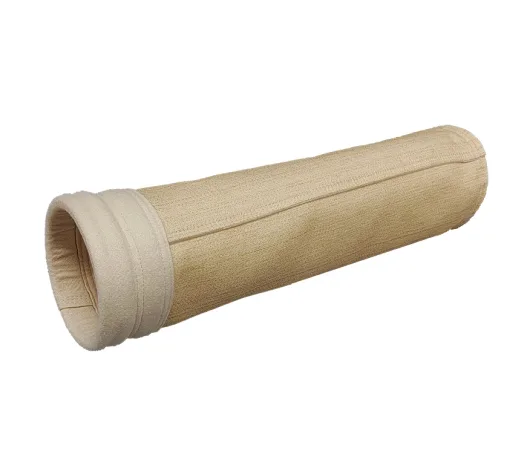
Here’s what the material actually does, what the product grades look like in practice, and two case studies that show what verified results look like.
Why Asphalt Plant Dust Collection Is a Genuine Engineering Challenge
The Temperature Problem Is More Complex Than It Looks
Most asphalt plant baghouses operate in the 80–180°C range under normal production conditions — but that range is deceptive. The peak temperatures that occur during startup, when the dryer is still coming up to operating temperature and the gas composition is unstable, are often the events that cause the most filter bag damage. A bag that can handle 150°C continuously can still be stressed by a 30-minute 200°C excursion during morning startup, especially if it happens repeatedly over weeks and months.
Aramid fiber — specifically Nomex meta-aramid — has a continuous service rating of 204°C, with short-term peak tolerance reaching 240–250°C depending on the specific product grade. That’s the safety margin that actually matters in asphalt applications: not just the rated continuous temperature, but the headroom above it.
Adhesive Particulates and Blinding
The dust load in an asphalt mixing plant baghouse isn’t just mineral aggregate fines. It contains bituminous aerosols — partially condensed asphalt vapors that are adhesive at lower temperatures and liquefy at higher ones. This chemistry is what makes asphalt plant filtration fundamentally different from, say, cement or limestone dust collection, where the particulate is dry and free-flowing.
Adhesive dust accelerates blinding — the gradual clogging of filter pores that increases pressure drop, reduces airflow, and eventually forces filter replacement. Cleaning systems (reverse air, rotary blowback) work less effectively on adhesive dust because the particles don’t release cleanly from the filter surface. This is why fiber engineering matters: finer fiber construction and tighter pore size distribution help maintain dust release properties over the bag’s service life.
Emission Standards Are Tightening
Older asphalt plants were often designed to meet 20–50 mg/Nm³ dust emission limits. China’s current standards and many regional environmental compliance requirements have moved to 10 mg/Nm³ or below, with some urban operation zones imposing stricter limits. Meeting these standards with conventional filter media on aging baghouse equipment requires careful material selection, proper bag sizing for the specific cleaning mechanism, and sometimes system-level adjustments to cleaning cycle parameters.
What Precision-Engineered Aramid Fiber Delivers
Standard aramid needle felt performs well in this application from a temperature and chemical resistance standpoint. But there’s a meaningful performance gap between commodity aramid construction and precision-engineered fine-fiber aramid, particularly on filtration efficiency and long-term emissions stability.
Fiber Microstructure and Filtration Precision
Conventional aramid fiber has a relatively consistent diameter, and when needle-punched into felt, produces a filtration structure with a pore size distribution that’s adequate for many applications but not optimized for very fine dust capture. Under scanning electron microscopy at 500× magnification, the fiber structure looks regular and open.
Precision-engineered fine-fiber aramid — where the fiber diameter is controlled at a finer level and the carding-and-lapping process creates a denser, more uniform surface layer — produces a tighter pore structure that intercepts fine particles at the filter surface rather than allowing them to penetrate into the depth of the felt. The SEM comparison is visible: the fine-fiber structure is noticeably more interlocked and compact at the same magnification.
The practical result is higher filtration efficiency on fine particulate — the fraction most likely to cause regulatory exceedances — and better dust release characteristics because particles sit on the surface rather than migrating into the felt depth.
Three Product Grades for Asphalt Applications
The right product grade for an asphalt plant depends primarily on the operating temperature profile and the target emission level. Our aramid filter bags for asphalt mixing applications come in three grades:
| Grade | Model | Continuous Temp | Peak Temp | Emission Target |
|---|---|---|---|---|
| OMHPE | OMHPE245N | ≤204°C | ≤250°C | ≤10 mg/Nm³ |
| OMPRO | OMPRO545N | ≤204°C | ≤240°C | ≤10 mg/Nm³ |
| OMMAX | OMMAX445N | ≤180°C | ≤220°C | ≤20 mg/Nm³ |
OMHPE245N is the premium grade — highest peak temperature tolerance (250°C), targeting sub-10 mg/Nm³ emissions. Appropriate for larger plants, plants with higher operating temperatures, or applications where emission compliance margins are tight.
OMPRO545N is the workhorse of the range. 204°C continuous, 240°C peak, sub-10 mg/Nm³ emission target. This is the grade most commonly specified for standard asphalt mixing plant baghouses using rotary blowback or reverse-air cleaning, and it’s the material used in the Hebei case study below.
OMMAX445N provides a lower-cost option where the operating temperature is more moderate (≤180°C continuous) and the emission target is ≤20 mg/Nm³. Appropriate for smaller plants or lower-intensity applications.
All grades are available with aramid needle-punched felt substrates, with surface treatment and finishing options matched to the specific gas chemistry of each installation.
What Drives Filter Bag Selection in Asphalt Mixing Plant Applications
Cleaning Mechanism
Asphalt plant baghouses commonly use reverse-air or rotary blowback cleaning — gentler cleaning methods than pulse-jet, and better matched to the adhesive dust characteristics of asphalt operations. Filter bags for these systems are typically specified in flat or envelope configurations, and the fabric weight and weave construction need to be matched to the lower differential pressure used for cleaning. Getting this wrong — specifying a pulse-jet bag weight in a reverse-air system, for example — produces poor cleaning efficiency and accelerated blinding.
Air-to-Cloth Ratio
The air-to-cloth ratio (face velocity) determines how much filtration area the system needs for its gas volume. Asphalt plants running reverse-air or rotary blowback cleaning typically operate at lower face velocities than pulse-jet systems — often below 1.0 m/min. The system’s actual face velocity under operating conditions should be calculated before bag specification, because undersizing filtration area in a high-adhesive-dust application is a reliable way to shorten bag life and raise pressure drop.
Temperature Excursion Profile
The difference between HPE245N and PRO545N is primarily peak temperature tolerance — 250°C versus 240°C. For most standard asphalt plant applications, PRO545N’s 240°C peak rating provides adequate margin. For plants with known temperature management challenges, or where the burner system has a history of excursions, HPE245N provides additional safety.
For applications where temperatures go significantly above 204°C continuously — glass furnaces, some special asphalt formulations — P84 polyimide filter bags rated to 240°C continuous may be more appropriate than aramid.
Case Study 1: Beijing Asphalt Mixing Plant — Marini 4000
Application: Large asphalt mixing plant running a Marini 4000 mixing unit. Baghouse configuration: 16 compartments, 576 total filter bags (480 bags at half-perimeter 375×3000mm + 96 bags at 375×2500mm). Cleaning method: reverse air. Fuel type: natural gas. Reclaimed asphalt proportion: 35% (range 30–40%). Operating temperature: 80–120°C.
The Situation
The plant started operations in March 2019. Filter bags were installed in November 2020. The requirement was to achieve reliable sub-10 mg/Nm³ emissions while managing the dual challenge of fresh aggregate dust and 30–40% reclaimed asphalt pavement (RAP) content. RAP raises the bituminous aerosol load significantly compared to virgin aggregate operations, increasing blinding risk.
What We Did
Following a review of the baghouse configuration, cleaning system parameters, and the operating temperature profile, we specified PRO545N aramid filter bags sized to match the existing cage dimensions. The specification covered fabric weight, surface treatment, and seam construction matched to the reverse-air cleaning mechanism.
Results
Independent emission testing was conducted twice — at 4 months and 9 months after installation. Measured dust emission concentrations: 1.5 mg/Nm³ at month 4 and 2.0 mg/Nm³ at month 9. Both measurements were well inside the 10 mg/Nm³ regulatory limit and demonstrated stable performance through extended operation at 30–40% RAP content. The system has continued to run reliably at this performance level with current production output of 340 t/h and cumulative output exceeding 800,000 tonnes.
Case Study 2: Hebei Asphalt Mixing Plant — Ammann 5000
Application: Asphalt mixing plant running an Ammann 5000 mixing unit. Flue gas volume: approximately 100,000 m³/h. Exhaust temperature: 100°C. Cleaning method: rotary blowback. Filter bag material: PRO545N. Bag dimensions: half-perimeter 342×2500mm. Total bag count: 672. Ash conveyance: screw conveyor. Inlet configuration: hopper inlet.
The Situation
Filter bags were installed in August 2022. Three months after installation, dust emission testing was conducted using calibrated field measurement equipment.
What We Did
On-site specification review and installation guidance. The PRO545N grade was selected based on the 100°C operating temperature, rotary blowback cleaning method, and the 10 mg/Nm³ target. Bag dimensions were matched to the existing cage configuration. Following installation, fluorescent powder leak detection was conducted to verify bag integrity — a minor leak point was identified on initial inspection and addressed before the emission test. A second fluorescent powder test confirmed no remaining leak paths prior to final emission measurement.
Results
Post-installation emission measurement: 8.96 mg/m³ — inside the 10 mg/Nm³ regulatory limit. The fluorescent powder testing process is worth noting: it’s an underused verification step that catches installation defects and minor seam issues before they become emission compliance problems. We recommend it as a standard post-installation check for any bag replacement project, particularly on large-count installations.
How to Select the Right Aramid Bag for Your Asphalt Plant
If you’re evaluating filter bag replacement or new installation for an asphalt mixing plant baghouse, the key specification inputs are:
Operating temperature profile — not just the nameplate continuous temperature, but the actual peak temperatures during startup and transient conditions. This determines whether PRO545N or HPE245N is the right grade.
Cleaning mechanism — reverse air, rotary blowback, or pulse-jet. Each imposes different mechanical and aerodynamic demands. Fabric weight and construction differ significantly between cleaning types.
RAP content — higher reclaimed asphalt pavement proportions increase bituminous aerosol loading, which accelerates blinding. Higher RAP applications may benefit from surface treatment options that improve dust release.
Emission target — the gap between ≤10 mg/Nm³ and ≤20 mg/Nm³ targets is meaningful in terms of which grade is appropriate. If you’re operating in an urban or restricted zone with sub-10 mg/Nm³ requirements, HPE245N or PRO545N is the specification path.
Bag dimensions and cage compatibility — diameter, length, and closure type need to match your existing cage configuration unless you’re replacing cages as well.
For a broader look at how asphalt plant dust collection systems are typically optimized, our article on dust collection optimization in asphalt production covers system-level considerations alongside filter media selection.
For questions about your specific plant configuration, our engineering team is available for a detailed review. Visit our asphalt industry dust filtration solutions page or contact us directly.
Frequently Asked Questions
What type of filter bag is best for asphalt mixing plant baghouses?
Aramid (Nomex) filter bags are the standard choice for asphalt mixing plant dust collection. They provide continuous temperature resistance to 204°C, short-term peak tolerance to 240–250°C depending on grade, and good resistance to the chemical environment of asphalt flue gas. Standard polyester bags are not suitable — their temperature ceiling is around 130°C, which doesn’t provide adequate margin for startup temperature excursions common in asphalt plant operations. For applications with sustained temperatures above 200°C, P84 polyimide filter bags may be more appropriate.
Can aramid filter bags achieve emissions below 10 mg/Nm³ in asphalt plant applications?
Yes — our HPE245N and PRO545N aramid filter bag grades are specifically engineered for sub-10 mg/Nm³ emission performance. Verified project results include 1.5 mg/Nm³ and 2.0 mg/Nm³ measurements at a Beijing asphalt plant using a Marini 4000 unit, tested at 4 and 9 months after installation. A Hebei plant using an Ammann 5000 unit measured 8.96 mg/m³ three months after installation. Achieving these results consistently requires correct bag specification for the cleaning mechanism, proper installation, and post-installation leak verification.
How long do aramid filter bags last in asphalt mixing plant applications?
Service life varies depending on operating intensity, temperature profile, RAP content, and cleaning system condition. Well-specified aramid filter bags in asphalt plant applications typically achieve 2 to 4 years of service life. The key factors that shorten bag life are repeated temperature excursions above the rated peak, high RAP content increasing adhesive dust loading, and inadequate cleaning system performance (either too aggressive or too infrequent cleaning). Pre-installation review of the cleaning system parameters is important — it’s often possible to extend bag life significantly by adjusting cleaning timing and pulse intensity without changing the filter material.
What is the difference between reverse-air and rotary blowback cleaning in asphalt plant baghouses?
Both are gentler cleaning methods than pulse-jet and are well-suited to the adhesive dust characteristics of asphalt operations. Reverse-air cleaning uses a counter-flow of air to collapse and flex the bag, releasing accumulated dust. Rotary blowback uses a rotating nozzle that directs a jet of air down individual bags in sequence. Rotary blowback typically achieves more thorough cleaning per cycle than reverse air, which is useful in high-loading applications with significant RAP content. Filter bag fabric weight and dimensions differ between the two cleaning types — bags specified for one cleaning method should not be directly substituted for the other without reviewing the specification.
Should I do fluorescent powder leak testing after installing new filter bags?
Yes, we recommend it as a standard step for any large-count bag replacement project. Fluorescent powder (tracer powder) testing involves introducing fluorescent particles into the gas stream and inspecting the clean-air side for any powder that passes through, indicating a bag leak, failed seam, or improper installation. It’s the most reliable way to verify installation integrity before relying on emission measurement results. In the Hebei case study above, initial fluorescent powder testing identified a minor leak point that was addressed before the final emission test — a good outcome that demonstrates the value of the verification step. Omela offers fluorescent powder leak testing as part of our installation and commissioning service.
How does high RAP (reclaimed asphalt pavement) content affect filter bag selection?
Higher RAP content — typically 30% and above — increases the bituminous aerosol load in the flue gas because reclaimed asphalt releases more volatile organic compounds and condensable aerosols during heating than virgin aggregate. This increases blinding risk and can accelerate the buildup of adhesive dust on the filter surface. For high-RAP applications, we typically recommend the HPE245N or PRO545N grade (which have finer fiber surface layers and better dust release characteristics than the MAX445N), and we review the cleaning system parameters to ensure cleaning frequency and intensity are matched to the higher dust loading. In some cases, a surface treatment option is specified to further improve dust release.
Author

Jessica Ma – Senior Filtration Engineer, Omela Filtration
Jessica Ma is a senior filtration engineer at Omela Filtration, specializing in dust and liquid filtration. With over 15 years of experience, she focuses on optimizing baghouse performance, enhancing filtration efficiency, and developing high-performance solutions for industrial dust collectors and precision liquid filtration applications.