
Tightening emissions regulations across the power generation sector are forcing plant operators to make a difficult choice: invest in expensive baghouse upgrades and civil modifications, or find filter media that delivers near-zero particulate performance within the constraints of the existing dust collector.
For most plants, the second option is strongly preferred. Modifying a baghouse — changing tube sheet dimensions, adding filtration surface area, or installing pleated cartridge systems — involves engineering costs, downtime, and operational risk that plant managers would rather avoid.
The answer lies in the filter bag itself. A new generation of PPS filter bags, engineered specifically for the performance demands of thermal power and combined heat and power applications, now delivers sub-5 mg/Nm³ outlet concentrations at higher filtration velocities than conventional PPS needle-felt — without requiring any modifications to the existing dust collector design.
This article covers what makes next-generation PPS filter bags different from standard PPS media, why the power generation environment demands this level of engineering, and a formally documented case study from a thermal power facility that achieved online outlet readings below 1 mg/Nm³ and a field sampling average of 1.5 mg/Nm³ — against a regulatory limit of 10 mg/Nm³ — while cutting pulse-jet cleaning energy consumption by 50% and delivering an estimated ¥60,000 per year in fan energy savings on a 130-tonne boiler.
Why Power Plants Keep Struggling with Filter Bag Performance
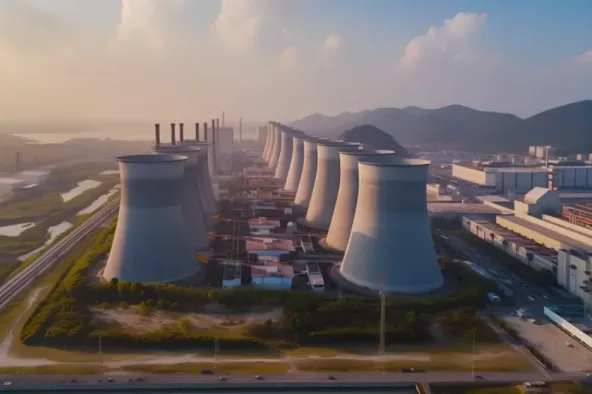
Thermal power plants and combined heat and power facilities present a combination of operating conditions that makes sustained baghouse performance genuinely difficult to maintain with standard filter media.
Tightening regulatory limits. Across most major industrial economies, particulate emission standards for power generation have moved from 30–50 mg/Nm³ a decade ago to 10 mg/Nm³ or below today, with near-zero emission zones in sensitive areas pushing requirements to 5 mg/Nm³ or less. Standard PPS needle-felt bags, while reliable under older standards, often struggle to hold consistent performance at these tighter limits over a multi-year service life.
High and variable filtration velocity. Power plant boiler flue gas volumes are large and variable. As load fluctuates, the filtration velocity — the ratio of gas flow to available filter area — can exceed the stable operating range of standard needle-felt media. When filtration velocity rises beyond the media’s design range, particle penetration increases and differential pressure becomes unstable. Conventional solutions involve adding more bags or reducing load, neither of which is cost-free.
Coal ash abrasion. Coal fly ash contains hard silica and alumina particles that physically abrade standard needle-felt filter media, particularly at higher face velocities. Abrasion thins the fiber matrix over time, reducing filtration efficiency and eventually causing pinholes and bag failures. The faster the gas velocity, the more aggressive the abrasion.
Acid dew point risk. Flue gas from coal combustion contains sulfur trioxide (SO₃), which combines with moisture to form sulfuric acid vapor below the acid dew point. If bag surface temperatures drop below this threshold — during startup, load reduction, or cold weather — acid condensation attacks the filter fiber, causing hydrolytic and chemical degradation. PPS fiber’s inherent resistance to acids makes it the preferred substrate for coal flue gas applications, but standard PPS media still has service life limitations in aggressive acid conditions.
Operational pressure to avoid downtime. Power plants run continuously. A bag replacement event requires taking a dust collector offline, which is coordinated around planned maintenance windows. If bag life is shorter than expected — whether due to abrasion, chemical degradation, or poor performance at high velocity — the entire maintenance cycle is disrupted, and unplanned shutdowns carry significant cost.
What Makes Next-Generation PPS Filter Bags Different
Standard PPS needle-felt has been the dominant filter media choice for coal-fired and biomass power plants for decades. It offers good thermal stability up to 190°C continuous, strong acid resistance including to SO₂ and HCl, and reliable mechanical strength under pulse-jet cleaning. However, standard PPS media has performance ceilings — particularly at higher filtration velocities — that are now becoming operational constraints as emission standards tighten.
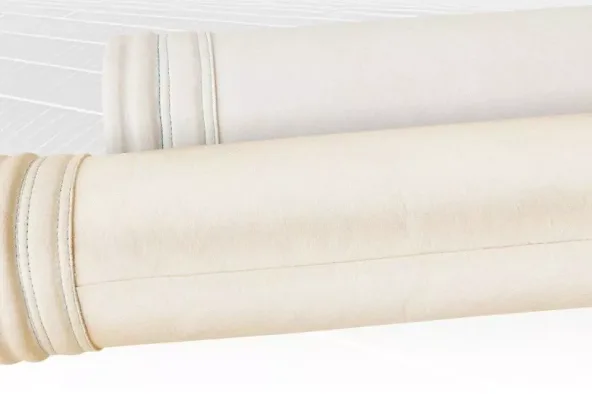
Next-generation PPS filter bags address these ceilings through advances in fiber engineering, media structure, and surface treatment that work together to deliver four specific performance improvements.
1. Higher filtration velocity tolerance
Standard PPS needle-felt is typically specified for filtration velocities in the range of 0.8–1.2 m/min, depending on dust loading and cleaning system design. Beyond this range, emissions begin to rise and differential pressure becomes unstable. Next-generation PPS filter bags are engineered to maintain stable filtration efficiency and controlled differential pressure at significantly higher face velocities — in some configurations, up to 30–50% above the range achievable with standard media.
This matters for two reasons. First, it means that plants facing increased gas volumes — due to load increases, equipment changes, or process modifications — can absorb the higher flow without adding bags or modifying the baghouse structure. Second, it means that aging baghouses where some bags have failed and been removed can continue operating without catastrophic performance degradation while awaiting a planned replacement event.
2. Abrasion resistance without membrane dependency
Conventional approaches to improving filtration efficiency at high velocities involve PTFE membrane lamination. PTFE membranes work extremely well in the right conditions, but they are sensitive to abrasion — the very problem that high-velocity coal fly ash creates. Sharp-edged particles can puncture or delaminate the membrane surface, eliminating the surface filtration benefit and creating a performance failure mode that is difficult to diagnose until emissions are already elevated.
Next-generation PPS filter bags achieve high-velocity filtration performance through fiber structure engineering rather than membrane dependency. The fiber matrix is designed to provide the necessary filtration precision through its own pore geometry and density, making the bag more tolerant of abrasive dust loading and repeated high-energy pulse-jet cleaning cycles. This results in more predictable performance over time, particularly in applications where membrane durability would otherwise be a risk.
3. Extended cleaning intervals and lower operating pressure drop
The fiber structure optimization that enables higher filtration velocity also produces a more efficient dust cake release profile. During each pulse-jet cleaning cycle, a greater proportion of the collected dust cake is dislodged from the bag surface, leaving a thinner residual layer. This produces two operational benefits: longer intervals between cleaning cycles, which reduces compressed air consumption and pulse valve wear, and a lower stable operating differential pressure across the filter bag array.
Lower differential pressure means lower fan energy consumption — a directly measurable operating cost reduction. In a large power plant baghouse running 8,000 hours per year, even a modest reduction in operating differential pressure translates to meaningful annual energy savings.
4. Extended service life
The combination of improved abrasion resistance and more efficient cleaning mechanics results in a significantly longer predicted service life compared to standard PPS needle-felt in high-velocity power plant applications. Independent testing and field data from installations in thermal power and CHP facilities indicate service life extensions of 30% or more over baseline PPS media — reducing the frequency of bag replacement events and the associated maintenance costs and downtime.
Performance Comparison: Standard PPS vs. Next-Generation PPS
| Performance Parameter | Standard PPS Needle-Felt | Next-Generation PPS |
|---|---|---|
| Continuous temperature rating | Up to 190°C | Up to 190°C |
| High-velocity filtration tolerance | 0.8–1.2 m/min typical | Higher velocity range without performance degradation |
| Membrane requirement for ultra-low emissions | Often required | Not required — achieved through fiber structure |
| Abrasion resistance at high velocity | Moderate | Enhanced — no membrane puncture risk |
| Operating differential pressure stability | Variable at high velocity | Stable across extended operating range |
| Cleaning interval | Standard | Extended — lower compressed air demand |
| Predicted service life vs. standard PPS | Baseline | 30%+ longer in high-velocity applications |
| Outlet emissions achievable | 10–20 mg/Nm³ typical | Sub-5 mg/Nm³ demonstrated |
Case Study: Thermal Power Plant Near-Zero Emission Achievement
Project background. A thermal power plant operating two baghouse dust collectors required bag replacement on one unit — Boiler No. 1 bag filter, involving 1,295 filter bags in total. The plant was operating under tightening local emission requirements and needed to achieve both regulatory compliance and reduced operating costs without modifying the existing dust collector design.
Operating conditions. The plant’s flue gas presented the typical challenges of coal-fired thermal power generation: variable load and corresponding gas volume fluctuations, coal fly ash with meaningful abrasive content, and SO₂ levels requiring acid-resistant filter media. The existing baghouse design had been adequate under previous emission standards but was struggling to achieve consistent compliance at the new 10 mg/Nm³ limit with the installed standard PPS bags.
Solution selected. Following a site inspection and analysis of the plant’s operating data — including flue gas temperature profile, filtration velocity range up to 1.2 m/min, dust loading, and cleaning system parameters — next-generation PPS filter bags were recommended. The selection was based on the following criteria: the plant’s filtration velocity was running near the upper limit of standard PPS media’s stable range; the emission target required a step improvement in filtration efficiency; and the plant strongly preferred to avoid any modification to the existing dust collector structure.
Measured performance results. After six months of continuous operation under full boiler load, the following data was recorded and formally documented in the plant’s product use report:
| Performance Metric | Measured Result | Reference / Limit |
|---|---|---|
| Online particulate monitor (outlet) | < 1 mg/Nm³ | Regulatory limit: 10 mg/Nm³ |
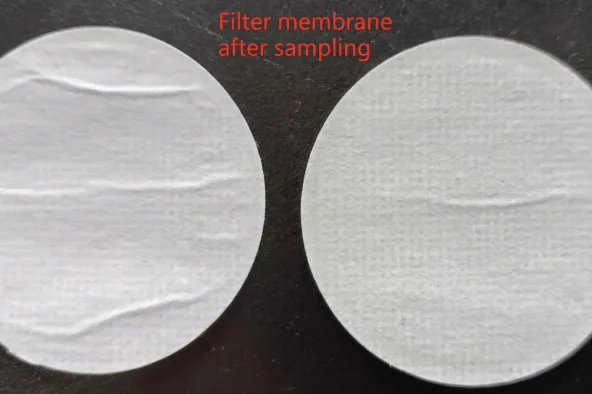
| Field sampling average (outlet) | 1.5 mg/Nm³ | Regulatory limit: 10 mg/Nm³ |
| Operating differential pressure | ~500 Pa | Stable — no upward drift observed |
| Cleaning cycle interval | ~4 hours | Extended vs. standard PPS baseline |
| Performance margin vs. permit | 85% below limit | — |
The 4-hour cleaning cycle interval is particularly significant: under equivalent operating conditions, standard PPS needle-felt typically requires cleaning cycles of 1–2 hours to maintain stable differential pressure. Doubling the interval directly halves the compressed air and electrical energy consumed by the pulse-jet cleaning system — a measurable reduction in operating cost that compounds across an 8,000-hour annual operating schedule.
Quantified operating cost savings. Based on field data from this and comparable installations, next-generation PPS filter bags deliver the following documented cost reductions in a typical 130-tonne boiler application:
- Fan energy savings: approximately ¥60,000 per year — achieved through lower stable operating differential pressure reducing fan power demand. The saving scales with boiler size; larger gas volumes produce proportionally greater fan energy reductions.
- Pulse-jet cleaning energy: approximately 50% reduction — both electrical consumption of the cleaning system and compressed air consumption are halved when the cleaning interval doubles.
- Baghouse modification cost: eliminated — no structural changes required for existing high-velocity baghouses. For new builds, the higher velocity tolerance means a smaller baghouse footprint, reducing both fabrication and procurement cost.
- Installation labor: reduced — the bag design simplifies transport and on-site installation, reducing labor hours per change-out event.
The facility achieved near-zero particulate emission status — confirmed by both continuous online monitoring and independent field sampling — satisfying the regulatory authority and the plant’s internal environmental performance targets, without any capital expenditure on baghouse modification.
Is a Next-Generation PPS Bag Upgrade Right for Your Plant?
The case for upgrading to next-generation PPS filter bags is strongest when one or more of the following conditions apply to your current operation:
Your current bags are approaching end of service life and your emission permit has been tightened since the last replacement. This is the most common scenario. A bag change-out is already scheduled; the question is whether the replacement media can achieve the new target.
Your baghouse is running at higher filtration velocity than its original design intent. Plant expansions, increased boiler load, and changes in coal blend all increase flue gas volume over time. If your current differential pressure is higher than optimal or your emissions are trending upward, velocity is often the first variable to investigate.
You have experienced membrane bag failures due to ash abrasion. If a previous upgrade to PTFE membrane bags resulted in shorter-than-expected service life due to membrane puncture from abrasive fly ash, next-generation fiber-structure PPS is an alternative path to improved filtration efficiency without membrane vulnerability.
You need to demonstrate near-zero emission capability without capital investment. Regulatory reporting, environmental certification, or stakeholder requirements may demand performance significantly below the permit limit. A 1.5 mg/Nm³ result — 85% below a 10 mg/Nm³ limit — provides a demonstrable compliance margin without baghouse engineering.
Key Procurement Specifications
When evaluating next-generation PPS filter bags, plant engineers and procurement teams should request the following from suppliers:
- Filtration efficiency data at the plant’s actual filtration velocity. Ask for test data at your specific operating velocity range, not just standard-condition lab results.
- Dust cake release performance at elevated velocity. Request cleaning efficiency data — specifically residual layer thickness after pulse-jet cleaning — at your operating conditions.
- Abrasion resistance test data. Particularly relevant if current bag failures have shown abrasion-pattern wear at the inlet zone.
- Predicted service life estimate under your specific operating conditions. A reliable supplier will provide this estimate with supporting field data, not just a percentage claim.
- Cage compatibility and specification. Confirm filter bag cage dimensions, wire count, and surface treatment are matched to the new bags. Mismatched cages are a common source of premature wear at the bag-to-cage interface.
- Compressed air demand reduction estimate. If extended cleaning intervals are a claimed benefit, ask for quantified data from comparable installations.
Conclusion
The power generation sector is now operating under emission standards that standard PPS needle-felt filter bags were not designed to meet — at least not consistently, over multi-year service lives, at the filtration velocities that modern plant operations demand.
Next-generation PPS filter bags close that gap. Engineered for higher velocity tolerance, improved abrasion resistance, stable low differential pressure, and extended service life, they deliver near-zero particulate emission performance within the existing baghouse footprint — no structural modifications, no pleated cartridge conversions, no capital expenditure beyond the bags themselves.
The case study above — formally documented in a plant product use report — demonstrates online outlet readings below 1 mg/Nm³ and a field sampling average of 1.5 mg/Nm³ at a thermal power plant with a 10 mg/Nm³ regulatory limit, alongside a 4-hour cleaning cycle interval, stable 500 Pa differential pressure, and approximately 50% reduction in pulse-jet energy consumption. That outcome is now repeatable across a wide range of power generation applications with the right media specification.
At Omela Filtration, our technical team works directly with power plant engineers to evaluate current baghouse conditions, review flue gas and dust characteristics, and recommend the most appropriate PPS filter bag specification for each application.
Author

Jessica Ma – Senior Filtration Engineer, Omela Filtration
Jessica Ma is a senior filtration engineer at Omela Filtration, specializing in dust and liquid filtration. With over 15 years of experience, she focuses on optimizing baghouse performance, enhancing filtration efficiency, and developing high-performance solutions for industrial dust collectors and precision liquid filtration applications.