
Glass manufacturing is a deceptively difficult dust collection application. On paper, the operating temperatures at many glass furnace baghouses look moderate — well within the range of common filter media like polyester or even standard PPS. Plants specify accordingly, install the bags, and watch them fail in six months or less. The replacement cycle repeats, maintenance costs accumulate, and the prevailing assumption becomes that short bag life is just part of operating a glass furnace.
It isn’t. The reason glass furnace filter bags fail early has almost nothing to do with temperature and almost everything to do with what’s in the flue gas that temperature readings alone don’t capture. Understanding this distinction — and specifying filter media based on gas chemistry rather than just operating temperature — is the difference between a 6-month bag life and a 3-year bag life in the same application.
What Makes Glass Furnace Flue Gas Different from Other Industrial Dust
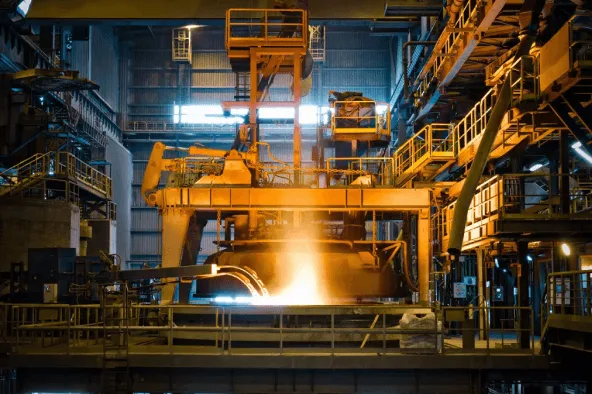
The raw materials used in glass production — primarily silica sand, soda ash (sodium carbonate), limestone, dolomite, and various metal oxide colorants — melt at temperatures above 1,500°C in the furnace. The flue gas exiting the furnace and passing through the emission control train has been cooled substantially by the time it reaches the baghouse, which is why the operating temperature at the bag filter often looks unremarkable on the data sheet.
But the gas chemistry tells a completely different story.
Hydrogen fluoride — the chemical that kills filter bags
Fluoride compounds are used in glass manufacturing as fluxing agents to lower the melting point of the glass batch. When these fluoride compounds decompose at furnace temperatures, they release hydrogen fluoride (HF) into the flue gas stream. HF is a strong acid that attacks most organic filter media fibers at the molecular level — it’s not a gradual process of surface corrosion but a chemical degradation of the polymer backbone that progressively weakens the fiber until it can no longer maintain structural integrity under the mechanical stress of pulse-jet cleaning.
Polyester fiber is particularly vulnerable to HF attack. The ester linkages in the polyester polymer chain are susceptible to acid-catalyzed hydrolysis, and HF accelerates this process significantly even at moderate temperatures. A polyester bag operating at a perfectly reasonable 110°C in a glass furnace baghouse will degrade and fail in a fraction of the time it would last in a non-fluoride-containing gas stream at the same temperature — not because the temperature is too high, but because the fluoride chemistry is destroying the fiber.
Sulfur dioxide and the acid dewpoint problem
Glass furnaces using fossil fuel combustion produce SO₂ in the flue gas. When SO₂ combines with moisture — and glass furnace flue gas does contain moisture from combustion products and from the batch materials — it forms sulfurous acid (H₂SO₃) and, with further oxidation, sulfuric acid (H₂SO₄). If the gas temperature at the baghouse drops to or below the acid dewpoint — which can happen during low-load operation, startup, or shutdown — these acids condense on the filter media surface and accelerate the chemical degradation that the fluoride compounds have already initiated.
The process train in modern glass plants typically includes multiple stages of emission control upstream of the baghouse: in-furnace SCR or SNCR for NOₓ reduction, electrostatic precipitation for initial particulate removal, SCR catalytic reactors, and semi-dry desulfurization for SO₂ reduction. The baghouse sits at the end of this train, which means it sees the residual gas chemistry that has passed through all the upstream treatment stages. The SO₂ concentration at the baghouse inlet is lower than at the furnace exit, but it’s not zero — and in combination with HF and moisture, even low residual SO₂ concentrations contribute to the acid attack mechanism.
Alkaline dust and the dual-chemistry problem
The particulate matter captured in a glass furnace baghouse is predominantly alkaline — sodium carbonate, calcium carbonate, and silica-based glass batch fines. This creates an unusual situation where the gas phase is acidic (HF, SO₂) while the dust phase is alkaline. The filter bag is simultaneously exposed to acid gas penetrating from the gas side and alkaline dust cake loading from the particulate side. Filter media that resists acids well but not alkalis — or vice versa — will fail from whichever chemistry it can’t handle.
Why PPS Filter Bags Are the Correct Specification for Glass Furnace Applications
For the specific combination of conditions found in most glass furnace baghouses — moderate continuous temperatures (100–160°C), HF and SO₂ in the gas phase, alkaline particulate, and high moisture — PPS (polyphenylene sulfide) filter bags provide the most appropriate balance of chemical resistance, thermal capability, and cost-effectiveness.
Chemical resistance to the specific species present
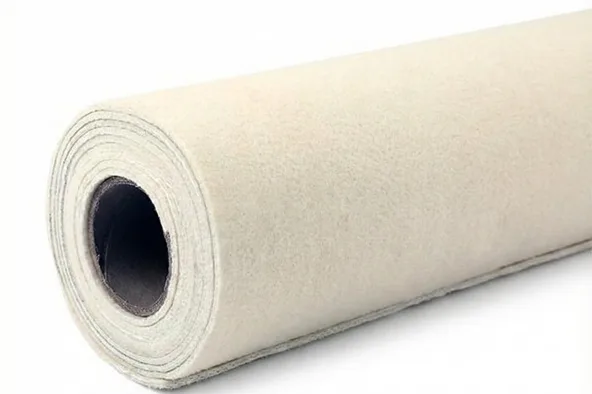
PPS has excellent resistance to both acids and alkalis across the concentration ranges found in glass furnace flue gas. The polyphenylene sulfide polymer backbone does not contain the hydrolyzable ester or amide bonds that make polyester and aramid vulnerable to acid-catalyzed degradation. PPS maintains its fiber integrity in the presence of HF, SO₂, and the resulting sulfuric acid mist that forms at or near the acid dewpoint temperature.
This is the critical specification advantage over polyester in glass furnace applications. Both materials can handle the operating temperature — 110°C continuous is well within polyester’s 130°C rating. But polyester’s polymer chemistry makes it inherently vulnerable to the fluoride and sulfur acid species that PPS handles without degradation. The 6-month failure pattern that characterizes polyester in glass furnace baghouses is a chemistry problem, not a temperature problem.
Temperature capability with margin
PPS handles continuous operating temperatures up to 160°C with peaks to 190–200°C. For glass furnace baghouses operating at 110°C continuous with peaks to 160°C, this provides meaningful thermal margin — approximately 50°C of continuous margin and 30–40°C of peak margin. This margin matters during process upsets, furnace transitions, and situations where the upstream gas conditioning system temporarily underperforms.
For applications where the operating temperature regularly approaches or exceeds 200°C — which can occur in some glass furnace configurations or in combined glass and metal processing facilities — PTFE or fiberglass filter bags would be the appropriate specification instead of PPS.
Hydrolysis resistance
PPS is inherently resistant to hydrolysis — the degradation mechanism where water molecules break polymer bonds in the presence of acid or alkaline catalysts. In a glass furnace baghouse where moisture content is significant and acid species are present, hydrolysis resistance is essential for achieving multi-year bag service life. Polyester’s vulnerability to hydrolysis in this environment is the primary reason it fails so quickly, even though the temperature is within its rated range.
Product Advantages: What Separates a 6-Month Bag from a 3-Year Bag
Beyond filter media chemistry, the construction and engineering of the filter bag itself determine whether the theoretical performance of the media translates into actual field performance. Three product characteristics are decisive in glass furnace applications.
Structural optimization for chemical environments
The filter media substrate must combine the chemical-resistant PPS fiber with a reinforced base fabric that maintains dimensional stability under the combined stress of thermal cycling during furnace startups and shutdowns, chemical exposure from the acid gas environment, and sustained mechanical loading from pulse-jet cleaning cycles. The base fabric provides the structural backbone; the needle-felt fiber layer provides the filtration surface. If either component is underspecified, the bag fails — either through structural collapse (weak base fabric) or through filtration failure (degraded fiber layer) — even though the other component is performing correctly.
Anti-corrosion surface treatment on the PPS media further enhances the resistance to HF and sulfuric acid attack at the fiber surface level. This treatment creates a protective barrier that slows the rate of chemical interaction between the acid gas species and the PPS fiber, extending the effective service life of the media in the most aggressive portion of the chemical exposure spectrum.
High-efficiency, low-resistance filtration
Glass furnace particulate includes very fine glass fiber dust, silica particles, and condensed metal oxide fines in the 1–10 μm range. Achieving less than 5 mg/m³ emission concentration with this particle distribution requires either high-precision surface filtration (PTFE membrane lamination) or correctly optimized depth-filtration media with the right fiber diameter distribution and fabric weight.
For glass furnace applications operating at moderate temperatures, a well-engineered PPS needle-felt with appropriate surface treatment achieves the required filtration precision at lower differential pressure than heavy-weight alternatives — which translates to lower fan energy consumption over the bag service life. The smooth, calendered surface of quality PPS media also releases the alkaline glass dust cake more cleanly during pulse-jet cleaning, preventing the progressive pressure drop buildup that characterizes poorly specified media in this application.
Extended service life — the economic case
The economics of filter bag specification in glass furnaces are straightforward when you calculate total cost rather than unit price.
A polyester bag at a lower price per unit that lasts 6 months means two complete bag changes per year. Each change requires production downtime, maintenance labor, bag procurement and logistics, and a startup period during which emissions are at their worst. Over a 3-year period, that’s six complete bag changes.
A PPS bag at a higher unit price that lasts 3 years means one bag change in the same period. The total expenditure on bags, labor, downtime, and startup-period emission risk is dramatically lower despite the higher per-bag cost. The maintenance planning becomes predictable. The emission compliance risk during startup periods drops by a factor of six.
Case Study: Float Glass Production Facility — From 6-Month Failures to 3-Year Service Life
A float glass manufacturing facility was experiencing exactly the failure pattern described above. The baghouse collected dust from the float glass furnace, processing 140,000 m³/h of flue gas through an online pulse-jet cleaning system at 110°C continuous operating temperature with peaks to 160°C. The emission compliance requirement was less than 5 mg/m³.
The process train followed a multi-stage emission control sequence: in-furnace denitration → electrostatic precipitator → SCR → semi-dry desulfurization → bag filter → stack.
The plant had been using conventional filter bags that were failing at approximately 6-month intervals. Each failure event required production disruption for bag replacement, and the cumulative annual maintenance cost ran into significant figures. The plant attributed the failures to aggressive operating conditions and had accepted the replacement frequency as unavoidable.
On-site analysis identified the root cause: the previous filter media specification had not accounted for the hydrogen fluoride content in the flue gas. The bags were failing through acid-catalyzed fiber degradation driven by HF and residual SO₂, not through thermal stress. The operating temperature of 110°C was well within the previous media’s thermal capability — the chemistry was the failure mechanism, not the temperature.
The replacement specification was Omela PPS filter bags with anti-corrosion surface treatment, engineered specifically for glass furnace acid gas environments. The PPS media was selected based on the actual gas chemistry — HF resistance, SO₂/sulfuric acid resistance, hydrolysis resistance in high-moisture conditions — rather than the temperature rating alone.
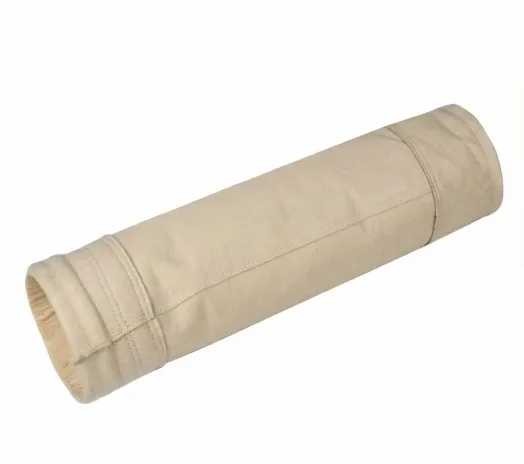
After installation, third-party emission testing confirmed actual particulate concentrations well below the 5 mg/m³ compliance limit. The bags have been operating continuously for over three years with no failures and no measurable performance degradation — a six-fold improvement in service life compared to the previous specification.
The annual maintenance cost reduction from eliminating five of six annual bag changes covered the total cost of the PPS bags within the first year of operation.
Filter Media Selection Framework for Glass Furnace Applications
The correct specification approach for glass furnace baghouses starts with gas chemistry analysis, not temperature rating.
Step 1: Identify acid gas species. Does the flue gas contain HF from fluoride flux materials? What is the residual SO₂ concentration after desulfurization? Are there other acid species from colorant or modifier compounds?
Step 2: Assess moisture and dewpoint risk. What is the moisture content at the baghouse inlet? What is the calculated acid dewpoint temperature? How much margin exists between the operating temperature and the dewpoint during low-load operation, startup, and shutdown?
Step 3: Match media to chemistry, not just temperature. If HF is present at any significant concentration, polyester and acrylic are eliminated regardless of temperature rating. PPS handles the HF and SO₂ chemistry at temperatures up to 160°C continuous. For applications above 160°C, or where the acid gas concentrations are extremely high, PTFE filter bags provide the next level of chemical resistance.
Step 4: Verify construction quality. Triple-seal bag construction prevents seam bypass. Anti-corrosion surface treatment extends media life in the most aggressive chemical exposure zones. Correct cage specification prevents mechanical damage that compounds chemical degradation.
For a deeper understanding of the factors that determine filter bag service life across all industrial applications, our article on top 5 factors influencing the service life of dust filter bags provides the broader context.
Author

Jessica Ma – Senior Filtration Engineer, Omela Filtration
Jessica Ma is a senior filtration engineer at Omela Filtration, specializing in dust and liquid filtration. With over 15 years of experience, she focuses on optimizing baghouse performance, enhancing filtration efficiency, and developing high-performance solutions for industrial dust collectors and precision liquid filtration applications.