
Key Takeaways
- A dust collector cage is not just a support frame; it directly affects dust collector filter bags, bag movement, pulse cleaning behavior, sealing stability, abrasion risk, and service life.
- Filter bag cages must match bag diameter, bag length, tubesheet design, venturi structure, dust chemistry, temperature, and cleaning method.
- Bent cages, rusted cages, broken welds, rough surfaces, poor coatings, wrong cage diameter, and damaged joints can cause bag abrasion, holes, dust leaks, high emissions, and premature filter bag failure.
- In corrosive, humid, high-temperature, or high-pulse systems, silicone coated dust bag cages, galvanized cages, stainless steel cages, or special coated cages should be reviewed.
- Cage inspection should be done before installing new bags, because reusing damaged cages can destroy new filter bags quickly.
- To receive a faster recommendation, send cage diameter, length, wire count, ring spacing, material, coating, venturi details, bag size, dust type, temperature, cage photos, and failure photos to contact Omela Filtration.
Why Dust Collector Cage Failure Matters
In a pulse-jet baghouse, the filter cage sits inside the filter bag and prevents the bag from collapsing during filtration and pulse cleaning. EPA describes pulse-jet collectors as systems where bags hang from the tubesheet, a wire-mesh cage is located inside the bags, and compressed-air pulses remove dust cake from the outside of the bags.
This means the cage is in constant contact with the filter bag. During every filtration cycle and every cleaning pulse, the fabric moves against the cage surface. If the cage is smooth, straight, correctly sized, and corrosion-resistant, it supports the bag and helps the system run steadily. If the cage is bent, rusted, poorly welded, or the wrong size, it becomes a hidden source of filter bag failure.
Many plants replace filter bags when emissions rise or pressure drop becomes unstable, but they do not inspect the old cages carefully. The result is predictable: new bags are installed on damaged cages, and the same failure comes back quickly.
What a Filter Bag Cage Actually Does
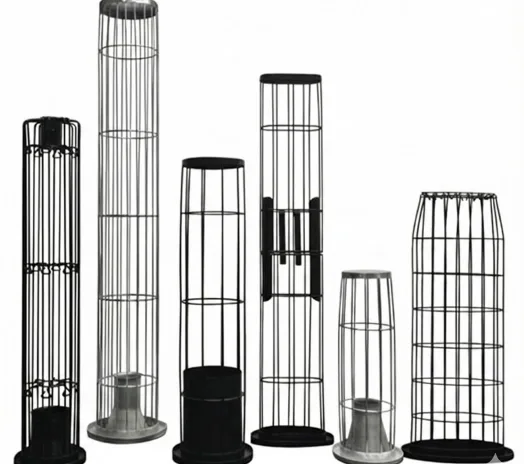
A filter bag cage provides the internal shape and support for the filter bag. It keeps the bag open, prevents collapse, supports airflow, helps maintain filtration area, and guides the bag movement during pulse cleaning.
Omela’s filter bag cage page describes cages as internal frames used inside baghouse and dust collector filter bags, with key selection criteria including cage material, corrosion and heat resistance, wire diameter, cage diameter, cage length, ring spacing, surface treatment, coating, venturi fit, and filter bag compatibility.
A good cage should support the bag without stretching it, rubbing it, cutting it, or blocking cleaning air. The correct design is not only “a metal frame inside a bag.” It is a matched component in the baghouse system.
How a Bad Cage Destroys a Good Filter Bag
Filter bag failure is often blamed on media quality, but the cage may be the real cause. A high-quality PPS, PTFE, polyester, acrylic, Nomex, fiberglass, or P84 bag can still fail early if it is installed on a bad cage.
Baghouse.com notes that bent, damaged, warped, or corroded cages can cause filters to fail prematurely. Sharp points from broken wires or cracked welds can physically damage the bag and create tears or holes. Rust and corrosion can also create abrasion and lead to holes in the fabric.
The damage is not always immediate. A rough weld may start as a small wear mark. A corroded wire may slowly rub through the felt. A slightly bent cage may cause bags to touch each other during pulse cleaning. After weeks or months, the plant sees dust leakage, high outlet emissions, or repeated bag replacement.
Common Dust Collector Cage Failure Modes
Bent or Warped Cages
A bent cage no longer supports the bag evenly. During pulse cleaning, the bag may move unevenly, hit neighboring bags, rub against the housing, or flex repeatedly at one weak point.
Baghouse.com explains that bent cages can cause filters to rub against each other or against collector walls during pulsing, creating localized wear spots and tears.
Bent cages are common after rough maintenance handling, poor storage, improper removal, dropped cages, stacked cages, or temperature excursions. A cage does not need to be completely crushed to cause problems. Even a small bend can change bag movement and create a repeated wear pattern.
Rusted or Corroded Cages
Rust is one of the most common cage-related causes of filter bag holes. A rusted cage surface is no longer smooth. It becomes abrasive, and the bag rubs against that rough surface during every cleaning cycle.
Corrosion can come from moisture, acid gas, chemical attack, condensation, improper outdoor storage, cold-end corrosion, or process upset conditions. Baghouse.com notes that high moisture levels can promote cage corrosion quickly, and rusted or corroded cages can wear through the bag fabric and cause holes.
Rust also affects installation. A rough cage can snag the bag during insertion, damage membrane surfaces, scrape anti-static fibers, or weaken the felt before the baghouse even starts running.
Broken Welds and Sharp Edges
Poor welding and broken joints can create small sharp points. These sharp points may not look serious during a quick inspection, but they can cut filter media during pulsing.
This is especially risky for PTFE membrane bags, fiberglass bags, anti-static bags, and coated media. A small scratch or pinhole can grow into a dust leak. If the same failure appears in the same vertical line on multiple bags, the cage wire or weld line should be checked carefully.
A cage should be smooth along every wire, ring, joint, collar, venturi connection, and bottom pan. The bottom cap is also important because many bags fail near the lower section due to cage contact, vibration, or dust turbulence.
Wrong Cage Diameter
A cage that is too large can stretch the bag too tightly. This increases friction, makes installation difficult, and can damage the filter media. A cage that is too small allows too much bag movement, which can cause flex fatigue and poor cleaning.
Bag-to-cage fit is one of the quiet causes of poor baghouse performance. Baghouse.com notes that filters that are too loose or too tight can limit collection efficiency and shorten service life, and that correct “pinch” depends on fabric type and cage dimensions.
The cage should support the bag smoothly without forcing the fabric. This is why cage diameter, bag diameter, felt thickness, seam structure, and installation tolerance should be reviewed together.
Wrong Cage Length
A cage that is too long may push into the bag bottom and create bottom punctures. A cage that is too short may leave the lower part of the bag unsupported, causing movement, collapse, poor cleaning, or bottom wear.
Bottom failure is often misread as a bag quality problem. In reality, the cage may be pressing into the bottom disc, the bag may be too long, or the hopper/inlet airflow may be attacking the lower bag area.
When replacing bags, do not measure only the filter bag. Measure the cage length, bottom cap condition, bag length, tubesheet position, and hopper clearance.
Poor Surface Coating or No Coating
For standard dry dust, a galvanized or carbon steel cage may be enough. But for high moisture, corrosive gas, acid/alkali exposure, adhesive dust, or high-temperature conditions, coating becomes important.
Omela’s silicone coated dust bag cage page describes silicone coated cages as steel support cages treated with a high-temperature silicone layer to help protect both cage and filter bag in systems where condensation, corrosive off-gases, or adhesive particulates are present.
A poor coating can peel, crack, or create rough spots. A missing coating in corrosive conditions can lead to rust and pitting. A good coating should be uniform, smooth, and compatible with the actual temperature and gas chemistry.
Field Failure Patterns That Point to Cage Problems
A cage problem often leaves a visible pattern on the filter bag. If maintenance teams know what to look for, they can identify the problem before replacing another full set of bags.
Vertical wear marks usually point to cage wire abrasion. Random holes near the lower bag section may indicate bent cages, rough bottom caps, or cage length problems. Dust leakage near the top can indicate poor seating, wrong snap band fit, tubesheet leakage, or cage alignment problems. Multiple bags failing in the same row may point to installation damage, inlet abrasion, or poor air distribution.
EPA’s fabric filter inspection manual lists bag problems such as pinhole leaks, tears, punctures, moisture damage, twisting, chafing, abrasion, ineffective cleaning, and blinding; it also notes that support structures such as wire mesh cages and suspension systems must be properly managed for reliable performance.
Based Case Lessons from Industry Sources
Case Lesson 1: Reused Damaged Cages Causing New Bag Failure
Baghouse.com reports that cages may be reused in some applications, but not when they are bent, broken, warped, corroded, or damaged by mishandling. It explains that reused damaged cages can cause new filters to fail much sooner, increasing maintenance cost, shutdown risk, lost production, and early replacement cost.
The practical lesson is clear: a new filter bag does not reset the system if the old cage is still damaging the fabric.
Case Lesson 2: Bent Cages, Leaks, and Bag-to-Bag Contact from Installation Issues
EPA’s operation and maintenance manual states that in pulse-jet systems, problems involving bent cages, bag/tubesheet seal leaks, and bag-to-bag contacts primarily result from improper installation, and that proper training of personnel responsible for bag installation can eliminate this difficulty.
The practical lesson is that cage failure is not always a purchasing problem. It can also be a maintenance procedure problem.
Case Lesson 3: Cleaning Stress Makes Cage Problems Worse
EPA’s O&M manual also notes that cleaning method is closely related to fabric construction and fiber type, and improper cleaning can cause premature fabric failure, incomplete cleaning, or blinding. It also notes that higher pressure drop places greater stress on fabric and can decrease bag life.
The practical lesson is that a rough or wrong-size cage becomes more damaging when pulse pressure, cleaning frequency, or differential pressure is poorly controlled.
Cage Inspection Before Installing New Filter Bags
Before installing new filter bags, inspect the old cages carefully. A cage that looks “usable” from a distance may still have rough welds, rust, pitting, bent wires, damaged joints, or coating loss.
A practical inspection should check cage straightness, wire condition, weld quality, ring spacing, bottom cap smoothness, venturi fit, collar shape, coating condition, corrosion, diameter, length, and whether the cage slides into the bag smoothly. If the cage scratches the bag during installation, it will likely damage the bag during operation.
Cages should also be checked against the tubesheet and filter bag top style. If the cage does not sit correctly, it may affect the snap band, top seal, or cleaning alignment.
Dust Collector Cage Inspection Checklist
- Cage outside diameter and total length
- Number of vertical wires and wire diameter
- Ring spacing and ring weld condition
- Cage straightness and roundness
- Rust, pitting, corrosion, or coating loss
- Broken welds, sharp edges, burrs, or rough joints
- Bottom cap condition and bottom smoothness
- Venturi fit, collar condition, and top connection
- Multi-section joint alignment and locking condition
- Bag-to-cage fit and installation smoothness
- Match with bag diameter, bag length, tubesheet, and cleaning system
- Photos of damaged cages, failed bags, and clean-air dust pattern
When Can Old Cages Be Reused?
Old cages may be reused when they are straight, smooth, clean, corrosion-free, properly coated, correctly sized, and mechanically stable. They should match the new filter bags and the baghouse design.
Old cages should not be reused if they are bent, warped, rusted, corroded, cracked, sharp, poorly coated, undersized, oversized, or difficult to insert into the bag. They should also be replaced if the old filter bags show repeated vertical wear marks, bottom punctures, cage-line holes, or row-by-row failure patterns.
If only part of the bag set is being replaced, cage condition should still be checked. A partial changeout can create mixed conditions where some cages continue to damage new bags while other areas perform normally.
How to Prevent Cage-Related Filter Bag Failure
The first step is correct cage sizing. The cage diameter and length must match the bag dimensions, felt thickness, top design, bottom structure, tubesheet, and cleaning system.
The second step is correct material selection. Carbon steel may be enough for standard dry dust. Galvanized steel is common for general corrosion protection. Stainless steel may be needed for higher temperature or more corrosive gas. Silicone coating, epoxy coating, PTFE coating, or other finishes may be needed when moisture, acid gas, alkali, adhesive dust, or corrosion risk is present.
The third step is installation control. Cages should not be forced into bags. Bags should not be dragged over rough cage edges. Long cages should be handled carefully to avoid bending. Multi-section cages should be aligned correctly.
The fourth step is routine maintenance. Track differential pressure, emissions, visible leakage, pulse pressure, cleaning frequency, and failure location. EPA identifies pressure differential, outlet concentration, inlet temperature, exhaust flow, cleaning mechanism operation, and fan current as performance indicators for fabric filters.
Cage Material and Coating Selection Guide
| Cage Option | Best Use | Main Benefit | Watch Point |
|---|---|---|---|
| Carbon Steel Cage | Standard dry dust collection | Economical and strong | Not ideal for corrosive or wet gas |
| Galvanized Steel Cage | General industrial dust collection | Better corrosion protection than bare steel | Coating must remain smooth and intact |
| Silicone Coated Cage | Moist, mildly corrosive, adhesive, or hot dust | Smooth surface and improved corrosion resistance | Coating quality must be checked |
| Stainless Steel 304 Cage | High-temperature or moderately corrosive gas | Good corrosion and heat resistance | Higher cost than carbon steel |
| Stainless Steel 316L Cage | More corrosive gas, chlorides, chemical exhaust | Better corrosion resistance | Higher cost |
| Titanium Cage | Highly aggressive chemical conditions | Excellent corrosion resistance | Premium option for special cases |
This table is only a first reference. The final cage choice should consider temperature, moisture, acid/alkali gas, dust abrasiveness, cleaning intensity, expected service life, and maintenance access.
Common Mistakes to Avoid
The first mistake is replacing filter bags without inspecting cages. This often repeats the same failure.
The second mistake is assuming rust is only cosmetic. Rust can act like sandpaper against the filter bag.
The third mistake is ignoring cage diameter. A cage that is too tight or too loose can shorten bag life.
The fourth mistake is reusing cages after fire, moisture upset, acid attack, or outdoor storage without inspection.
The fifth mistake is treating cage coating as optional in corrosive or high-moisture environments.
The sixth mistake is blaming filter media for holes that follow the cage wire pattern.
To Request a Quote
For dust collector cages or cage-related filter bag failure review, please send:
- Baghouse type and application
- Dust type, temperature, moisture, and gas chemistry
- Current filter bag material and bag size
- Cage outside diameter and total length
- Number of vertical wires and wire diameter
- Ring spacing and cage shape
- Cage material and surface coating
- Venturi, collar, flange, or joint details
- Tubesheet hole size and bag top style
- Photos of cages, failed bags, holes, wear marks, and clean-air side dust
- Current service life and failure frequency
- Quantity and delivery destination
With this information, Omela can help compare carbon steel, galvanized steel, silicone coated, stainless steel, titanium, and custom cage options for your baghouse system.
Omela Engineering View
Filter bag cages are often overlooked because they are not the visible filtration surface. But in a pulse-jet baghouse, the cage is one of the most important parts affecting filter bag life.
A filter bag can fail because the material is wrong. But it can also fail because the cage is bent, rusted, rough, oversized, undersized, poorly coated, or damaged during installation. Before blaming the new bag, inspect the cage.
The right approach is to treat the filter bag and cage as one matched assembly. The bag provides filtration. The cage provides support. The tubesheet provides sealing. The cleaning system controls dust cake release. When these parts match, the baghouse runs more steadily. When one part is wrong, the whole system becomes unstable.
Omela Filtration helps customers review filter bag failure patterns, inspect cage-related risks, select suitable cage materials and coatings, and match filter bags with the correct support cages for industrial dust collection systems.
FAQ
What is a dust collector cage?
A dust collector cage is the internal support frame installed inside a filter bag in a baghouse or dust collector. It keeps the bag open, prevents collapse, and supports the bag during filtration and pulse cleaning.
How do bent cages damage filter bags?
Bent cages change the shape and movement of the filter bag. During pulse cleaning, the bag may rub against the cage, neighboring bags, or the collector wall, causing abrasion, holes, and early failure.
Can rusted cages be reused?
Rusted cages should be inspected very carefully and are usually not recommended for reuse if the rust is rough, pitted, or spreading. Rust can abrade the filter bag and create holes.
Why do new filter bags fail quickly after replacement?
New filter bags may fail quickly if they are installed on bent, rusted, rough, or wrong-size cages. Other causes include poor installation, tubesheet leakage, high pulse pressure, abrasive dust, moisture, or unsuitable media.
What cage material should I choose?
Cage material depends on temperature, moisture, corrosion risk, dust chemistry, and cost target. Carbon steel may work for dry standard dust, galvanized steel for general use, stainless steel for corrosion or high temperature, and coated cages for moisture or corrosive environments.
What information is needed to quote filter bag cages?
To quote filter bag cages, provide cage diameter, length, wire count, wire diameter, ring spacing, cage material, coating, venturi type, top and bottom connection, bag size, operating conditions, quantity, and photos.
Should filter bags and cages be replaced together?
Not always, but cages should always be inspected before new bags are installed. If cages are bent, rusted, rough, corroded, or incorrectly sized, replacing bags without replacing cages may lead to repeated failure.
Author

Jessica Ma – Senior Filtration Engineer, Omela Filtration
Jessica Ma is a senior filtration engineer at Omela Filtration, specializing in dust and liquid filtration. With over 15 years of experience, she focuses on optimizing baghouse performance, enhancing filtration efficiency, and developing high-performance solutions for industrial dust collectors and precision liquid filtration applications.