
Key Takeaways
Pleated filters can be a practical upgrade for an existing baghouse when the real problem is limited filtration area, high air-to-cloth ratio, high differential pressure, short filter life, poor airflow, or difficult bag-and-cage replacement.
A pleated filter is not simply a “better filter bag.” It is an extended-surface filter element designed to provide more media area within the same tubesheet footprint. In many pulse-jet baghouses, pleated elements can replace traditional round filter bags and cages without rebuilding the whole collector.
However, pleated filters are not suitable for every dust stream. Moisture, condensation, sticky dust, oil mist, tar, poor cleaning settings, high dust loading, and unsuitable gas chemistry can cause pleat packing, blinding, or premature failure.
Omela Filtration supplies pleated filter bags, industrial dust filter bags, matched filter bag cages, PPS filter bags, and PTFE filter bags for industrial dust collection systems.
What Are Pleated Filters for a Baghouse?
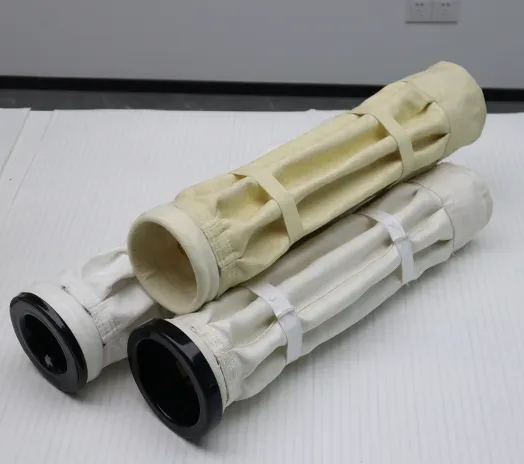
Pleated filters, also called pleated filter bags, pleated bag filters, pleated baghouse filters, or pleated filter elements, are dust collector filters made with folded filter media. Instead of using a long cylindrical felt bag supported by a separate metal cage, a pleated filter usually combines the media and support structure into one element.
The pleated shape allows more filtration area to fit inside the same baghouse cell. This is why pleated filters are often used in retrofit projects where the collector housing is still usable, but the system needs more airflow capacity, lower pressure drop, or longer filter life.
In a standard pulse-jet baghouse, airflow passes through the filter media while dust forms a cake on the outside surface. The pulse-cleaning system removes this dust cake periodically. Pleated filters work on the same principle, but the larger media area reduces the load on each square foot or square meter of filter media.
This lower filtration velocity can help the collector run with lower differential pressure, fewer pulse-cleaning cycles, and more stable airflow.
Why Plants Consider Pleated Filters
Most plants do not convert to pleated filters simply because their old filter bags are worn out. They consider pleated filters because the operating conditions have changed.
Production may have increased. More pickup points may have been added. The original collector may now be undersized. Filter bags may be failing faster than expected, or maintenance teams may be spending too much time removing long dirty bags and cages.
The most common reasons include:
- High differential pressure and weak airflow
- Short filter life or frequent bag changes
- Limited space for adding more filter area
- Abrasion near the lower section of traditional bags
- Need to reduce maintenance time and compressed-air use
The key is to identify the real cause of the problem before making the conversion. Pleated filters work best when the main limitation is filter area, airflow, pressure drop, or maintenance access.
Pleated Filters vs. Standard Filter Bags
A traditional filter bag is a long tubular fabric bag installed over a metal cage. This design is proven and widely used in cement, asphalt, steel, power generation, food processing, grain handling, chemicals, and general industrial dust collection.
A pleated filter is different. It uses folded media to create more filtration area in a shorter element. In many designs, the pleated element replaces both the bag and the cage.
| Item | Standard Filter Bag and Cage | Pleated Filter Element |
|---|---|---|
| Structure | Long felt bag over metal cage | Pleated media with integrated core |
| Media area | Limited by bag diameter and length | Higher area in same tubesheet footprint |
| Installation | Bag and cage installed separately | One-piece element in many designs |
| Best use | Broad industrial applications | Retrofit, high A/C ratio, limited space, high pressure drop |
| Main risk | Cage abrasion, blinding, wrong media | Pleat packing, moisture, sticky dust |
Pleated filters are most useful when the baghouse has an area problem, airflow problem, or maintenance problem. They are less useful when the root cause is condensation, chemical attack, hopper blockage, poor duct design, or incorrect cleaning settings.
When to Consider Pleated Filters
1. The Baghouse Has a High Air-to-Cloth Ratio
Air-to-cloth ratio is the amount of airflow passing through each unit of filter media. If the ratio is too high, the dust collector is overloaded. Dust hits the filter surface at a higher velocity, penetrates deeper into the media, and becomes harder to clean.
A high air-to-cloth ratio often leads to high pressure drop, short filter life, frequent cleaning, and reduced hood capture velocity. Pleated filters can help because they increase the total media area inside the same collector. When airflow stays the same but media area increases, the air-to-cloth ratio decreases.
This is one of the strongest reasons to consider a pleated filter retrofit, especially when production has increased or the original collector was undersized.
2. Differential Pressure Is High but the Dust Cake Is Dry and Cleanable
Differential pressure is one of the most important indicators of baghouse health. If pressure drop rises too high, the fan must work harder and airflow through the system may fall.
Pleated filters can reduce pressure drop when the high differential pressure is caused by insufficient media area or excessive filtration velocity. More media area gives the air an easier path through the filter element.
However, pleated filters should not be treated as a universal cure for high pressure drop. If the dust cake is wet, sticky, oily, chemically hardened, or caused by condensation, pleated filters may make the situation worse.
A practical rule is simple: if the dust cake is dry and cleanable, pleated filters may help. If the dust cake is sticky or packed, solve the process problem first.
3. The Existing Baghouse Needs More Airflow but Cannot Be Enlarged
Many plants need more airflow but do not have the space, budget, or downtime for a new dust collector. Pleated filters can sometimes increase the airflow capacity of an existing baghouse because they add media area without changing the housing.
This can be valuable in cement handling, foundries, powder coating, grain processing, food ingredient handling, welding, metalworking, and bulk material conveying systems.
Before using pleated filters to increase airflow, the entire system still needs to be checked. Fan capacity, duct velocity, inlet design, hopper capacity, cleaning system, tubesheet hole spacing, and can velocity may still limit performance.
Pleated filters can solve a filter-area bottleneck, but they cannot solve every airflow bottleneck in the system.
4. The Bottom of Standard Filter Bags Is Wearing Out
Some baghouses have inlet designs that expose the lower part of long tubular bags to high-velocity abrasive dust. Particles repeatedly strike the bag bottoms, causing holes and early emission failures.
Pleated filters are usually shorter than the standard bags they replace. This can create more open space below the filters, allowing heavier dust to slow down and drop into the hopper before reaching the media surface.
This is why pleated filters are often considered in abrasive dust applications such as foundry sand, cement dust, lime dust, mineral powders, grinding dust, shot blasting dust, and bulk material handling.
If bag failure is caused by abrasion, the inlet design, baffle plate, hopper discharge, and filter length should all be reviewed together.
5. Filter Changeouts Take Too Much Time
Replacing traditional filter bags can be time-consuming. Workers must remove dirty cages, remove old bags, inspect or clean cages, install new bags, reinstall cages, and check sealing. Long bags are heavy, awkward, and often difficult to handle inside confined baghouse spaces.
Pleated filters can reduce maintenance time because they are often shorter and built as one-piece elements. This can make installation easier, especially in top-load baghouses.
For continuous production plants, reducing filter changeout time can be as important as extending filter life. Less downtime means more stable production, lower labor cost, and fewer safety risks during maintenance.
When Pleated Filters May Not Be the Right Choice
Pleated filters are useful, but they are not suitable for every dust collector. They need dust that can release from the pleated surface. If dust becomes wet, sticky, oily, or chemically hardened, the pleat valleys can pack with material and block airflow.
Use caution when the process has:
- Moisture, condensation, or acid dew point risk
- Sticky, oily, resinous, tar-like, or asphalt-related dust
- Very high dust loading without pre-separation
- Weak pulse cleaning or wet compressed air
- Corrosive gas or temperature beyond media limits
In these cases, the first step is not always to change the filter. It may be more important to improve insulation, control dew point, repair the cleaning system, add pre-separation, correct inlet airflow, or choose a different filter media.
Material Options for Pleated Filters
Pleated filters can be manufactured with different media. The correct choice depends on temperature, chemistry, dust type, emission target, and cleaning behavior.
Spunbond Polyester
Spunbond polyester is commonly used for dry, moderate-temperature dust. It offers good mechanical strength, pleat stability, and cost efficiency. It is often used in cement handling, grain processing, powder coating, woodworking, packaging, and general dry dust collection.
It should not be selected for hot, humid, or chemically aggressive gas streams.
Nanofiber or Fine-Fiber Media
Nanofiber media can improve surface filtration and fine dust release. It is often used when fine particles penetrate conventional felt media and create high residual pressure drop.
It can be suitable for fine powders, welding fumes, pharmaceutical dust, pigments, powder coating, and some metalworking dust.
PTFE Membrane Pleated Media
PTFE membrane media provides high surface filtration efficiency and improved dust release. It is useful when emissions are strict or when fine dust is difficult to clean from ordinary media.
The base media must still match the real operating temperature, moisture, and gas chemistry.
Aramid or PPS Pleated Media
Aramid may be considered for higher-temperature dry applications such as some asphalt or dryer systems. PPS may be considered where moisture and mildly acidic gas are present, such as certain boiler or process dust applications.
These materials require careful review. Aramid can be sensitive to moisture and chemical conditions, while PPS must be evaluated for oxidation risk.
Application Guidance by Industry
Cement and Lime Plants
Pleated filters can be effective for silo vents, mill vents, packing machines, transfer points, and clinker handling systems. They are useful when the existing collector needs more media area but cannot be easily enlarged.
Dust abrasiveness and moisture must be checked. If dust is highly abrasive, shorter pleated filters may help create a larger dropout zone, but inlet velocity and baffle design still matter.
Grain, Feed, and Food Processing
Pleated filters are often useful for dry powder handling, pneumatic conveying, mills, mixers, and packaging lines. They can reduce maintenance time and improve dust capture.
For combustible dust, antistatic media and proper explosion protection should be evaluated. Hygroscopic or oily food dust may require special media or may not be suitable for pleated filters.
Foundries and Metalworking
Foundries often deal with abrasive dust and high dust loading. Pleated filters can help if the existing baghouse has a high air-to-cloth ratio, bottom bag wear, or limited airflow capacity.
Metalworking fumes and grinding dust may benefit from surface filtration media, but oil mist or sticky residues require caution.
Asphalt, Boiler, and Power Applications
Asphalt plants, coal boilers, and heating boilers require careful review. These systems may involve elevated temperature, moisture, acidic gas, hydrocarbons, or sticky dust.
Pleated filters may help in some retrofit cases, but the filter media must be selected according to the actual gas stream. Aramid, PPS, PTFE membrane, or standard needle-felt bags may each be better depending on the operating conditions.
Public Case Lessons
Foundry Retrofit with Pleated Filter Elements
A public foundry case reported that a pulse-jet collector was upgraded with pleated filter elements to improve airflow and system performance. After conversion, the system operated with stable differential pressure and improved air volume.
The lesson is practical: pleated filters can work well when the problem is high air-to-cloth ratio, insufficient filter area, and a need for more stable collector operation.
Foundry Baghouse Life Improvement
Another public case reported that pleated bag technology significantly improved filter life compared with previous traditional bags. Before conversion, high pressure drop restricted production time. After pleated bags were installed, the foundry could operate more consistently.
The lesson is that pleated filters can be highly effective when conventional bags are overloaded and the dust can be cleaned from the pleated media surface.
Older Baghouse Upgrade
Many older baghouses were designed for lower production rates and less demanding emission targets. Pleated filters can sometimes help these collectors meet higher airflow and efficiency requirements without installing a completely new collector.
The lesson is that pleated filters are often most valuable as a retrofit solution, not necessarily as the default choice for every new baghouse.
Checklist Before Converting to Pleated Filters
Before ordering pleated filters, collect enough operating data for a technical review. A supplier should not recommend pleated filters from bag size alone.
At minimum, confirm:
- Current bag size, cage size, tubesheet hole size, and installation method
- Airflow volume, operating temperature, peak temperature, and differential pressure trend
- Dust type, particle size, dust loading, moisture, and stickiness
- Pulse-cleaning pressure, compressed-air quality, and hopper discharge condition
- Current filter life, emission target, and photos of failed bags
This information helps determine the correct media, pleat geometry, sealing design, filter length, top cap, bottom cap, and surface treatment.
Final Recommendation
Pleated filters are worth considering when a baghouse needs more filtration area, lower air-to-cloth ratio, lower differential pressure, better airflow, faster maintenance, or longer filter life without major structural modification.
They are especially useful in retrofit applications where the existing dust collector is physically sound but undersized for current production demands. They may also help reduce bottom bag abrasion, improve emissions stability, and lower compressed-air usage.
However, pleated filters are not the right solution for every process. Moisture, sticky dust, oil mist, tar, very high dust loading, corrosive gas, high temperature, weak pulse cleaning, and poor hopper discharge can cause poor results.
The best approach is to evaluate the baghouse as a system. Filter media, pleat design, tubesheet fit, sealing method, cleaning energy, airflow distribution, dust properties, and operating conditions must all work together.
Omela Filtration can help review whether pleated filter bags are suitable for your dust collector. By checking airflow, air-to-cloth ratio, differential pressure, dust type, temperature, moisture, cleaning system, and current filter failure patterns, Omela engineers can recommend a practical retrofit solution designed to improve baghouse performance without creating new operating risks.
FAQ
1. When should I consider pleated filters for my baghouse?
Consider pleated filters when your baghouse has high air-to-cloth ratio, high differential pressure, short filter life, poor airflow, frequent cleaning, bottom bag abrasion, or limited space for adding more filter area.
2. Can pleated filters reduce differential pressure?
Yes. Pleated filters can reduce differential pressure when the main problem is insufficient filtration area or excessive filtration velocity. They increase media area and lower the load on each unit of filter media.
3. Can pleated filters replace standard filter bags and cages?
In many pulse-jet baghouses, pleated filters can replace both the standard filter bag and its cage. Compatibility depends on tubesheet size, sealing design, collector type, cleaning system, and available space.
4. Are pleated filters always better than standard filter bags?
No. Pleated filters are useful in many retrofit applications, but standard filter bags may still be better for sticky dust, severe moisture, high dust loading, high temperature, or chemically complex flue gas.
5. What causes pleat packing in pleated filters?
Pleat packing can be caused by moisture, sticky dust, oil mist, tar, poor cleaning, high differential pressure, or excessive dust loading. Once dust packs into the pleat valleys, airflow may not recover easily.
6. What materials are used for pleated filter bags?
Common media include spunbond polyester, nanofiber media, PTFE membrane media, antistatic polyester, aramid, PPS, and specially treated hydrophobic or oleophobic media. The correct material depends on temperature, chemistry, dust type, and emission target.
7. What should I check before converting to pleated filters?
Check baghouse dimensions, tubesheet holes, airflow, air-to-cloth ratio, differential pressure trend, dust type, moisture, temperature, gas chemistry, pulse-cleaning system, hopper discharge, current filter life, and failure photos.
Author

Jessica Ma – Senior Filtration Engineer, Omela Filtration
Jessica Ma is a senior filtration engineer at Omela Filtration, specializing in dust and liquid filtration. With over 15 years of experience, she focuses on optimizing baghouse performance, enhancing filtration efficiency, and developing high-performance solutions for industrial dust collectors and precision liquid filtration applications.