
Key Takeaways
Sintering machine dust collector bags operate in one of the most demanding dust-collection environments in the steel industry. Sinter plants generate hot, fine, abrasive, and sometimes sticky dust, often combined with moisture, sulfur compounds, alkaline particles, and fluctuating temperatures.
The correct filter bag material should not be selected only by temperature. Sinter plant engineers must also consider moisture content, SOx, NOx, oxygen level, acid dew point, alkali dust, inlet dust concentration, particle size, abrasion, cleaning method, air-to-cloth ratio, and the required outlet emission level.
For many sinter tail baghouses, PPS with PTFE membrane, P84 with PTFE membrane, fiberglass with PTFE membrane, or full PTFE filter bags may be considered depending on the actual gas chemistry and temperature. For cooler or low-temperature transfer-point dust, polyester or acrylic may be suitable only when the gas is dry and chemically mild.
Omela supplies industrial dust filter bags for steel plants, including PPS filter bags, P84 high-temperature filter bags, PTFE filter bags, and matched filter bag cages for pulse-jet baghouse systems.
Why Sintering Machine Dust Collection Is Difficult
A sintering machine converts iron ore fines, coke breeze, return fines, fluxes, mill scale, and other iron-bearing materials into porous sinter suitable for blast furnace operation. During this process, large volumes of dust-laden gas are generated from the sinter strand, tail section, cooler, screening, crushing, transfer points, and storage systems.
Compared with ordinary material-handling dust, sinter plant dust is more complex. It may contain iron oxides, flux dust, unburned carbon, alkaline compounds, sulfur-related components, chlorides, and fine particulate matter. Some dust is dry and abrasive, while some becomes sticky when moisture and temperature fluctuations are present.
The sintering machine tail is especially challenging. Tail gas can contain high-temperature and high-humidity dust-laden air. The dust is often fine, partially adhesive, and mixed with alkaline components. If the baghouse is not properly insulated or if the media is not compatible with moisture and chemistry, filter bags may blind, harden, corrode, or fail early.
A sinter plant baghouse must therefore be designed as a complete system, not simply as a set of replacement filter bags.
Main Dust Sources in a Steel Sinter Plant
Sinter plant dust collection normally covers several areas, each with different operating conditions.
Sintering Machine Tail
The tail section receives dusty exhaust from the discharge end of the sintering machine. This area can involve temperature fluctuation, fine dust, high moisture, and sticky particles. It often requires high-efficiency pulse-jet cleaning and carefully selected filter media.
Sinter Cooler
Hot sinter is cooled before being transported to the blast furnace. During cooling, air movement can release dust from the hot sinter bed. The dust may be abrasive and thermally unstable, and the gas volume can be large.
Crushing and Screening
After sintering and cooling, sinter is crushed and screened. This produces mineral dust with significant abrasion. The temperature may be lower than the sinter tail, but mechanical dust loading can be high.
Conveyor Transfer Points
Transfer points, bins, and storage areas create localized dust. Polyester or antistatic polyester may be enough in some low-temperature dry areas, but material selection still depends on dust temperature, spark risk, and abrasion.
Raw Material Handling
Iron ore fines, coke breeze, limestone, dolomite, and return fines can create mixed dust. These areas may use lower-cost media when temperature and chemistry are mild, but bag fit and abrasion resistance remain important.
Sintering Machine Baghouse Operating Conditions
A sinter tail baghouse may see operating temperatures around 80–150°C, with short peaks that can be higher during process instability. Moisture can be significant, especially if upstream cooling, wet feed, or gas treatment is involved. Inlet dust concentration may also change quickly with production rate and raw material variation.
Typical design concerns include:
- Large gas volume
- Fine and sticky dust
- Abrasive mineral particles
- Moisture and condensation
- SOx, NOx, and possible acid dew point
- Alkaline dust components
- Variable temperature
- High dust concentration
- Need for ultra-low emissions
- Risk of sparks or hot particles
- Long operating hours and limited shutdown windows
A filter bag that performs well in a cement silo or ordinary transfer point may fail quickly in a sinter tail baghouse. The media must be matched to the actual sinter gas stream.
Quick Material Selection Table
| Filter Bag Media | Typical Sinter Plant Use | Main Advantage | Main Limitation |
|---|---|---|---|
| Polyester | Low-temperature dry transfer points, bins, screens | Economical and strong | Poor hydrolysis resistance; not suitable for hot humid sinter gas |
| Acrylic | Low-temperature humid dust after cooling | Better moisture resistance than polyester | Limited temperature capability |
| Aramid / Nomex | Dry elevated-temperature dust | Good heat resistance | Sensitive to hydrolysis and acid conditions |
| PPS | Humid or mildly acidic sinter tail gas | Good hydrolysis and acid/alkali resistance | Sensitive to oxidation at high temperature |
| P84 | Fine high-temperature dust requiring high efficiency | Excellent fine particle capture | Higher cost; moisture and chemistry must be checked |
| PTFE Membrane on Base Felt | Low-emission sinter tail baghouse | Surface filtration, low emissions, better dust release | Base fiber must still match temperature and chemistry |
| Full PTFE | Severe corrosive, humid, or chemically unstable gas | Best chemical and moisture resistance | High initial cost |
| Fiberglass with PTFE Membrane | High-temperature and corrosive areas | Heat resistance and surface filtration | Requires careful cage and pulse-cleaning design |
| FMS Composite | High temperature with mixed abrasion and chemistry | Balanced performance | Must be matched to actual gas conditions |
This table provides a starting point, not a final specification. The final choice should be based on temperature history, gas analysis, dust loading, emission target, cleaning method, and existing bag failure symptoms.
PPS Filter Bags for Sinter Tail Gas
PPS is commonly considered for sinter tail baghouses where moisture and mild acidity are present. It has good resistance to hydrolysis and many acidic or alkaline conditions, making it more suitable than polyester or aramid in humid flue gas.
A PPS filter bag with PTFE membrane can be a practical option when the plant needs stable emissions and better dust release. The PPS base felt provides chemical and moisture resistance, while the PTFE membrane captures fine dust on the surface and reduces particle penetration into the felt.
However, PPS has one important limitation: oxidation. If oxygen concentration is high and temperature remains elevated, PPS can lose strength over time. For sinter applications with high excess oxygen, high NOx, or severe oxidation risk, PPS should be evaluated carefully.
PPS may be suitable when:
- Operating temperature is within the safe range
- Moisture is present but controlled
- Acid gas exposure is moderate
- Oxidation is not severe
- PTFE membrane is required for low emissions
- The plant wants a balance of cost and service life
P84 Filter Bags for Fine Sinter Dust
P84 is a polyimide fiber known for excellent fine-particle filtration. Its multi-lobed fiber structure provides more effective surface area than round fibers, helping capture fine dust more efficiently.
In sinter plants, P84 can be useful when dust is fine and the emission limit is strict. It can improve particle capture and support stable filtration performance in high-temperature conditions.
P84 is especially useful when:
- Fine particulate control is the main challenge
- Outlet emission targets are strict
- Dust penetration through ordinary felt is a problem
- The gas is hot but not chemically extreme
- Moisture and acid dew point are controlled
For difficult sinter tail gas, P84 is often combined with PTFE membrane. This improves surface filtration and dust release while retaining the fine-dust capture advantages of P84.
P84 should not be selected only because it has high filtration efficiency. Its chemical compatibility, moisture exposure, and cleaning intensity still need to be checked.
PTFE Membrane Filter Bags for Ultra-Low Emission
PTFE membrane is one of the most important upgrades for sinter plant baghouse filtration.
Conventional felt relies partly on depth filtration. Fine particles may enter the felt structure before a stable dust cake forms. In sinter applications, this can lead to high residual pressure drop, difficult cleaning, and emissions instability.
PTFE membrane changes the filtration mechanism. It creates a microporous surface layer that captures fine dust on the outside of the filter bag. This can improve:
- Fine-particle capture
- Dust cake release
- Differential pressure stability
- Outlet emission performance
- Resistance to blinding
- Cleaning efficiency
For ultra-low emission sinter tail baghouses, PTFE membrane is often recommended on a compatible base felt such as PPS, P84, fiberglass, or PTFE depending on the gas chemistry.
It is important to understand that PTFE membrane is not a cure for every problem. If the base fiber is wrong, or if condensation, hot particles, or poor cleaning remain unresolved, membrane bags can still fail.
Full PTFE Filter Bags for Severe Chemistry
Full PTFE filter bags provide excellent chemical resistance, moisture resistance, hydrolysis resistance, acid resistance, alkali resistance, and oxidation resistance.
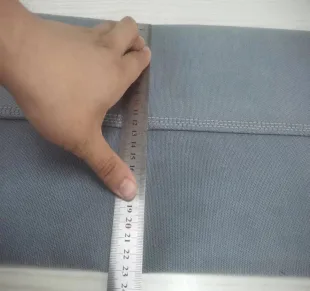
They are usually considered when the gas stream is highly corrosive, humid, chemically unstable, or when previous materials have failed quickly due to chemical degradation. In sinter plants with high chlorine, sulfur, acid dew point risk, or frequent operating instability, full PTFE may provide a safer long-term solution.
The main disadvantage is cost. Full PTFE bags are more expensive than PPS, P84, or fiberglass composite bags. However, when shutdown cost, labor, emission risk, and repeated bag replacement are considered, full PTFE can be economical in severe applications.
Full PTFE should be considered when:
- Previous bags failed from corrosion or hydrolysis
- Acid dew point cannot be fully controlled
- Moisture is high or unstable
- Gas chemistry changes frequently
- Ultra-low emission stability is critical
- Long service life is more important than initial price
Fiberglass and FMS Composite Bags
Fiberglass has excellent heat resistance and dimensional stability. It can be used in high-temperature steel plant applications, especially when combined with PTFE membrane or chemical-resistant finishes.
However, fiberglass is sensitive to flex fatigue. If the pulse cleaning is too aggressive, cages are rough, or bags are not properly supported, fiberglass fibers can break. Therefore, fiberglass filter bags require careful cage design, pulse control, and installation quality.
FMS is a composite media that blends fiberglass with other high-temperature fibers. It is often used where temperature, abrasion, and chemistry must be balanced. In sinter plants, FMS may be considered where standard single-fiber materials cannot provide enough overall performance.
Why Air-to-Cloth Ratio Matters
The air-to-cloth ratio determines how much gas passes through each unit area of filter media. A high ratio may reduce the initial equipment size, but it can create serious operating problems in sinter dust collection.
If the air-to-cloth ratio is too high, the baghouse may experience:
- Rapid pressure drop increase
- Poor dust release
- High cleaning frequency
- Deep dust penetration
- Shorter bag life
- Higher emissions risk
- More compressed air consumption
- More maintenance stops
For sinter tail gas, the filtration velocity should be conservative because dust may be fine, sticky, and moisture-sensitive. A lower air-to-cloth ratio generally improves stability, especially when PTFE membrane bags are used for ultra-low emissions.
Sizing should be based on real gas volume, temperature correction, dust concentration, particle size, moisture, and required emission level.
Baghouse Design Features That Protect Filter Bags
Correct filter media cannot compensate for poor baghouse design.
For sinter plant baghouses, important design features include:
Pre-Separation and Spark Protection
Sinter tail gas may contain coarse particles or hot particles. A pre-separation zone, baffle plate, dropout chamber, or spark arrestor can reduce direct impact on filter bags.
Uniform Gas Distribution
Uneven airflow causes some bags to carry more load than others. Local high velocity can lead to abrasion, high pressure drop, and early failure. Inlet distribution plates and proper chamber design are essential.
Insulation and Anti-Condensation
Condensation can cause sticky dust cake, acid corrosion, hopper blockage, and bag blinding. The casing, hopper, and ductwork should be insulated where necessary. Startup and shutdown procedures should also prevent low-temperature corrosion.
Proper Hopper Discharge
Collected dust must leave the hopper continuously. If dust accumulates, it can re-enter the airflow, increase abrasion, and overload the lower parts of the bags.
Matched Cages
Filter cages should be straight, smooth, correctly sized, and corrosion-resistant. Damaged cages cause vertical wear lines, holes, poor sealing, and repeated bag failure.
Common Causes of Early Bag Failure in Sinter Plants
Premature filter bag failure usually has more than one cause. Common problems include:
- Wrong filter media
- Excessive temperature peaks
- Condensation and acid dew point
- High moisture
- Alkaline or acidic chemical attack
- Oxidation of PPS
- Abrasive dust impact
- High air-to-cloth ratio
- Uneven gas distribution
- Misaligned pulse pipes
- Wet compressed air
- Excessive pulse cleaning
- Blocked hopper discharge
- Damaged or corroded cages
- Poor installation and sealing
Used bags should be inspected before simply reordering the same material. A vertical wear pattern may indicate cage abrasion. A hard dust cake may indicate moisture or poor cleaning. Brittle fibers may indicate chemical or thermal degradation. Burn marks may indicate sparks or hot particles.
Operation and Maintenance Checklist
A reliable sinter plant baghouse requires routine monitoring.
Recommended checks include:
- Track differential pressure daily
- Monitor outlet emissions
- Check pulse-cleaning frequency
- Inspect compressed air pressure and dryness
- Listen for weak or leaking pulse valves
- Check hopper discharge and rotary valves
- Watch for temperature excursions
- Keep the system above acid dew point
- Inspect cages during every bag change
- Perform periodic bag lab analysis
- Use leak detection when emissions rise unexpectedly
Increasing pulse frequency is not always the right response to rising pressure drop. If the real cause is condensation, high inlet dust loading, or hopper blockage, more cleaning may only damage bags faster.
Public Industry Case Lessons
ArcelorMittal Ostrava Sinter Plant
ArcelorMittal Ostrava announced a major dust collection project for its sinter plant cooling bands. The project involved covering cooling bands, extracting dust-contaminated air, and sending it to new bag-filter houses. The company expected the system to collect a significant amount of fugitive dust emissions each year.
The lesson is clear: sinter plants are major dust sources, and bag filters are often selected where fine particulate capture and environmental compliance are critical.
Tata Steel Port Talbot Sinter Plant
A public case study reports that Tata Steel installed a bag filtration plant on an existing secondary dust extraction system at the Port Talbot sinter plant. The project was required to reduce outlet stack emissions to less than 10 mg/Nm³.
The practical lesson is that retrofitting existing sinter plant dust extraction systems with bag filtration can be an effective path toward stricter emission limits.
Sinter Plant Stack Emission Research
Published research on iron and steel sinter plant stack emissions shows that sinter plants without bag filters can have higher particulate and gas pollutant levels than plants equipped with more advanced treatment systems.
The lesson is that media selection, baghouse design, and gas treatment strategy should be evaluated together. Filter bags are part of a wider emission-control system, not a standalone solution.
Information Needed for an Accurate Recommendation
A filter bag quotation for a sintering machine should not be based only on diameter, length, and quantity.
To recommend the correct media, provide:
- Sintering machine size
- Dust collection point
- Gas volume
- Operating and peak temperature
- Moisture content
- SOx, NOx, HCl, HF, and oxygen levels
- Dust concentration
- Particle size distribution
- Dust abrasiveness and stickiness
- Current filter bag material
- Current bag life
- Emission requirement
- Differential pressure trend
- Baghouse cleaning method
- Cage material and dimensions
- Existing failure photos
- Startup and shutdown conditions
With this information, engineers can select the correct fiber, scrim, membrane, surface treatment, felt weight, sewing thread, cage coating, and reinforcement design.
Final Recommendation
There is no single universal filter bag for every sintering machine dust collector.
For dry, low-temperature transfer points, polyester or acrylic may be sufficient. For humid sinter tail gas, PPS with PTFE membrane is often a practical starting point. For fine dust and strict emission targets, P84 with PTFE membrane may provide stronger filtration performance. For severe corrosion, high moisture, acid dew point, or unstable gas chemistry, full PTFE or fiberglass/PTFE composite bags may be safer.
The best choice depends on the real operating environment. Temperature, moisture, gas chemistry, dust loading, particle size, abrasion, emission limit, and baghouse design must all be evaluated together.
Omela Filtration can supply PPS, P84, PTFE, fiberglass, FMS, aramid, acrylic, polyester, and PTFE membrane filter bags for sinter plants, steel mills, non-ferrous smelting, cement, power generation, and waste incineration. We also provide matched cages in galvanized, silicone-coated, epoxy-coated, and stainless steel constructions.
Customers are welcome to contact Omela with operating data, bag dimensions, cage details, current service life, and photos of used bags. Our engineers can recommend a practical filter bag solution designed to balance emission control, service life, maintenance cost, and long-term baghouse reliability.
FAQ
1. What filter bags are used in sintering machine dust collectors?
Common options include PPS, P84, PTFE membrane, fiberglass, FMS, aramid, acrylic, and polyester filter bags. The final choice depends on temperature, moisture, gas chemistry, dust loading, and emission requirements.
2. Which filter bag material is best for sinter tail gas?
For many sinter tail applications, PPS with PTFE membrane is a practical starting point. P84 with PTFE membrane may be selected for fine dust and strict emissions, while full PTFE may be required for severe corrosion or high moisture.
3. Why do sinter plant filter bags fail early?
Common causes include condensation, acid dew point, wrong media selection, abrasive dust, excessive air-to-cloth ratio, uneven gas distribution, damaged cages, wet compressed air, and aggressive pulse cleaning.
4. Is PTFE membrane useful for sintering machine dust collector bags?
Yes. PTFE membrane improves surface filtration, fine-particle capture, dust cake release, and emission stability. However, the base fiber must still match the process temperature and gas chemistry.
5. Can polyester filter bags be used in sinter plants?
Polyester can be used only in low-temperature, dry, chemically mild dust collection points such as certain transfer points or storage areas. It is generally not suitable for hot, humid, corrosive sinter tail gas.
6. What information is needed to quote sinter plant filter bags?
Provide gas volume, operating and peak temperature, moisture, gas chemistry, dust concentration, particle size, emission limit, current filter bag material, service life, bag dimensions, cage details, and failure photos.
7. How can steel plants extend the service life of sinter plant filter bags?
Use the correct media, control condensation, maintain proper air-to-cloth ratio, ensure uniform airflow, protect bags from sparks and abrasion, keep compressed air dry, inspect cages, and monitor differential pressure and emissions regularly.
Author

Jessica Ma – Senior Filtration Engineer, Omela Filtration
Jessica Ma is a senior filtration engineer at Omela Filtration, specializing in dust and liquid filtration. With over 15 years of experience, she focuses on optimizing baghouse performance, enhancing filtration efficiency, and developing high-performance solutions for industrial dust collectors and precision liquid filtration applications.