
District heating plants and industrial boilers face a particular set of challenges when it comes to dust collection. The flue gas from coal-fired heating boilers combines high temperatures, significant moisture content, acid gases from sulfur combustion, and fine particulate matter — all in an application where the system typically runs continuously through the heating season with minimal opportunity for maintenance intervention. When the baghouse starts underperforming in November, you can’t easily shut it down and sort it out until spring.
This article covers the specific dust filtration challenges in heating boiler applications, what typically goes wrong with aging baghouse systems, and why PTFE filter bags have become the preferred solution for facilities that need reliable, compliant operation throughout the heating season.
Why Heating Boiler Baghouses Are Particularly Demanding
Coal-fired heating boilers operate differently from power generation boilers in ways that matter for dust collection. Heating demand varies significantly with outdoor temperature, meaning boiler output — and flue gas conditions — fluctuates constantly. Load cycling puts repeated thermal stress on filter media. When the boiler ramps up quickly on a cold morning, temperature spikes can briefly exceed steady-state operating conditions. When it ramps down, moisture can condense in the ductwork and baghouse if gas temperature drops too far.
The flue gas chemistry is also aggressive. Coal combustion produces SO₂ and SO₃, and in systems with selective non-catalytic reduction (SNCR) for NOₓ control — which is common in district heating applications — unreacted ammonia slip adds to the chemical load on the filter media. Combined with moisture, these acid gases create conditions that degrade conventional filter bag materials through hydrolysis and chemical attack much faster than the temperature alone would suggest.
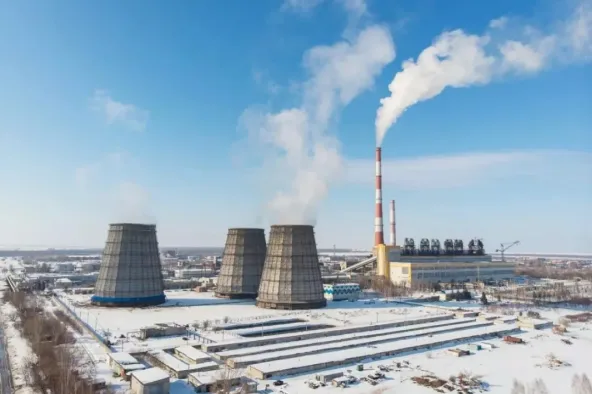
Typical process flow in these plants is: boiler flue gas → SNCR (for NOₓ reduction) → pulse-jet baghouse → wet scrubber (for SO₂ removal). The baghouse sits downstream of the SNCR injection point, meaning it sees the full chemical complexity of the treated flue gas.
What Aging Baghouse Systems Look Like in Practice
After several heating seasons, a baghouse that hasn’t been systematically maintained develops predictable problems. The clean-air chamber walls accumulate white crystalline deposits — typically ammonium sulfate or bisulfate from the reaction between ammonia slip and acid gases. These deposits indicate that the seal integrity of the tube sheet has been compromised, allowing contaminated gas to bypass the filter media and migrate into the clean-air plenum.
Access door seals deteriorate and stop providing effective closure. Original filter bags develop holes or tears, particularly at the bag collar where repeated flexing from cleaning pulses creates fatigue failure. Tube sheets warp from thermal cycling, which prevents proper bag seating and creates bypass leakage pathways around the bag collars. The combined effect of these problems is that the system continues to operate but no longer achieves the particulate emission levels it was designed for.
Simply replacing the filter bags in this condition delivers disappointing results. New bags installed in a structurally compromised collector with corroded walls, warped tube sheets, and degraded seals will suffer shortened service life and still produce inconsistent emissions. The structural issues need to be addressed first.
Why PTFE Filter Bags Are the Right Choice for This Application
For heating boiler applications with the flue gas chemistry described above, PTFE (polytetrafluoroethylene) filter bags offer a combination of properties that conventional materials simply cannot match.
Complete chemical inertness. PTFE is resistant to acids, alkalis, oxidants, and essentially all organic solvents. In a flue gas environment containing SO₂, SO₃, HCl, moisture, and ammonia compounds, PTFE maintains its integrity where polyester degrades through hydrolysis and PPS can be attacked by strong oxidizing conditions. This chemical stability translates directly into longer service life and predictable performance throughout the heating season.
High temperature capability. Omela PTFE filter bags handle continuous operating temperatures up to 250°C with peaks to 280°C — well above the requirements for heating boiler applications. This provides a meaningful margin against the temperature spikes that occur during load changes, protecting the filter media even when process conditions deviate from steady state.
Non-stick surface for efficient cleaning. PTFE’s characteristically low surface energy prevents dust from adhering strongly to the bag surface. This enables efficient pulse-jet cleaning at lower differential pressure compared to conventional media, which reduces fan energy consumption and maintains stable airflow through the heating season. A baghouse running at consistently low pressure drop is also a sign that the cleaning system is working effectively and bags are not paste-blinding.
Hydrolysis resistance. Unlike polyester and some other synthetic fibers, PTFE does not degrade through hydrolysis in high-moisture flue gas environments. This is particularly relevant in heating boiler applications where condensation risk during low-load operation is a real concern.
For a detailed breakdown of PTFE filter bag applications and performance data, see our article on applications of PTFE membrane filter bags.
The Right Approach: Structural Assessment Before Filter Bag Selection
Before specifying replacement filter bags for an aging heating boiler baghouse, a thorough on-site inspection is essential. The inspection should cover the condition of the clean-air chamber walls and any crystalline deposits that indicate bypass leakage; the tube sheet condition, checking for warping or corrosion that prevents proper bag seating; the condition of access door seals and gaskets; the state of the pulse-jet cleaning system — valves, manifolds, and diaphragms; and the condition of any existing filter cages.
Where structural issues are found, they should be addressed as part of the same scope as the filter bag replacement. This typically means anti-corrosion treatment of interior surfaces, replacement of warped or corroded tube sheet sections, new access door seals, and new filter cages. Doing the structural repair and the filter bag replacement as a single project avoids the common outcome of installing expensive PTFE filter bags into a system that still has bypass leakage — which produces disappointing emission results and premature bag damage.
Pre-coating the new bags before the boiler is brought back online is also strongly recommended for heating boiler applications. A lime pre-coat layer on the bag surface protects the PTFE media from the initial surge of fine sticky particles when the boiler first starts up after maintenance, extending the effective service life of the bags significantly. See our guide on baghouse lime pre-coating powder for details.
Expected Performance After Proper Commissioning
A properly refurbished baghouse with correctly specified PTFE filter bags in a heating boiler application should achieve particulate emissions well below the regulatory limits that apply in most markets — typically 5–10 mg/Nm³ or better under normal operating conditions. The combination of PTFE’s surface filtration mechanism and efficient pulse-jet cleaning maintains low differential pressure throughout the heating season, which keeps energy consumption predictable and avoids the performance degradation that characterizes conventional media in this chemical environment.
Service life expectations for PTFE filter bags in well-maintained heating boiler baghouses are typically 3–5 years, compared to 1–2 years commonly seen with conventional media in the same application. The higher upfront cost of PTFE is recovered through reduced replacement frequency and lower total maintenance cost over the heating equipment lifecycle.
For more context on filter bag service life factors, our article on top 5 factors influencing the service life of dust filter bags covers the variables that matter most across different industrial applications.
Omela Filtration Support for Heating Boiler Applications
Omela Filtration supplies PTFE filter bags, PPS filter bags, and full-scope baghouse support services for heating boiler and district heating plant applications. Our engineering team provides on-site condition assessments, filter media selection support based on actual flue gas parameters, and professional filter bag installation services including pre-coat guidance.
Author

Jessica Ma – Senior Filtration Engineer, Omela Filtration
Jessica Ma is a senior filtration engineer at Omela Filtration, specializing in dust and liquid filtration. With over 15 years of experience, she focuses on optimizing baghouse performance, enhancing filtration efficiency, and developing high-performance solutions for industrial dust collectors and precision liquid filtration applications.