
Fine chemical production is one of the most unforgiving industrial environments for dust collection equipment. The flue gas streams from pharmaceutical intermediates, agrochemicals, dye manufacturing, and specialty chemical processing share a combination of properties that systematically destroys conventional filter bags: high-concentration acid and alkali vapors, organic solvent aerosols, combustible and explosive dust, high humidity from steam-intensive processes, and toxicological requirements that make emission exceedances a regulatory and safety event rather than just a compliance matter. A filter bag that works perfectly in a cement plant or a power station will typically fail within weeks in a fine chemical application — not because the fine chemical environment is generally harsher, but because it is chemically and physically specific in ways that the standard filter media selection process doesn’t capture.
This article works through the five failure mechanisms that cause premature filter bag failure in fine chemical applications, why each one is more complex than it first appears, and what the filter media and construction requirements are to address them properly.
The Five Failure Mechanisms That Define Fine Chemical Dust Collection
1. Chemical corrosion — the failure mode that looks like something else
Fine chemical production involves acids, alkalis, organic solvents, and oxidizing agents — often in combination, often cycling between them as different process streams pass through shared ductwork or as production campaigns change. A single boiler serving a pharmaceutical intermediate facility might exhaust flue gas containing hydrogen chloride from one production campaign, ammonia from the next, and sulfur-containing compounds from a third, sometimes with intervals short enough that the baghouse doesn’t fully stabilize between changes.
The problem with corrosion-driven filter bag failure is that it often presents as mechanical failure rather than chemical degradation. The fiber structure weakens progressively through chemical attack, losing tensile strength and elongation properties over months. The bags eventually fail mechanically — tearing along stress concentration points, collapsing on the cages, losing their shape — and the failure looks like a mechanical problem. In reality, the fibers had been chemically degraded to a fraction of their original strength before the mechanical event occurred.
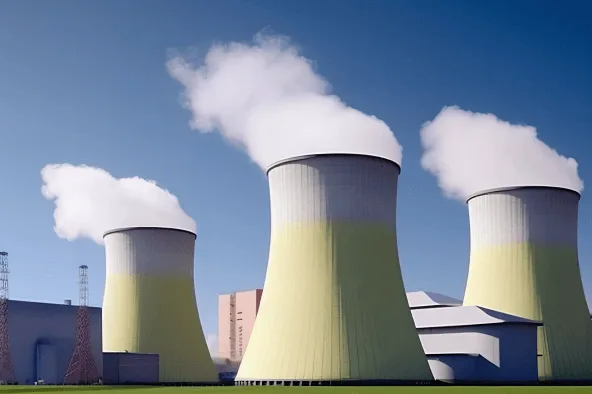
Standard polyester filter bags are particularly vulnerable to this in fine chemical environments. Polyester has reasonable resistance to mild organic acids at moderate temperatures, but it hydrolyzes in the presence of concentrated acids or alkalis and degrades under sustained exposure to strong oxidizing agents. The typical failure timeline for polyester in a high-acid pharmaceutical intermediate production environment is one to three months — which is why plants in this sector often report going through multiple bag changes per year with conventional media and incorrectly attributing the failures to installation issues or product quality rather than material incompatibility.
PTFE filter bags are chemically inert across essentially the complete range of acid and alkali concentrations found in industrial chemical production. PTFE maintains its structural integrity across pH 1 to 14 without degradation — not because it’s moderately resistant to acids, but because it essentially doesn’t react with them at all. This is a fundamentally different level of chemical resistance than what PPS or acrylic provides, and it’s the reason PTFE is the appropriate specification for fine chemical applications where the gas chemistry is aggressive and variable.
2. Static electricity and explosion risk — a failure mode with safety consequences
Fine chemical and pharmaceutical production dust has two properties that create serious static electricity risk: many organic dusts generated in these processes are combustible, and the fine particle size distributions involved — often in the 1–50 μm range — produce dust clouds that can reach explosive concentration limits in poorly controlled collection systems. The combination of combustible dust, fine particle size, and the organic solvents present in many fine chemical process gas streams creates conditions where static discharge can trigger dust explosions rather than simply producing spark damage to the filter media.
Standard needle-felt filter bags accumulate electrostatic charge through the triboelectric effect as the dust-laden gas flows through the media during filtration. In an application where the dust cloud is combustible and solvent vapors may be present, this accumulated charge represents a credible ignition source. Conventional antistatic treatments — conductive fiber blending, surface coatings — can reduce the surface resistivity of the filter media, but the antistatic performance of many treatment approaches degrades over time as the surface is abraded or chemically attacked by the process environment.
The correct specification for fine chemical applications is permanent antistatic functionality — conductive fibers incorporated into the media structure rather than applied as a surface treatment. Permanent conductive fibers maintain their charge dissipation capability throughout the service life of the bag, regardless of the chemical environment or mechanical stress from cleaning cycles. This is not a cosmetic difference. In a combustible dust application, the difference between surface antistatic treatment and permanent embedded conductive fiber is the difference between a system that is genuinely safe and one that becomes progressively less safe as the surface treatment degrades.
3. Filtration precision for fine and toxic particles
Fine chemical production generates dust in the submicron to low-micron range that standard depth-filtration needle-felt media cannot capture consistently. Pharmaceutical intermediate dust, catalyst fines, and dye pigment particles in the 1–5 μm size range have high penetration coefficients through conventional filter media — particularly at the beginning and end of the filtration cycle when the dust cake is thin or absent.
The regulatory context matters here. The emission limits applicable to pharmaceutical intermediate and fine chemical production are typically much tighter than those for mining, minerals, or general industrial processes — often 5 mg/Nm³ or below. Achieving these limits consistently with depth-filtration media requires either operating at very low air-to-cloth ratios (which means larger, more expensive baghouses) or accepting that emission performance will be marginal under peak load conditions.
PTFE membrane surface filtration changes the particle capture mechanism fundamentally. The biaxially-stretched PTFE membrane with pore density up to 1×10⁹/cm² and open porosity of 85–93% captures particles at the fabric surface from the first operating cycle, without dependency on dust cake development. This means the emission performance is consistent from startup, across the full range of process load conditions, and immediately after cleaning pulses — exactly the performance stability that fine chemical applications require. The surface filtration mechanism also allows higher filtration air velocities at a given emission concentration, which reduces the required baghouse footprint.
For an explanation of why this filtration mechanism matters specifically for applications with strict emission requirements, our article on applications of PTFE membrane filter bags covers the technical background in detail.
4. Hydrolysis resistance in high-humidity, high-steam environments
Fine chemical and pharmaceutical production is steam-intensive. Reactor heating, distillation, crystallization, and spray drying all generate significant water vapor, and in plants where multiple process units share common utility services, the baghouse can see gas streams with moisture contents of 20–30% or higher. When this moisture-laden gas cools in the ductwork or baghouse, condensation occurs on the filter media surface.
Condensation on a filter bag creates two problems. First, hygroscopic dusts — including many fine chemical and pharmaceutical dusts — absorb the condensed moisture and form a paste that blocks the filter pores. This paste-blinding is not reversible by pulse-jet cleaning and requires physical bag cleaning or replacement. Second, sustained moisture exposure at elevated temperatures accelerates hydrolytic degradation in fibers susceptible to this mechanism.
Polyester fiber hydrolyzes — the ester bonds in the polymer backbone undergo acid- or base-catalyzed cleavage in the presence of water. The rate of hydrolysis increases significantly with temperature, which is why polyester bags that might survive for years in a dry, ambient-temperature application fail within months in a high-humidity, moderate-temperature fine chemical environment. The effect is visible at the microscopic level as loss of fiber crystallinity and surface fibrillation before macroscopic mechanical failure occurs.
PTFE has no ester bonds to hydrolyze. It is inherently immune to hydrolytic degradation regardless of moisture content, temperature, or the presence of acid or alkaline species in the condensate. This property is independent of any surface treatment or post-processing — it’s intrinsic to the molecular structure of PTFE.
PPS is also hydrolysis-resistant and is used in some high-humidity chemical applications. However, PPS has limited resistance to strong oxidizing conditions, which are present in many fine chemical plant exhaust streams. Where oxidizing agents are present alongside high moisture, PTFE is the more reliable long-term choice.
5. Bag integrity and seam construction — the failure mode that undermines everything else
The most technically sophisticated filter media specification is rendered ineffective if the bag construction allows bypass leakage. In fine chemical applications where the dust may be toxic, carcinogenic, or explosive, a seam failure is not just an emission compliance event — it’s a safety event.
Conventional filter bag seams are formed by sewing with thread. Stitched seams create a series of small holes through the filter media at regular intervals — the needle perforations. In standard dust collection applications, these perforations are small enough relative to the particle size that they don’t significantly affect filtration efficiency. In fine chemical applications collecting submicron toxic particles, the needle perforations represent bypass channels that allow unfiltered gas to pass directly through the seam line into the clean-air plenum.
The correct construction for fine chemical filter bag applications uses a combination of seam technologies that eliminate needle perforations entirely for thermoplastic base materials, or seal them completely where needle perforation cannot be avoided. Triple-seal bag construction — seamless welding for thermoplastic materials, adhesive closure as a secondary seal, and mechanical Tap closure at the bag ends — provides the integrity level appropriate for toxic or explosive dust applications. Combined with double-layer reinforcement at high-stress areas (bag collar, bottom, and cleaning impact zones), this construction addresses both the initial integrity requirement and the in-service fatigue resistance needed for sustained pulse-jet cleaning loads.
Case Study: Pharmaceutical Intermediate Production, Circulating Fluidized Bed Boiler Application
A pharmaceutical intermediate production facility operating two circulating fluidized bed boilers — each rated at 35–40 T/H steam output — had been experiencing repeated filter bag failures averaging approximately once per month. The production process involves combustible organic intermediates, creating a dust environment where static discharge represents a genuine explosion risk. The existing bags were conventional polyester needle-felt without permanent antistatic treatment.
On-site inspection found exactly what the failure pattern suggested: the top cover plates of both baghouses showed advanced corrosion damage from acid vapor attack on the mild steel. The old filter bags showed the characteristic signs of combined chemical and hydrolytic degradation — fiber surface etching visible under magnification, loss of tensile strength before visible mechanical damage, and paste-blinded areas where condensate had interacted with the hygroscopic organic dust.
The process flow for both units is: boiler → SNCR/SCR (for NOₓ control) → bag filter → wet scrubber (for SO₂ removal). Both baghouses operate as low-pressure pulse-jet systems with offline cleaning at 130°C, with a target emission level of less than 5 mg/Nm³. The filtration velocity is less than 0.7 m/min for unit 1 and less than 0.69 m/min for unit 2.
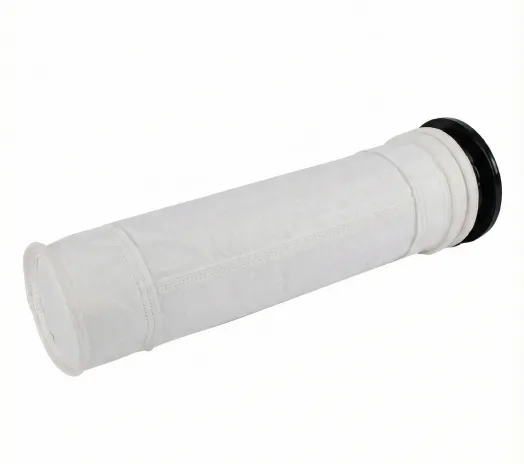
The specification selected for this application was PTFE filter bags incorporating permanent conductive fiber for antistatic functionality, PTFE membrane lamination for surface filtration performance, and triple-seal bag construction (seamless welding + adhesive closure + Tap mechanical closure) with double-layer reinforcement. The housing structural damage was addressed as part of the same scope — anti-corrosion treatment of internal surfaces and cover plate restoration before new bag installation.
After installation, the system was commissioned and the PTFE antistatic bags operated in the strongly corrosive chemical environment continuously. After 18 months of service — at which point the previous polyester bags had been failing monthly — the PTFE bags showed no structural deterioration and no static discharge incidents had occurred. Third-party emission testing recorded actual particulate concentrations below 5 mg/Nm³, meeting the compliance requirement with margin. Annual maintenance costs decreased substantially compared to the previous monthly replacement cycle.
The 18-month service life demonstrated in this case is not exceptional for PTFE filter bags in chemical applications. In properly specified and maintained installations, service life of 2–3 years or longer is achievable — the economics of which make the higher upfront cost of PTFE a straightforward investment rather than a premium expenditure.
Selecting Filter Media for Your Fine Chemical Application
The framework for fine chemical filter bag selection follows from the five failure mechanisms described above. Each one needs to be addressed explicitly:
Chemical environment: Identify the complete range of acid, alkali, solvent, and oxidizing species in the process gas stream — not just the steady-state nominal composition, but the transient conditions during startup, shutdown, and process changeover. PTFE handles the full pH 1–14 range without compromise; PPS has limitations under strong oxidizing conditions; polyester and acrylic are not appropriate for aggressive chemical environments.
Electrostatic risk: Determine whether the dust has a minimum ignition energy below 100 mJ and whether solvent vapors may be present simultaneously. If either condition applies, permanent conductive fiber is required — not surface antistatic treatment.
Particle size and emission requirement: For sub-5 mg/Nm³ targets with fine particle distributions in the 1–10 μm range, PTFE membrane surface filtration is the appropriate specification. Depth-filtration media produces variable emission performance that becomes marginal at these limits.
Moisture exposure: For applications with condensation risk — high-humidity gas streams, steam-intensive processes, low operating temperatures — PTFE’s inherent hydrolysis immunity removes a significant failure mode from the risk register.
Bag construction: For toxic or explosive dust applications, specify triple-seal construction and verify that the bag manufacturing process eliminates needle perforations through the filter media at seam lines.
Our team provides on-site condition assessment and process-specific filter media selection for fine chemical and pharmaceutical production applications. Contact us to discuss your specific gas composition, temperature profile, and emission requirements.
Author

Jessica Ma – Senior Filtration Engineer, Omela Filtration
Jessica Ma is a senior filtration engineer at Omela Filtration, specializing in dust and liquid filtration. With over 15 years of experience, she focuses on optimizing baghouse performance, enhancing filtration efficiency, and developing high-performance solutions for industrial dust collectors and precision liquid filtration applications.