
Introduction
The global lithium-ion battery industry is expanding at an unprecedented pace, driven by the accelerating electrification of transportation and the surging demand for energy storage systems. According to industry forecasts, the new energy storage sector is projected to maintain a compound annual growth rate of 55%–70% through 2025, with market scale continuing to set new records year over year.
Behind this growth lies a manufacturing reality that plant engineers and procurement teams know well: the production of lithium battery cathode and anode materials generates highly hazardous, ultra-fine dust that is difficult to capture, potentially explosive, and destructive to standard filtration equipment.
Choosing the right filter bag is not a minor operational decision — it directly impacts emission compliance, worker safety, equipment longevity, and total cost of ownership.

The Dust Collection Challenge in Lithium Battery Production
Lithium battery electrode material manufacturing involves a series of high-temperature drying, mixing, and coating processes. These operations produce particulate matter with characteristics that push standard dust collectors to their limits:
1. Sub-micron particle size Cathode materials such as lithium iron phosphate (LFP), NCM (lithium nickel manganese cobalt oxide), and anode materials like graphite and silicon carbon generate particles smaller than 1 micron. Standard needle-felt filter bags have insufficient interception efficiency for particles at this scale, leading to elevated emissions and regulatory non-compliance.
2. Explosion and fire risk Many electrode materials are electrochemically active or electrically conductive. Accumulated fine dust can create static discharge risks or, in the case of materials like lithium metal or certain anode powders, present direct ignition hazards. Filtration systems that are not properly grounded dramatically increase the risk of dust explosions.
3. Chemical aggressiveness The production process exposes filter media to solvents, acidic or alkaline off-gases, and elevated temperatures — particularly in drying kiln and calcination processes. Standard polyester or fiberglass bags deteriorate rapidly under these conditions, leading to premature failure and unplanned downtime.
4. Rapid pressure drop buildup Fine particles blind filter media quickly, causing differential pressure to rise, airflow to drop, and cleaning cycles to become ineffective. The result is a system that consumes more energy while delivering worse filtration performance.
5. High maintenance burden Frequent bag replacements, unplanned shutdowns for bag changeouts, and reactive maintenance create significant hidden costs for lithium battery producers — costs that compound as production lines scale.
What Makes a Filter Bag Suitable for Lithium Battery Applications?
Not all filter bags are created equal. For lithium battery electrode material dust collection, the following properties are essential:
High-Efficiency Sub-micron Particle Capture
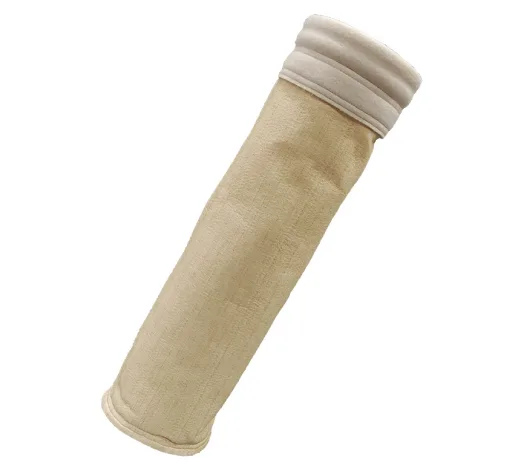
The filter bag must achieve filtration precision at or below 0.5 microns. This is typically accomplished through PTFE membrane lamination on a high-performance needle-felt substrate. The membrane acts as a surface filtration barrier, preventing particles from penetrating the depth of the media and enabling consistent, clean-pulse discharge.
Antistatic Construction
Filter bags used in environments with electrically conductive or reactive dusts must incorporate conductive fibers woven or blended into the filter media. This provides a continuous discharge path for static electricity, eliminating charge accumulation that could ignite dust clouds. Antistatic filter bags are a non-negotiable specification in most lithium battery plant safety protocols.
High-Temperature and Chemical Resistance
For drying and calcination processes, filter media must withstand continuous operating temperatures of 180°C or above, with resistance to hydrolysis, acid attack, and solvent exposure. Aramid (Nomex) fiber and PPS (polyphenylene sulfide) needle felt are common choices for these environments; PTFE membrane-laminated variants offer additional chemical inertness.
Low Resistance, Long Cleaning Intervals
Advanced fiber engineering — including optimized fiber diameter, controlled needling density, and surface treatment — reduces the inherent resistance of the filter media. Lower baseline pressure drop means lower energy consumption, and more stable differential pressure over time means longer intervals between pulse-jet cleaning cycles.
Customization for Process-Specific Conditions
Different steps in the electrode production line — cathode material synthesis, anode material coating, scrap recovery, and so on — each present unique dust characteristics and gas compositions. A one-size-fits-all filter bag specification is rarely optimal. Effective dust collection engineering begins with a thorough analysis of each dust point’s temperature, humidity, chemical composition, particle size distribution, and flow characteristics.
Filter Bag Material Selection Guide for Lithium Battery Applications
| Process Stage | Typical Temp | Key Hazard | Recommended Media |
|---|---|---|---|
| Cathode material drying | 150–200°C | High temp, moisture | Aramid (Nomex) + PTFE membrane |
| Anode material mixing | 80–120°C | Conductivity, fine dust | Antistatic polyester + PTFE membrane |
| Calcination / sintering | 180–250°C | Ultra-high temp, chemical | PPS or P84 needle felt |
| Scrap recovery | 60–100°C | Mixed dust composition | PTFE membrane on polyester |
| General ventilation | <80°C | Fine dust | Polyester needle felt with membrane |
Note: Material selection should always be confirmed by a process-specific analysis. Operating conditions in lithium battery manufacturing vary significantly between facilities and equipment generations.
A Real-World Case: Cathode Material Plant in Sichuan, China
A lithium cathode material manufacturer in Sichuan Province experienced a catastrophic bag failure event when an upstream process disruption caused the feed to their dryer to shut off unexpectedly. The resulting runaway temperature rise sent exhaust gas temperatures above 180°C for approximately fifteen minutes — well beyond the thermal design limits of the installed bag set.
On-site investigation by the filtration engineering team revealed three compounding failure causes:
Improper material selection: The installed bag set was a mixed combination of fiberglass composite bags and aramid bags. Fiberglass composite media, while effective in certain high-temperature applications, is highly susceptible to hydrolytic degradation in high-humidity gas streams, which is characteristic of drying operations. Additionally, fiberglass fiber has poor resistance to flexural fatigue, making it prone to cracking and pinhole failure under repeated pulse-jet cleaning.
Inadequate high-temperature safety margin: The operating temperature control system had an alarm setpoint that was set too high relative to the thermal tolerance of the installed media. When the process upset occurred, the bags reached carbonization temperature before the interlock triggered a shutdown.
Pulse-jet system malfunction: Several pulse valves had failed without detection, leaving portions of the bag array uncleaned for extended periods. The accumulation of hot, reactive dust on bag surfaces created heat islands that accelerated thermal degradation.
Corrective Actions Implemented:
- Full replacement of the bag set with high-performance PTFE membrane-laminated aramid filter bags, specified to meet 0.5-micron filtration precision
- Inspection and correction of cage alignment to ensure all bags hang vertically within tolerance
- Recalibration of pulse jet nozzle positioning to ensure centered impingement on each bag inlet
- Adjustment of high-temperature alarm and interlock setpoints to provide a wider safety margin relative to the new bag media’s thermal ratings
Following the upgrade, the dust collector operated within specification for over twelve months without incident, achieving sub-0.5-micron outlet emissions and eliminating the unplanned bag replacement costs that had plagued the previous installation.
Key Procurement Questions for Plant Engineers
When specifying filter bags for a lithium battery dust collection application, procurement teams and plant engineers should require the following information from their filter bag supplier:
- What is the certified filtration efficiency at 0.5 microns? Ask for third-party test data, not just manufacturer claims.
- What is the static dissipation resistance of the antistatic media? Most safety standards require resistance below 10⁸ Ω.
- What are the continuous and peak temperature ratings? Confirm both continuous operating temperature and short-duration surge temperature tolerance.
- What is the bag’s resistance to hydrolysis? In drying applications, high humidity combined with high temperature creates aggressive conditions for filter media.
- Can the supplier provide site-specific material selection recommendations? A reputable supplier will request process data before recommending a product, not simply quote based on your bag dimensions.
- What is the expected service life under your operating conditions? Get this in writing and understand what warranty or performance guarantee backs it up.
Conclusion
The lithium battery manufacturing industry demands filtration solutions that go well beyond what standard industrial filter bags can provide. Sub-micron particle capture, explosion risk mitigation, chemical and thermal resistance, and long service life under aggressive operating conditions are all non-negotiable requirements for plants that want to operate safely, compliantly, and efficiently.
At Omela Filtration, we work directly with plant engineers and procurement teams to analyze process conditions, recommend appropriate filter media, and supply high-performance filter bags engineered for the specific challenges of new energy manufacturing environments.
If you are commissioning a new dust collector, evaluating a bag replacement, or troubleshooting premature bag failures in a lithium battery application, contact our technical team for a process-specific consultation.
Author

Jessica Ma – Senior Filtration Engineer, Omela Filtration
Jessica Ma is a senior filtration engineer at Omela Filtration, specializing in dust and liquid filtration. With over 15 years of experience, she focuses on optimizing baghouse performance, enhancing filtration efficiency, and developing high-performance solutions for industrial dust collectors and precision liquid filtration applications.