
Key Takeaways
Filter bag selection in the metal industry should not be based on industry name alone. A steel sinter strand, electric arc furnace, aluminum melting furnace, zinc oxide line, copper smelter, lead processing plant, and foundry dust collector may all need different filter media.
The right choice depends on operating temperature, dust load, particle size, gas chemistry, moisture, abrasion, spark risk, baghouse cleaning method, and emission target.
For moderate-temperature dry dust, polyester or polyester with PTFE membrane may be enough. For acidic, humid, high-temperature, or corrosive flue gas, PPS, P84, PTFE, fiberglass, or composite media should be considered.
For steel plants, aluminum plants, zinc oxide lines, copper and lead smelters, and foundry dust collection systems, Omela Filtration supplies matched dust filter bags, needle-punched felt, and filter bag cages to help improve filtration stability and reduce maintenance problems.
What Does Metal Industry Dust Collection Usually Include?
When customers ask for filter bags for the metal industry, the application may refer to several very different dust sources. These may include steel sinter strand dust collection, electric arc furnace fume extraction, blast furnace and converter secondary dedusting, aluminum melting furnace filtration, zinc oxide dust recovery, copper and lead smelting, ferroalloy furnace dedusting, and foundry dust collection.
Although these applications all belong to the ferrous and non-ferrous metal industry, their working conditions are not the same. Some systems handle high-temperature flue gas. Some collect very fine metal oxide fumes. Some face high dust load and strong abrasion. Others must deal with moisture, acid gases, heavy metal dust, or spark damage.
This is why one filter bag specification rarely covers the whole plant. A raw material handling dust collector may work well with polyester, while a zinc oxide or copper smelting system may require PTFE membrane, PPS/PTFE, or fiberglass with special surface treatment.
Quick Selection Table for Metal Industry Filter Bags
| Application | Common Challenge | Recommended Direction |
|---|---|---|
| Aluminum melting furnace | Moderate temperature, aluminum oxide dust, cost control | Polyester with PTFE membrane; aramid for higher temperature |
| Steel sinter strand | High dust load, abrasive dust, variable gas composition | PPS with PTFE membrane, P84 composite, fiberglass with PTFE finish |
| Electric arc furnace | Fine metal fume, spark risk, unstable temperature | Aramid, P84, PTFE membrane, flame-retardant or antistatic treatment |
| Zinc oxide dust | Fine sticky dust, high recovery value, high DP risk | Aramid with PTFE membrane, P84, PTFE, PPS/PTFE |
| Copper or lead smelting | Corrosive gas, heavy metal dust, strict emission limits | PTFE, PPS/PTFE, fiberglass with PTFE membrane, corrosion-resistant cages |
| Foundry dust collection | Sand dust, metal oxide fumes, grinding dust | Polyester, acrylic, aramid, P84, or PTFE membrane depending on temperature |
| Material handling | Dry mineral or metal dust, moderate temperature | Polyester, acrylic, antistatic or water/oil repellent treatment if needed |
1. Steel Sinter Strand Dust Collection
Steel sinter plants usually generate high dust concentration and abrasive particles. The dust may contain iron ore fines, coke breeze, lime, flux, and other mineral components. In many systems, the gas composition can also be unstable, especially when moisture, SOx, NOx, or other acidic components are present.
If the filter media is not selected correctly, the baghouse may suffer from high differential pressure, fast abrasion, dust penetration, and short filter bag service life. In this type of application, the filter bag must have enough chemical resistance, mechanical strength, and dust release performance.
For sinter strand dust collection, PPS needle felt with PTFE membrane is often a practical option when moisture or acidic gas is present. PPS provides good resistance to hydrolysis and acid exposure, while PTFE membrane improves surface filtration and pulse cleaning performance. For higher temperature or more demanding dust conditions, P84 composite or fiberglass with PTFE treatment may also be considered.
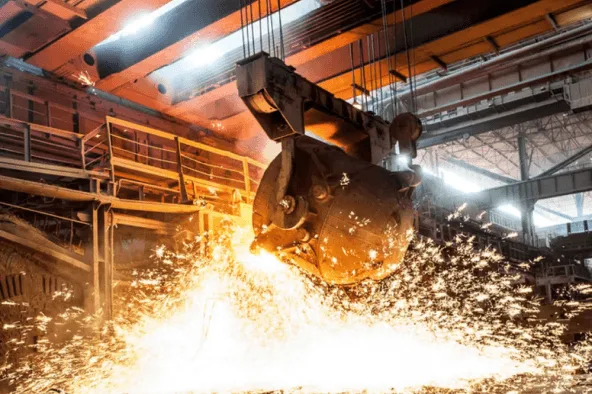
2. Electric Arc Furnace Dust Collection
Electric arc furnace dust is often very fine and may contain metal oxide fumes. The working condition may change quickly during charging, melting, tapping, and secondary fume extraction. Compared with general dust collection, EAF filtration requires more attention to fine particulate capture, spark risk, and temperature fluctuation.
For some lower-temperature secondary dust collection points, polyester with PTFE membrane may be used when the gas is dry and stable. However, if the system faces higher temperature, fine metal fumes, spark damage, or strict emission limits, aramid, P84, or PTFE filter bags should be evaluated.
In EAF applications, filter bag selection should not be separated from system protection. Good spark control, proper inlet design, stable airflow distribution, and clean pulse air are all important for extending bag life.
3. Aluminum Melting Furnace and Aluminum Oxide Dust
Aluminum melting furnace dust collection often operates at moderate temperature, but the dust can still be fine and abrasive. The main goal is usually to keep emissions stable while controlling maintenance and replacement cost.
For dry and moderate-temperature aluminum dust collection, polyester needle felt can be a cost-effective choice. If the plant needs better fine dust capture or lower emissions, polyester with PTFE membrane can improve surface filtration and dust release. If the temperature is higher or more unstable, aramid may be a safer option.
In some aluminum dust applications, combustible dust risk should also be considered. If the process has static or explosion concerns, antistatic treatment, proper grounding, and system-level dust explosion protection should be evaluated together.
4. Zinc Oxide and Zinc-Containing Dust Recovery
Zinc oxide dust is usually fine and may be sticky. In many plants, the collected dust also has recovery value, so the filter bag must support both emission control and product collection. If dust penetrates deeply into the felt, the filter bag can blind quickly, causing high differential pressure and reduced airflow.
PTFE membrane is very useful in this type of application. It keeps fine dust on the surface of the media instead of allowing it to enter deep into the felt structure. This helps reduce blinding, improve pulse cleaning, and stabilize pressure drop.
Depending on the temperature and gas chemistry, possible options include aramid with PTFE membrane, P84 filter bags, PTFE, PPS/PTFE, or fiberglass with PTFE membrane. If the system also has corrosion or moisture problems, cage material and surface coating should be reviewed at the same time.
5. Copper, Lead, and Non-Ferrous Smelting
Copper, lead, and other non-ferrous smelting processes may involve corrosive gases, heavy metal dust, high moisture, and strict environmental requirements. In these applications, chemical resistance and sealing reliability are often more important than the lowest initial bag cost.
PTFE is one of the most chemically resistant filter media options. If full PTFE is not required, PPS/PTFE composite, P84 composite, or fiberglass with PTFE membrane may provide a balanced solution. The final selection should be based on actual temperature, gas composition, acid dew point risk, and emission target.
For heavy metal dust control, good installation is also critical. Even a high-performance filter bag may fail to meet emission requirements if the snap band is not seated correctly, the tube sheet is damaged, or the cages are corroded.
6. Foundry Dust Collection
Foundries usually have multiple dust sources, including melting, pouring, shakeout, sand handling, shot blasting, grinding, and finishing. These dust points may need different filter bag materials in the same facility.
For general sand handling and dry moderate-temperature dust, polyester or acrylic may be enough. For hotter furnace fume or fine metal oxide dust, aramid, P84, PPS, or PTFE membrane media may be more suitable. If the dust is abrasive, fabric weight, surface treatment, cage quality, and inlet airflow should be checked together.
Foundry dust collection is a good example of why filter bag selection should be done by process section, not by plant name. A sand handling collector and a furnace fume collector should not automatically use the same bag material.
Filter Bag Problem and Product Recommendation Table
| Problem | Possible Cause | Practical Recommendation |
|---|---|---|
| High differential pressure | Fine dust penetration, moisture, sticky dust, poor cleaning | Use PTFE membrane media; check pulse cleaning and compressed air quality |
| Short bag life | Wrong media, high temperature, abrasion, cage damage | Review temperature, dust type, cage condition, and choose PPS, P84, aramid, PTFE, or fiberglass as needed |
| Visible emissions | Broken bags, poor sealing, wrong fit, tube sheet leakage | Check snap band, cage fit, tube sheet, and perform leak testing |
| Spark holes | Hot particles entering the baghouse | Improve spark control; consider aramid, P84, flame-retardant treatment, or system protection |
| Bag blinding | Moisture, oily dust, sticky dust, deep dust penetration | Use membrane or water/oil repellent treatment; control dew point |
| Vertical wear lines | Bent, rusty, or rough cages | Replace damaged cages and use suitable cage coating |
| Bottom bag abrasion | Hopper re-entrainment, high inlet velocity, bag movement | Check inlet design, hopper discharge, and bag spacing |
Practical Field Cases
Case 1: Aluminum Melting Furnace
An aluminum melting furnace application had moderate operating temperature, fine aluminum oxide dust, and a need for better emission control without increasing replacement cost too much.
In this case, polyester with PTFE membrane was a practical recommendation. The base polyester felt provided cost control, while the PTFE membrane improved fine dust capture and dust release. This type of solution is suitable when temperature is stable and the main goal is better filtration efficiency.
Case 2: Steel Sinter Strand
A sinter strand application had high dust load, abrasive particles, and possible acidic components. The system also showed a risk of high differential pressure.
For this type of condition, PPS with PTFE membrane or P84 composite can be more reliable than standard polyester. The goal is to improve chemical resistance, dust release, pressure drop stability, and service life.
Case 3: Non-Ferrous Foundry
A non-ferrous foundry had higher peak temperature, metal oxide dust, possible chemical exposure, and early bag damage. Inspection also showed cage corrosion.
In this situation, replacing only the bags would not solve the problem. PPS/PTFE or fiberglass with PTFE membrane could be considered for the filter bags, while corrosion-resistant cages should also be used to prevent internal wear and leakage.
Case 4: Electric Arc Furnace
An electric arc furnace dust collector had fine metal fume, unstable operating conditions, and spark risk. The main concern was not only temperature, but also fine particulate emission and potential hot particle damage.
Depending on actual inlet temperature, aramid, P84, or PTFE membrane media may be selected. Spark control, inlet protection, and cleaning system settings should also be reviewed.
How to Choose the Right Filter Bag
Before making a recommendation, collect the following information:
- Dust source and process section
- Baghouse type: pulse-jet, reverse-air, or shaker
- Filter bag size and cage size
- Continuous and peak temperature
- Dust concentration and particle size
- Moisture, SOx, NOx, oxygen, acid, alkali, fluoride, or chloride content
- Current filter bag material and service life
- Main problem: high DP, broken bags, blinding, spark holes, leakage, or short lifetime
- Emission requirement
- Photos of used bags, dust cake, cages, and tube sheet
With this information, engineers can recommend suitable filter media, surface treatment, sewing or welded construction, cage finish, installation method, and maintenance direction.
Final Recommendation
Filter bags for ferrous and non-ferrous metals should be selected by dust source, not only by industry name. A steel sinter strand, aluminum melting furnace, electric arc furnace, zinc oxide line, copper smelter, lead processing plant, and foundry dust collector may all require different solutions.
For moderate dry dust, polyester or acrylic may be enough. For fine dust and strict emissions, PTFE membrane is often valuable. For acidic and humid flue gas, PPS or PPS/PTFE can be suitable. For high-temperature and fine dust applications, P84, aramid, PTFE, or fiberglass-based media should be evaluated.
Omela Filtration provides filter bags, filter media, cages, and practical selection support for steel plants, aluminum plants, zinc oxide lines, copper and lead smelters, ferroalloy furnaces, and foundry dust collection systems.
By matching the filter bag to the actual working condition, plants can reduce emissions, stabilize pressure drop, extend filter bag service life, reduce unplanned shutdowns, and lower long-term maintenance costs.
For project evaluation, replacement recommendations, or failed bag analysis, you can contact Omela with your operating temperature, dust type, gas composition, bag size, cage photos, and current service life.
FAQ
1. What filter bag material is best for steel plants?
There is no single best material for all steel plants. PPS filter bags are often used for acidic or humid flue gas. P84 filter bags are suitable for fine dust and low emission requirements. Fiberglass filter bags are used in high-temperature applications. Aramid filter bags can be used for dry high-temperature dust collection, while polyester is suitable for moderate-temperature material handling.
2. Can one filter bag specification cover the whole metal plant?
Usually not. A metal plant may include raw material handling, sintering, furnace dedusting, casting, grinding, finishing, and silo ventilation. Each dust source has different temperature, dust load, particle size, and chemical conditions.
3. Why is PTFE membrane often used in metal dust collection?
PTFE membrane helps improve fine dust capture, keep dust on the surface, reduce deep dust penetration, improve pulse cleaning, lower emissions, and reduce blinding risk. It is especially useful for fine metal fumes, zinc oxide dust, and strict emission applications.
4. What filter bags are suitable for aluminum melting furnace dust collection?
For moderate-temperature aluminum furnace dust collection, polyester needle felt or polyester with PTFE membrane can be suitable. For higher-temperature areas, aramid filter bags may be considered. If combustible dust risk exists, antistatic treatment and system-level protection should be evaluated.
5. Why do filter bags fail early in metal smelting applications?
Common causes include wrong media selection, high temperature peaks, chemical attack, moisture and acid dew point, abrasion, spark damage, poor cleaning, high differential pressure, damaged cages, and incorrect installation.
Author

Jessica Ma – Senior Filtration Engineer, Omela Filtration
Jessica Ma is a senior filtration engineer at Omela Filtration, specializing in dust and liquid filtration. With over 15 years of experience, she focuses on optimizing baghouse performance, enhancing filtration efficiency, and developing high-performance solutions for industrial dust collectors and precision liquid filtration applications.