
Key Takeaways
- PPS and acrylic are both used in dust collector filter bags, but they are not interchangeable. PPS is usually selected for hotter, more chemically aggressive flue gas, while acrylic is better suited for lower-to-medium temperature humid or mildly acidic conditions.
- PPS filter bags are often considered for sulfur-containing, acidic, alkaline, moisture-prone, and medium-to-high-temperature flue gas where polyester or acrylic may lose strength too quickly.
- Acrylic filter bags are a practical option when moisture resistance, hydrolysis resistance, and cost control matter, but the process temperature remains within the acrylic operating range.
- The final choice should be based on needle-punched felt filter media properties, gas chemistry, moisture, oxygen level, dust behavior, cleaning method, and differential pressure trend—not only the material name.
- Even the right media can fail early if the filter bag cages are corroded, oversized, rough, or poorly matched to the bag diameter and cleaning method.
- To select the right material faster, send your temperature, dust type, gas chemistry, moisture level, bag size, cage condition, and failure photos to contact Omela Filtration.
Why PPS vs Acrylic Is a Real Selection Question
In baghouse dust collection, filter bag material selection is rarely a simple “which one is better?” decision. PPS and acrylic can both appear in moist, acidic, or medium-temperature applications, but they solve different problems.
Acrylic filter bags are often used when the gas stream is humid, mildly acidic, or prone to hydrolysis problems, but the temperature is still moderate. PPS filter bags are usually considered when the gas stream is hotter, more chemically aggressive, or contains sulfur compounds and moisture that would shorten the life of lower-temperature media.
This matters because many plants describe their process only as “wet flue gas” or “acidic dust.” That is not enough. A coal boiler, biomass boiler, spray dryer, cement mill, waste incineration line, asphalt plant, or chemical dryer may all contain moisture and acid gas, but the temperature, oxygen level, sulfur content, dew point behavior, and dust cake characteristics can be very different.
EPA explains that fabric filters collect dust by building a dust cake on the filter surface; as dust accumulates, pressure drop increases and the filter media must be cleaned periodically by methods such as shaking, reverse air, or pulse jet cleaning. This means media selection is always connected to dust cake behavior, cleaning method, and pressure drop control—not just chemical resistance.
What PPS Filter Bags Are Best For
PPS stands for polyphenylene sulfide. In dust collection, PPS is commonly used as needle-punched felt for baghouse filter bags. It is valued for its balance of temperature resistance, chemical durability, hydrolysis resistance, and stable performance in flue gas containing moisture and sulfur compounds.
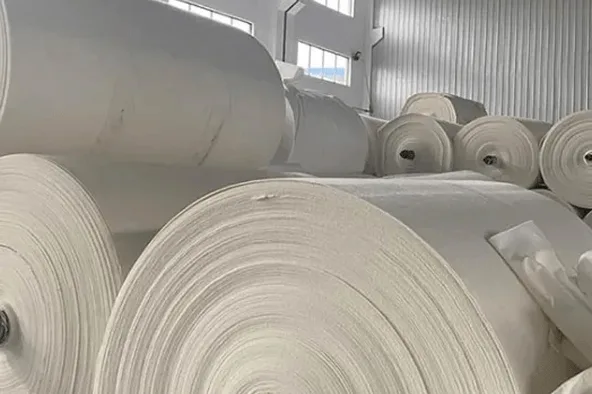
Omela describes PPS dust filter bags as suitable for demanding industrial processes where hot and chemically aggressive flue gases can damage conventional media. Omela’s PPS page lists a typical continuous temperature range of 160–190°C with peaks around 200–210°C, depending on media construction and operating conditions.
PPS is often considered for coal-fired boilers, biomass boilers, waste-to-energy plants, chemical processing, smelting, metallurgical dust collection, and other flue gas systems where moisture and acid gas may appear together.
The main advantage of PPS is that it can handle a more severe combination of heat, moisture, acid gas, alkali components, and sulfur-containing flue gas than acrylic. If the baghouse operates above the safe acrylic range, or if the flue gas chemistry changes from hour to hour, PPS is often the more reliable starting point.
However, PPS is not perfect. Its important weakness is oxidation risk. In high oxygen and high temperature conditions, PPS can gradually lose strength. This is why oxygen concentration, startup temperature, excess air, temperature spikes, and cleaning conditions should be reviewed before selecting PPS. Some material comparison guides also warn that PPS can be affected when elevated temperature and high oxygen occur together.
What Acrylic Filter Bags Are Best For
Acrylic filter bags are made from acrylic needle-punched felt. They are mainly selected for low-to-medium temperature dust collection where moisture, hydrolysis, or mild acid exposure makes polyester less suitable.
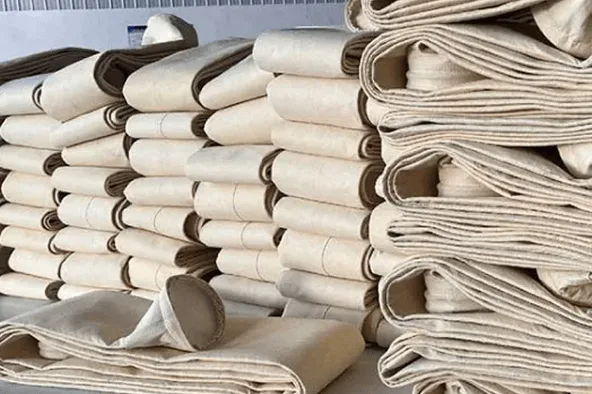
Omela describes acrylic filter bags as suitable for industrial dust-collection systems requiring strong moisture resistance, stable filtration efficiency, and chemical durability under medium-temperature conditions. Omela’s acrylic page lists a typical continuous range of 120–130°C, with short peaks around 140–150°C.
Acrylic is often considered for cement plants, coal mills, spray dryers, waste incineration support systems, asphalt-related processes, chemical plants, and drying processes where temperatures stay moderate but moisture or mild acidic gas is present.
The key advantage of acrylic is moisture resistance. Polyester can degrade quickly in hot and humid conditions because of hydrolysis. Acrylic is more stable than polyester in humid gas streams, which makes it useful where the gas is not hot enough to justify PPS, P84, PTFE, or fiberglass, but still too wet for standard polyester.
Acrylic is also cost-effective compared with higher-temperature media. If the process temperature is moderate, the chemical conditions are not severe, and the main issue is moisture or mild acidity, acrylic may provide a practical balance between performance and cost.
The limitation is temperature. Acrylic should not be selected only because moisture is present. If the continuous temperature is too high, or if the plant experiences frequent temperature peaks, acrylic may harden, shrink, lose strength, or fail earlier than expected. A filter bag material comparison from Aokai also notes that acrylic remains a low-to-medium temperature material and should not be selected only because moisture is present if continuous temperature exceeds its operating range.
PPS vs Acrylic: Practical Comparison
| Selection Factor | PPS Filter Bags | Acrylic Filter Bags |
|---|---|---|
| Typical role | Moist, acidic, sulfur-containing, chemically aggressive flue gas | Humid, mildly acidic, low-to-medium temperature dust collection |
| Temperature level | Higher than acrylic; often used in medium-to-high temperature flue gas | Lower-to-medium temperature range |
| Moisture resistance | Strong hydrolysis resistance | Good moisture and hydrolysis resistance |
| Acid gas resistance | Better for stronger acidic / sulfur-containing gas | Good for mild acidic gas |
| Alkali resistance | Usually stronger than acrylic | Moderate, application-dependent |
| Oxidation risk | Needs oxygen and temperature review | Less selected for high-temperature oxidizing gas |
| Cost level | Higher than acrylic | Usually more economical |
| Typical applications | Boilers, WtE, sulfur-containing flue gas, chemical dust, metallurgical dust | Cement, coal mill, spray dryer, drying process, humid moderate-temperature dust |
| Main warning | Avoid high oxygen + high temperature without review | Avoid continuous high temperature or severe chemical exposure |
This comparison should be used as a first screening tool, not a final design rule. Actual material selection depends on the full operating conditions.
How Moisture Changes the Decision
Moisture is one of the most common reasons plants compare PPS and acrylic. Moisture can appear from fuel, raw materials, cooling, spray drying, flue gas condensation, leakage air, or process water.
In low-temperature systems, moisture may cause dust to become sticky. In acid gas systems, moisture can create corrosion and acid dew point problems. In fabric filters, condensation can also cause bag blinding, which blocks airflow through the bag; EPA also notes that lower temperatures can allow acid gases to condense and corrode casing and metal parts.
When moisture is present but the temperature is moderate, acrylic may be enough. When moisture is combined with sulfur-containing gas, stronger acid components, higher temperature, or frequent temperature swings, PPS is usually safer.
A useful rule is this: moisture alone does not automatically require PPS, but moisture plus heat plus acid gas often pushes the selection toward PPS.
How Acidic and Sulfur-Containing Gas Changes the Decision
Acidic gas and sulfur-containing flue gas are important because they attack fibers, sewing thread, cages, tube sheets, and metal parts. The risk becomes greater when moisture and dew point conditions are not controlled.
PPS is commonly selected when sulfur-containing flue gas, acid gas, moisture, and moderate-to-high temperature occur together. It is used in many boiler and incineration applications for this reason. Filter Bag Works also notes that PPS is usually selected when acid gas, hydrolysis risk, moisture, and moderate-high temperature make polyester, acrylic, or aramid less suitable.
Acrylic can handle mild acidic gas and moisture, but it should not be pushed into severe chemical environments simply to reduce cost. If the plant has SOx, NOx, HCl, HF, chlorides, fluctuating dew point, or high sulfur fuel, acrylic should be reviewed carefully.
The most practical question is not “is the gas acidic?” but “how acidic, how wet, how hot, and for how long?”
How Temperature and Oxygen Affect PPS and Acrylic
Temperature is the most visible difference between PPS and acrylic. Acrylic is a lower-to-medium temperature material. PPS can handle higher temperatures, but it also requires oxygen review.
Acrylic is usually not suitable when continuous temperature exceeds its safe operating range. If temperature peaks are frequent, acrylic may degrade even if the average temperature looks acceptable.
PPS handles higher temperature, but high oxygen concentration can create oxidation risk. This matters in boilers, biomass systems, and flue gas lines with excess air, air leakage, or unstable combustion. The risk is not only the maximum temperature; it is the combination of temperature, oxygen, time, and startup conditions.
A practical selection approach is to record continuous temperature, peak temperature, startup temperature, shutdown behavior, and oxygen level. Without these details, PPS may be over-specified or under-protected, while acrylic may be selected outside its safe range.
Dust Behavior and Cleaning Method Matter Too
The dust itself can decide whether PPS or acrylic performs well. Fine ash, sticky dust, hygroscopic powder, oily particles, or high dust concentration can create high pressure drop, poor dust release, and frequent pulse cleaning.
If the dust cake releases easily, a standard felt finish may be enough. If dust is sticky or fine, a singed, glazed, water-repellent, oil-repellent, or PTFE membrane finish may be needed. A study summarized by EPA HERO found that filtration operation and surface treatment influence pulse-jet cleaning performance, and PTFE membrane bags showed strong cleaning performance in that study.
This is why PPS vs acrylic should not be separated from surface treatment. A standard PPS felt may not solve a sticky-dust problem if the surface finish is wrong. A properly finished acrylic bag may perform well in a moderate-temperature humid process where a more expensive PPS bag is unnecessary.
Application-Based Selection Logic
For coal-fired or biomass boilers, PPS is usually the first material to evaluate when the flue gas contains sulfur compounds, moisture, acid gas, and moderate-to-high temperature. Acrylic may be considered only when temperature and chemistry are clearly within its range.
For cement mills and raw material grinding, acrylic may be practical when moisture is present but temperature is moderate. PPS may be used when the process has higher gas temperature, acid components, or chemically unstable conditions.
For spray dryers, acrylic can be useful when the temperature is moderate and moisture resistance is the main need. PPS may be needed when the exhaust is hotter, more chemically aggressive, or more difficult to clean.
For waste incineration and waste-to-energy systems, PPS may be considered when acidic gas, moisture, and temperature are important. But if the chemistry is severe, PTFE, P84, or composite media may also need review.
For asphalt-related systems, the selection depends heavily on temperature, oil mist, mineral dust, and dust release behavior. Acrylic may work in moderate conditions, but PPS, aramid, fiberglass, or membrane media may be better when temperature or chemistry becomes more demanding.
Common Mistakes to Avoid
The first mistake is choosing acrylic only because the gas is wet. Acrylic is good for moisture, but it still has a temperature limit. If the process is too hot, acrylic may fail quickly.
The second mistake is choosing PPS only because the gas is acidic. PPS is strong in many acidic and sulfur-containing conditions, but oxygen and temperature must still be reviewed.
The third mistake is ignoring dew point. Moisture and acid gas below dew point can create sticky dust, corrosion, bag blinding, and high pressure drop.
The fourth mistake is ignoring the cage. A corroded or rough cage can cut a new bag, whether the media is PPS or acrylic.
The fifth mistake is focusing only on material name. Surface treatment, sewing thread, bag construction, pulse pressure, cleaning frequency, air-to-cloth ratio, and dust cake behavior can change the final result.
Practical Selection Checklist
Before choosing between PPS and acrylic filter bags, confirm:
- Continuous temperature, peak temperature, and startup/shutdown temperature behavior
- Moisture level, dew point risk, and condensation history
- Acid gas, sulfur compounds, alkali components, chlorides, fluorides, and oxygen level
- Dust particle size, stickiness, abrasiveness, and concentration
- Cleaning method, pulse pressure, differential pressure trend, bag size, cage condition, current service life, and failure photos
If the process is humid and mildly acidic but stays within the acrylic range, acrylic may be the practical choice. If the process is hotter, sulfur-containing, chemically aggressive, or unstable, PPS is usually the stronger candidate.
To Request a Quote
For PPS or acrylic filter bags, please send:
- Application or industry
- Dust type and particle size
- Working temperature and peak temperature
- Moisture level, dew point risk, and condensation history
- Gas composition, including acid gas, sulfur, alkali, oxygen, or corrosive components
- Bag diameter and length
- Top and bottom design
- Current filter bag material
- Cleaning method and differential pressure trend
- Cage photos and current failure photos, if available
- Quantity and delivery destination
With this information, Omela can compare PPS, acrylic, polyester, aramid, P84, PTFE, fiberglass, FMS, and membrane-treated options based on real working conditions.
Omela Engineering View
PPS and acrylic filter bags both solve moisture-related filtration problems, but they sit in different performance ranges.
Acrylic is the practical choice for humid, mildly acidic, low-to-medium temperature dust collection when cost control matters. PPS is the better candidate for hotter, sulfur-containing, acidic, alkaline, or chemically unstable flue gas where acrylic may not provide enough thermal and chemical durability.
The safest selection method is to review the full baghouse environment: temperature, moisture, acid gas, sulfur, oxygen, dust behavior, cleaning method, air-to-cloth ratio, cage condition, and failure history. A good filter bag recommendation should explain not only which media to use, but also why the other material may not be suitable.
FAQ
What is the main difference between PPS and acrylic filter bags?
PPS filter bags are generally used for hotter and more chemically aggressive flue gas, especially where sulfur-containing gas, acid gas, alkali components, and moisture are present. Acrylic filter bags are more suitable for humid, mildly acidic, low-to-medium temperature dust collection.
Are acrylic filter bags suitable for moist flue gas?
Yes. Acrylic filter bags are often selected for moist or humid flue gas because they have good hydrolysis resistance. However, the temperature must remain within the safe acrylic operating range.
Are PPS filter bags suitable for sulfur-containing flue gas?
Yes. PPS filter bags are commonly evaluated for sulfur-containing, acidic, and moisture-prone flue gas. Final selection should still review temperature, oxygen content, dew point, cleaning method, and dust behavior.
Is PPS always better than acrylic?
No. PPS offers higher temperature and chemical resistance, but it is usually more expensive and can face oxidation risk under high oxygen and high temperature. Acrylic may be more cost-effective when the process is humid but not too hot or chemically severe.
Can acrylic replace PPS in a baghouse?
Only when the operating temperature, gas chemistry, moisture, and dust behavior are within acrylic’s safe range. If the process involves high temperature, sulfur-containing flue gas, or stronger chemical attack, PPS is usually safer.
What information is needed to choose between PPS and acrylic?
To choose between PPS and acrylic, provide temperature, moisture level, gas chemistry, sulfur content, oxygen level, dust type, bag size, cleaning method, differential pressure trend, cage condition, and current failure photos.
Author

Jessica Ma – Senior Filtration Engineer, Omela Filtration
Jessica Ma is a senior filtration engineer at Omela Filtration, specializing in dust and liquid filtration. With over 15 years of experience, she focuses on optimizing baghouse performance, enhancing filtration efficiency, and developing high-performance solutions for industrial dust collectors and precision liquid filtration applications.