
Key Takeaways
P84 and PTFE are both premium filter media for demanding baghouse applications, but they solve different problems.
P84 filter bags are usually selected when the main requirement is excellent fine-particle filtration at high temperature. P84 has excellent inherent filtration properties because of its special polyimide fiber structure. It is suitable for applications where fine dust capture, stable emissions, and good pulse-cleaning performance are important.
PTFE filter bags, often referred to as Teflon filter bags in some markets, are usually selected when the main challenge is chemical attack, moist heat, mineral acids, alkalis, hydrolysis, or unstable flue-gas chemistry. PTFE needle felt itself does not always provide better inherent filtration than P84, but it provides much stronger chemical and moisture resistance.
The most important correction is this:
P84 has better inherent filtration properties. PTFE has better chemical, alkali, acid, and moist-heat resistance. PTFE membrane can greatly improve filtration efficiency when surface filtration is required.
Omela supplies P84 high-temperature dust filter bags, PTFE filter bags, and other industrial dust filter bags for cement, waste incineration, power generation, metallurgy, carbon black, asphalt, and chemical processing. For applications requiring surface filtration, see our guide to PTFE membrane filter bag applications.
What Is P84 Filter Media?
P84 is a high-performance polyimide fiber used in high-temperature industrial dust collection. Its key advantage is not only heat resistance but also its special fiber geometry.
Unlike many round fibers, P84 has a multi-lobed fiber cross-section. This structure increases the effective filtration surface area and helps capture fine particles more efficiently. In baghouse operation, this means dust is more likely to be collected near the surface of the felt rather than penetrating deeply into the fiber structure.
Main Function
The main function of P84 filter media is to provide excellent fine-dust capture under high-temperature conditions.
This makes P84 a strong option for applications where particulate emissions must be tightly controlled, especially when the dust is fine and difficult to capture with conventional media.
Practical Benefits
P84 filter bags can help provide:
- Excellent filtration properties
- Good energy absorption during pulse cleaning
- Good resistance to mineral acids
- Good moist-heat performance
- Stable filtration under elevated temperatures
- Lower risk of deep dust penetration compared with some standard felts
- Good performance where strict particulate emissions are required
However, P84 is not the best choice for every harsh process. Its abrasion resistance is generally rated as fair, and its resistance to alkalines is also fair. If the gas stream is strongly alkaline, chemically unstable, or highly corrosive, PTFE may be safer.
What Is PTFE Filter Media?
PTFE stands for polytetrafluoroethylene. Teflon is a well-known trade name associated with PTFE, while PTFE is the generic material name normally used in engineering specifications.
In baghouse filtration, PTFE may appear in several forms:
- Full PTFE needle felt
- PTFE membrane laminated onto another base felt
- PTFE scrim
- PTFE coating
- PTFE impregnation
- PTFE sewing thread
These are not the same. A full PTFE felt, PTFE-coated felt, and PTFE membrane-laminated felt may perform differently.
Main Function
The main function of PTFE is to provide excellent chemical resistance, moisture resistance, hydrolysis resistance, and resistance to acids and alkalis.
PTFE is usually chosen when ordinary high-temperature fibers fail because of chemical attack, condensation, acid dew point, sticky dust, or corrosive gas components.
Practical Benefits
PTFE filter bags can help provide:
- Excellent resistance to moist heat
- Excellent resistance to alkalines
- Excellent resistance to mineral acids
- Excellent resistance to hydrolysis and corrosion
- Good abrasion resistance
- Good energy absorption
- Strong performance in chemically unstable gas streams
- Better service life in severe flue-gas environments
The important limitation is that PTFE needle felt itself may only have fair filtration properties compared with P84. If the system requires very high fine-particle capture, PTFE membrane should be considered.
P84 vs. PTFE: Updated Fabric Characteristics Table
| Fabric Characteristic | P84 Filter Bags | PTFE / Teflon Filter Bags | Practical Meaning |
|---|---|---|---|
| Max continuous operating temperature | 500°F / about 260°C | 500°F / about 260°C | Both can handle high-temperature baghouse applications. The final choice is usually decided by dust type, moisture, and gas chemistry. |
| Abrasion resistance | Fair | Good | PTFE has the stronger abrasion rating, but both materials still require smooth cages and proper airflow distribution. |
| Energy absorption | Good | Good | Both can handle pulse-cleaning stress when the bag, cage, and cleaning settings are correctly matched. |
| Filtration properties | Excellent | Fair as base felt; excellent when laminated with PTFE membrane | P84 has stronger inherent fine-dust capture. PTFE needs membrane construction for best surface-filtration performance. |
| Moist heat resistance | Good | Excellent | PTFE is safer where humid gas, condensation risk, or moist heat is present. |
| Alkali resistance | Fair | Excellent | PTFE is preferred for alkaline gas or alkaline dust conditions. |
| Mineral acid resistance | Good | Excellent | PTFE is better for strongly acidic or corrosive gas streams. |
This table should not be used as the only selection rule. Actual performance also depends on felt weight, scrim, membrane, surface treatment, bag construction, cage condition, air-to-cloth ratio, pulse-cleaning intensity, and operating stability.
Filtration Performance: Where P84 Has the Advantage
One of the most important updates to the previous comparison is the distinction between PTFE base felt and PTFE membrane.
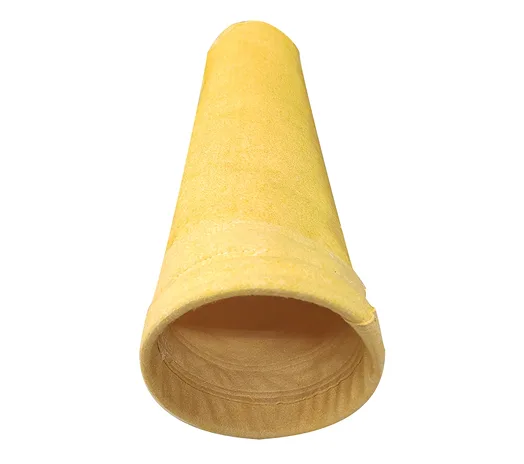
P84 has excellent inherent filtration performance. Its multi-lobed fiber shape creates a larger surface area and improves fine-particle capture. This makes it useful in high-temperature applications where fine dust and strict emission limits are the main concerns.
PTFE needle felt, by contrast, is not automatically a better filtering material in its base-felt form. Its filtration properties are often considered only fair when compared with P84.
However, when a PTFE membrane is laminated onto a base felt, the situation changes. PTFE membrane creates a microporous surface layer that captures dust on the surface before particles can enter deeply into the felt. This can significantly improve fine-particle capture, dust release, and emission stability.
A more accurate comparison is:
| Media Type | Filtration Behavior | Best Use |
|---|---|---|
| P84 needle felt | Excellent inherent fine-dust filtration | High-temperature fine dust and strict particulate control |
| PTFE needle felt | Fair inherent filtration but excellent chemical resistance | Corrosive, humid, acid, alkaline, or chemically unstable gas |
| P84 with PTFE membrane | Excellent fiber filtration plus surface filtration | Fine dust, strict emissions, improved cleaning |
| PTFE with PTFE membrane | Strong chemical resistance plus surface filtration | Severe corrosive gas and low-emission applications |
Chemical Resistance: Where PTFE Has the Advantage
PTFE is the clear winner when chemical resistance is the most important factor.
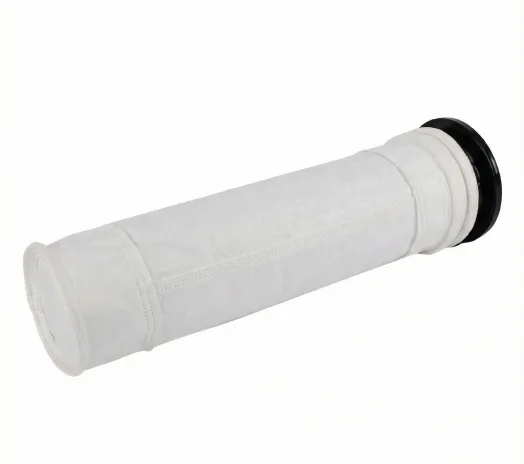
P84 can handle many demanding industrial conditions, especially where high temperature and fine dust are the main challenges. It also has good resistance to mineral acids and good moist-heat performance. However, its alkali resistance is only fair, and it should be carefully evaluated in highly alkaline or chemically aggressive environments.
PTFE provides excellent resistance to alkalines, mineral acids, moist heat, and many corrosive components. This makes it more suitable for severe flue-gas environments where chemical degradation is the main cause of bag failure.
PTFE should be strongly considered when the gas stream contains:
- High moisture or condensation risk
- Acid gases such as HCl, HF, or SOx
- Strong alkaline compounds
- Corrosive metal fumes
- Chemically unstable emissions
- Sticky dust combined with moisture
- Acid dew-point risk
In these conditions, a high-temperature fiber with excellent filtration properties may still fail early if its chemical resistance is not strong enough.
Temperature Resistance: Similar Rating, Different Risk
Both P84 and PTFE are commonly rated around 500°F for maximum continuous operation, depending on the specific fabric construction and supplier recommendation.
This can make the two materials appear similar at first glance. However, temperature rating alone is not enough.
For example, a cement kiln operating at high temperature with relatively dry mineral dust may be suitable for P84. The main challenge is fine dust capture and stable filtration performance.
A waste incineration plant operating at a similar temperature may require PTFE or PTFE membrane composite media because the gas can contain moisture, acid gases, corrosive compounds, and variable chemistry.
The question should not be only:
“Can this media survive the temperature?”
A better question is:
“Can this media survive the temperature, moisture, chemistry, dust abrasiveness, and cleaning stress at the same time?”
Abrasion and Mechanical Durability
According to the comparison data, PTFE has good abrasion resistance while P84 is rated fair.
This does not mean PTFE can ignore mechanical design problems. PTFE filter bags are expensive, and poor baghouse conditions can still damage them quickly.
Common mechanical causes of premature failure include:
- Bent or corroded cages
- Rough cage welds
- Bag-to-cage friction
- Bag-to-bag rubbing
- High inlet velocity
- Abrasive dust impact
- Misaligned pulse pipes
- Over-cleaning
- Hopper dust re-entrainment
P84 also needs mechanical protection, especially in applications with abrasive mineral dust, clinker dust, metal oxides, or high inlet dust loading.
For both materials, proper baghouse design is essential. A premium fiber cannot compensate for poor airflow distribution, damaged cages, excessive air-to-cloth ratio, or aggressive cleaning settings.
Moist Heat and Condensation
Moist heat is a major reason to choose PTFE.
P84 has good moist-heat resistance, but PTFE is rated excellent. In real baghouse operation, moisture can combine with fine dust and chemical gases to create severe operating problems.
Condensation may cause:
- Sticky dust cake
- Rapid blinding
- High differential pressure
- Acid corrosion
- Fiber weakening
- Difficult pulse cleaning
- Shortened bag life
If the process frequently crosses the dew point, PTFE or PTFE membrane composite media may be more reliable than P84.
However, media selection should not be the only corrective action. The plant should also review insulation, startup procedures, compressed-air dryness, air leakage, hopper heating, duct temperature, and shutdown condensation.
Acid and Alkali Resistance
P84 provides good resistance to mineral acids, but its alkali resistance is only fair. This means it can be suitable for certain acidic high-temperature applications, but it should be used carefully when alkaline compounds are present.
PTFE provides excellent resistance to both mineral acids and alkalines. This is one of its strongest advantages.
For applications involving waste incineration, chemical processing, titanium dioxide, carbon black, non-ferrous smelting, hazardous waste treatment, and some flue-gas neutralization systems, PTFE may provide a longer and safer service life.
The key point is:
P84 is often selected for filtration performance. PTFE is often selected for chemical survival.
Dust Release and Pressure Drop
Dust release depends on both the filter material and the dust characteristics.
P84 can support good dust release because its fiber geometry helps form a more effective dust cake near the surface. This can reduce deep dust penetration and help stabilize pressure drop.
PTFE has a naturally low surface energy, so dust tends to adhere less strongly. PTFE membrane can further improve dust release by creating a smooth surface-filtration layer.
For sticky or fine dust, PTFE membrane may reduce blinding and make pulse cleaning more effective.
Still, pressure drop problems are not always caused by the media. A baghouse with poor compressed air quality, failed pulse valves, high air-to-cloth ratio, blocked hopper discharge, or moisture ingress may show high differential pressure even with premium filter bags.
Application Selection Table
| Application Condition | Recommended Starting Direction | Reason |
|---|---|---|
| Fine high-temperature dust | P84 | Excellent inherent filtration properties |
| Strict emission control with fine dust | P84 with PTFE membrane | Combines strong fiber filtration with surface filtration |
| Humid or condensation-prone gas | PTFE or PTFE membrane composite | Excellent moist-heat and hydrolysis resistance |
| Strong alkaline gas or dust | PTFE | Excellent alkali resistance |
| Strong mineral acid exposure | PTFE | Excellent mineral acid resistance |
| Cement kiln or lime kiln | P84, P84/PTFE membrane, fiberglass/PTFE | Depends on temperature, dust fineness, and chemistry |
| Waste incineration | PTFE, P84/PTFE, fiberglass/PTFE | Corrosion and low emissions are both important |
| Carbon black or sticky fine dust | PTFE membrane composite | Better dust release and anti-blinding performance |
| Metallurgical flue gas | P84, PTFE, or fiberglass/PTFE | Depends on acids, alkalines, temperature, and abrasion |
| Chemically severe process gas | Full PTFE | Best chemical resistance and service stability |
When P84 Is the Better Choice
Choose P84 filter bags when the main challenge is high-temperature fine dust filtration and the gas chemistry is relatively controlled.
P84 is a strong option when the plant needs excellent filtration properties, good pulse-cleaning performance, and reliable fine-particle capture. It is often suitable for cement kilns, lime kilns, power plants, waste-to-energy systems, and metallurgical applications where emission control is the priority.
P84 is especially useful when:
- Fine dust capture is critical
- The operating temperature is high
- The dust is not strongly alkaline
- Moisture and acid dew point are reasonably controlled
- The plant wants better filtration than standard high-temperature felts
- Full PTFE is technically unnecessary or too costly
When PTFE Is the Better Choice
Choose PTFE filter bags when the main challenge is chemical attack, moist heat, alkalines, mineral acids, hydrolysis, or unstable flue-gas chemistry.
PTFE is not mainly selected because its base felt filters better than P84. It is selected because it survives better in corrosive, humid, acidic, alkaline, and chemically unstable environments.
PTFE is especially useful when:
- Previous bags failed from chemical degradation
- The gas contains acid or alkaline components
- The system operates near dew point
- Moisture cannot be fully avoided
- Sticky dust causes blinding
- Bag replacement and shutdown costs are high
- Long service life is more important than the lowest initial price
When to Use P84 with PTFE Membrane
P84 and PTFE do not have to be used separately. In many baghouses, the best solution is a composite design.
A P84 felt laminated with PTFE membrane combines two advantages:
- P84 contributes excellent fine-dust filtration and high-temperature performance.
- PTFE membrane improves surface filtration, dust-cake release, and emission control.
This construction can be useful when the gas chemistry is not severe enough to require full PTFE, but the plant needs better filtration efficiency and more stable pressure drop than ordinary P84 felt can provide.
P84 with PTFE membrane is often considered for:
- Cement and lime kilns
- Waste-to-energy plants
- Metallurgical dust collection
- Fine mineral dust
- Low-emission baghouse systems
- Applications with dust penetration or blinding problems
Common Selection Mistakes
Mistake 1: Choosing Only by Temperature
Both P84 and PTFE can be used around 500°F depending on design, so temperature alone does not decide the media.
Moisture, acids, alkalines, abrasion, oxygen, dust particle size, and cleaning intensity must also be reviewed.
Mistake 2: Assuming PTFE Always Filters Better
PTFE needle felt has excellent chemical resistance, but its base filtration properties may be only fair compared with P84.
For better filtration efficiency, specify PTFE membrane, not just PTFE fiber.
Mistake 3: Ignoring Alkali Resistance
P84 has only fair alkali resistance. If alkaline dust or alkaline gas is present, PTFE may be more reliable.
Mistake 4: Reusing Damaged Cages
Both P84 and PTFE filter bags can fail quickly if installed over bent, rusted, or rough cages. Premium media should always be matched with proper cage condition.
Mistake 5: Treating Membrane as a Fix for All Problems
PTFE membrane improves filtration and dust release, but it cannot solve poor airflow distribution, wet compressed air, excessive filtration velocity, or blocked hopper discharge.
Information Needed Before Choosing P84 or PTFE
To recommend the correct filter media, the supplier should review:
- Continuous operating temperature
- Peak temperature
- Moisture content and dew point
- Acid gases such as SOx, HCl, or HF
- Alkali content
- Oxygen concentration
- Dust particle size
- Dust abrasiveness
- Dust stickiness
- Current filter bag material
- Existing service life
- Failure symptoms
- Differential-pressure trend
- Baghouse cleaning method
- Bag dimensions
- Cage condition
- Required emission limit
Photos of used bags, dust cake, cages, and failed areas are very useful. They can show whether the real problem is chemical attack, abrasion, thermal damage, installation leakage, blinding, or cleaning-system failure.
Final Recommendation
P84 and PTFE are both high-performance filter bag materials, but they should be selected for different reasons.
Choose P84 filter bags when the main challenge is high-temperature fine dust filtration. P84 offers excellent inherent filtration properties, good energy absorption, good mineral acid resistance, and good moist-heat performance. It is especially useful when fine particulate capture and emission stability are the main requirements.
Choose PTFE filter bags when the main challenge is chemical survival. PTFE offers excellent resistance to moist heat, alkalines, mineral acids, hydrolysis, and corrosive flue gas. It is usually the safer choice when previous bags failed due to chemical attack, condensation, acid dew point, or unstable gas composition.
Choose P84 with PTFE membrane when the system needs both strong fine-dust filtration and improved surface filtration. In this configuration, P84 provides excellent filtration performance, while the PTFE membrane improves dust-cake release, emission control, and resistance to blinding.
Omela Filtration can supply P84, PTFE, P84 with PTFE membrane, fiberglass with PTFE membrane, PPS with PTFE membrane, FMS, aramid, and other composite filter bags. Available options include PTFE membrane, PTFE impregnation, singeing, calendering, heat setting, water- and oil-repellent treatment, reinforced bottoms, and matched cages.
Customers are welcome to contact Omela Filtration with operating temperature, gas chemistry, moisture level, dust characteristics, current bag material, service life, failure symptoms, bag dimensions, and cage photos. Our engineers can help determine whether P84, PTFE, P84/PTFE membrane, or another composite media is the most practical solution for your baghouse.
FAQ
1. What is the main difference between P84 and PTFE filter bags?
P84 is a polyimide fiber known for excellent fine-dust filtration and high-temperature performance. PTFE is a fluoropolymer known for excellent moist-heat, acid, alkali, and chemical resistance.
2. Which has better filtration properties, P84 or PTFE?
P84 has better inherent filtration properties. PTFE needle felt has fair filtration properties as a base felt, but PTFE membrane-laminated media can provide excellent surface filtration.
3. Which material has better chemical resistance?
PTFE has better overall chemical resistance, especially against moist heat, alkalines, mineral acids, hydrolysis, and corrosive gas streams.
4. Can P84 and PTFE be used at the same temperature?
Both are commonly used in high-temperature baghouse applications, with maximum continuous ratings around 500°F depending on construction and operating conditions. Chemistry and moisture usually determine the final choice.
5. Is PTFE better than P84 for alkaline dust?
Yes. PTFE has excellent alkali resistance, while P84 has only fair alkali resistance.
6. When should I choose P84 with PTFE membrane?
Choose P84 with PTFE membrane when you need excellent fine-dust filtration, improved dust-cake release, better surface filtration, and more stable emissions.
7. Is Teflon the same as PTFE?
Teflon is a well-known trade name associated with PTFE. PTFE is the generic material name used in most industrial filter bag specifications.
Author

Jessica Ma – Senior Filtration Engineer, Omela Filtration
Jessica Ma is a senior filtration engineer at Omela Filtration, specializing in dust and liquid filtration. With over 15 years of experience, she focuses on optimizing baghouse performance, enhancing filtration efficiency, and developing high-performance solutions for industrial dust collectors and precision liquid filtration applications.