
Key Takeaways
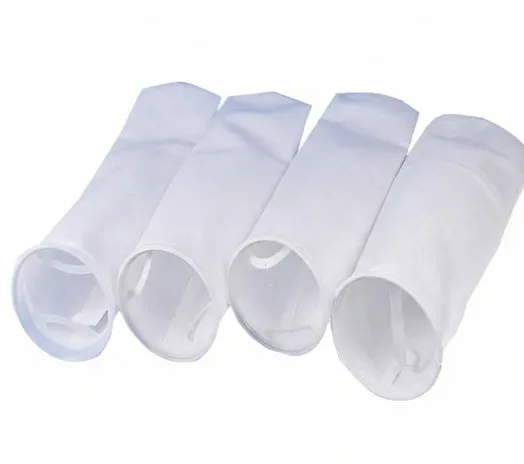
High flow filter bags are not one single material or one fixed product. They are a group of liquid filter bag solutions designed for large-volume filtration, low pressure drop, high dirt-holding capacity, longer service life, and fewer filter change-outs.
The right high flow filter bag may be PP felt, polyester felt, nylon mesh, monofilament mesh, multifilament mesh, PTFE, stainless steel, oil-absorbing media, or a high-efficiency multilayer construction. The best choice depends on liquid type, viscosity, particle load, micron rating, temperature, chemical compatibility, flow rate, and housing design.
For general large-volume water or chemical filtration, polypropylene liquid filter bags are often a practical starting point. For stronger mechanical performance or medium-temperature process liquids, polyester liquid filter bags may be better. For high-viscosity liquids such as resin, paint, ink, or coatings, nylon liquid filter bags or mesh filter bags may provide higher flow and lower pressure drop.
Omela Filtration supplies industrial liquid filter bags in PP, polyester, nylon, mesh, PTFE, stainless steel, and customized constructions for water treatment, chemicals, oils, coatings, resins, inks, adhesives, food and beverage, wastewater, electroplating, and process filtration.
What Are High Flow Filter Bags?
High flow filter bags are liquid filter bags designed for applications where a large volume of liquid must pass through the filtration system efficiently. The goal is not only to remove particles, but also to maintain stable flow, reduce pressure drop, hold more dirt, and reduce replacement frequency.
In many industrial systems, a standard liquid filter bag may work well at first but block too quickly when the flow rate, solids loading, or viscosity increases. A high flow filter bag solution may use a larger bag size, lower-resistance media, mesh construction, multilayer depth media, or a multi-bag housing to keep the process stable.
Typical high flow applications include:
- Cooling water, process water, wastewater, and RO pre-filtration
- Chemicals, plating baths, acids, alkalis, and solvents
- Oils, fuels, lubricants, emulsions, and hydraulic fluids
- Resin, paint, ink, coatings, varnish, adhesives, and glue
- Food and beverage liquids, syrups, edible oils, and ingredient streams
In short, high flow filter bags are selected when the process needs more liquid throughput without excessive pressure drop or constant bag replacement.
High Flow Does Not Mean “Any Large Bag”
A common mistake is assuming that a larger filter bag automatically means high flow performance. Size helps, but it is only one part of the system.
A high flow filter bag must match the liquid and process conditions. A very fine felt bag may still clog quickly in a high-viscosity coating. A coarse mesh bag may provide high flow but fail to capture fine particles. A chemically incompatible bag may deform, shed fibers, or fail even if it has enough flow capacity.
High flow filtration depends on five factors working together:
- Filter media structure
- Micron rating
- Liquid viscosity and temperature
- Particle type and solids loading
- Housing size, sealing, and flow distribution
When these are matched correctly, the system can deliver high throughput, stable pressure drop, and better operating cost.
Why Pressure Drop Matters in High Flow Filtration
Pressure drop is one of the most important indicators in bag filtration. It shows how much resistance the liquid experiences as it passes through the filter bag and housing.
If pressure drop is too high, the system may suffer from reduced flow, pump overload, poor downstream performance, shortened bag life, or frequent shutdowns. If pressure drop rises too quickly, it usually means the bag is loading with solids, the media is too fine, the liquid is too viscous, or the housing is undersized.
For high flow systems, the filter should be selected so that clean pressure drop stays low and the system has enough capacity to absorb dirt loading before reaching the change-out point.
A good high flow filter bag should not simply capture particles. It should capture them while maintaining reasonable flow and pressure stability.
Common Types of High Flow Filter Bags
PP Felt High Flow Filter Bags
PP felt filter bags are one of the most common options for large-volume liquid filtration. They are cost-effective, chemically versatile, and suitable for many low-temperature water, wastewater, chemical, and general process applications.
PP felt bags are depth filters. Particles are captured throughout the felt structure, which gives them good dirt-holding capacity. They are commonly used for removing suspended solids, rust, sand, gelatinous particles, and general process contamination.
Use PP felt high flow bags when the application requires:
- Economical large-volume filtration
- General water or chemical compatibility
- Good dirt-holding capacity
- Disposable single-use operation
- Moderate micron ratings such as 1–200 µm
PP is not the best choice for high-temperature liquids, strong oxidizers, or incompatible solvents. Chemical compatibility should always be confirmed before use.
Polyester Felt High Flow Filter Bags
Polyester felt bags provide higher mechanical strength and better temperature resistance than PP in many applications. They are often used for oils, coatings, emulsions, chemicals, and process liquids where strength and stability matter.
Polyester felt also works as a depth media. It can remove solid particles and gelatinous contaminants while maintaining good service life in suitable conditions.
Use polyester felt high flow bags when the process requires:
- Better mechanical strength than PP
- Medium-temperature liquid filtration
- Good dirt capacity
- Stable performance in oils, coatings, or process fluids
- Reliable filtration for industrial production lines
Polyester should be checked carefully in strong alkaline conditions or chemically aggressive fluids.
Nylon Mesh High Flow Filter Bags
Nylon mesh filter bags are surface filters. They use woven monofilament mesh with controlled openings, making them useful when the process needs high flow, low pressure drop, and defined particle retention.
They are especially useful for high-viscosity liquids because they do not load the same way as depth felt media. Larger gels, skins, lumps, fibers, and agglomerates are captured on the mesh surface while the liquid passes through with less resistance.
Use nylon mesh bags for:
- Resin, ink, paint, coating, and adhesive filtration
- Medium-viscosity liquids
- Coarse and medium surface filtration
- Applications where low fiber shedding matters
- Processes where reusable cleaning is possible
Nylon mesh is not suitable for every chemical system, especially some acidic or aggressive liquids. Compatibility must be checked.
Monofilament and Multifilament Mesh Bags
Mesh filter bags may be made from monofilament or multifilament yarn.
Monofilament mesh has smooth single-filament yarns and more uniform openings. It provides more precise surface filtration and is easier to clean.
Multifilament mesh is made from twisted fine filaments. It is softer and may hold more dirt in coarse filtration applications, but it is usually less precise and less reusable than monofilament.
Mesh bags are useful when the goal is high flow and particle screening rather than deep dirt loading. They are often selected for cooling water, coating lines, chemical liquids, edible oils, paint, resin, wastewater, and process pre-filtration.
PTFE High Flow Filter Bags
PTFE filter bags are used when chemical resistance is more important than low initial cost. They are suitable for aggressive solvents, strong acids, strong alkalis, hot corrosive liquids, high-purity chemicals, and demanding resin or polymer systems.
PTFE offers excellent chemical resistance and high-temperature stability. It can also reduce contamination risk in critical applications because of its low extractables and low fiber shedding.
Use PTFE high flow bags when the process involves:
- Strong acids or alkalis
- Organic solvents
- High-temperature liquids
- Corrosive wastewater
- High-purity chemicals
- Resin or polymer systems where contamination risk is high
The main limitation is cost. PTFE should be selected when process risk, chemical severity, or product value justifies the investment.
Stainless Steel High Flow Filter Bags
Stainless steel liquid filter bags are reusable metal mesh elements made from 304 or 316 stainless steel. They are used where polymer felt or mesh bags may not survive because of temperature, pressure, abrasion, or cleaning requirements.
They are suitable for hot oils, fuels, hydraulic fluids, solvents, corrosive chemicals, resins, coatings, electroplating lines, and high-pressure or high-flow systems.
Stainless steel bags are not always the lowest-cost purchase, but they can reduce long-term replacement cost where washing, backflushing, or repeated reuse is possible.
High-Capacity and Extended-Life Filter Bags
In some systems, a standard felt or mesh bag is not enough. The process may require high dirt-holding capacity and longer change-out intervals. In these cases, high-capacity or extended-life bags may be used.
These bags may use thicker felt, graded-density layers, multilayer construction, or pleated/extended surface designs. The goal is to capture more particles while maintaining lower pressure drop and longer service life.
They are useful when:
- Solids loading is high
- Bag replacement is too frequent
- Downtime is expensive
- Disposal cost is high
- Flow must remain stable for longer production runs
High-capacity bags are not always necessary for clean liquids. They are most valuable when the process has enough particle load to justify the higher bag cost.
Choosing the Right Micron Rating
Micron rating must be selected according to the particle size, liquid viscosity, and final process requirement.
| Filtration Goal | Typical Micron Direction | Practical Use |
|---|---|---|
| Coarse debris and large particles | 100–800 µm | Cooling water, pre-filtration, mesh bags |
| General process liquid cleanup | 25–100 µm | Water, chemicals, oils, coatings |
| Fine particle reduction | 5–25 µm | Paints, inks, plating baths, process fluids |
| High-cleanliness filtration | 1–10 µm | Fine chemicals, coatings, polishing stages |
| Final precision filtration | Below bag range or cartridge stage | Membrane or cartridge polishing may be needed |
For high flow systems, do not choose the finest micron rating automatically. A filter that is too fine may create high pressure drop and short service life. A staged system is often better: coarse bag first, finer bag or cartridge later.
Bag Size and Housing Selection
A high flow filter bag must be supported by the correct housing. Even the best media will fail if the housing is undersized, poorly sealed, or overloaded.
Single-Bag Housing
Single-bag housings are suitable for moderate flow rates, point-of-use filtration, batch processing, and smaller production systems. Size #2 bags are commonly selected where more area and dirt capacity are needed than smaller bags can provide.
Multi-Bag Housing
Multi-bag housings are used when one bag cannot handle the required flow or dirt load. By dividing flow across multiple bags, the system can reduce pressure drop and extend service life.
Horizontal or High-Flow Housing
Some high flow bags are designed for compatible horizontal or extended-length housings. These systems may provide larger filtration surface area and easier handling for high-volume processes.
Basket and Seal Design
The support basket prevents the bag from deforming under pressure. The seal prevents bypass. For high flow systems, ring type, flange type, gasket material, basket perforation, and cover closure are all important.
High Flow Filter Bags vs. Cartridge Filters
Bag filters and cartridge filters are both useful, but they solve different problems.
High flow filter bags are often better for large-volume liquids, high dirt load, coarse-to-medium particle removal, and lower operating cost. They are easy to change and usually more forgiving when particles, gels, or larger solids are present.
Cartridge filters are better for finer retention, final polishing, higher efficiency ratings, and applications where precise particle control is required.
A practical system may use:
Pump → coarse mesh bag → felt or high-capacity bag → cartridge polishing → downstream process
This layout protects the fine filter stage, reduces cartridge replacement cost, and keeps high-flow operation more stable.
Application Guidance
Water Treatment and Wastewater
High flow filter bags are widely used for process water, cooling water, wastewater, RO pre-filtration, and utility water. PP felt and mesh bags are often practical starting points.
For water with high suspended solids, a high-capacity bag or multi-bag housing may reduce change-out frequency.
Chemical and Petrochemical Liquids
Chemical processes require careful material selection. PP, polyester, PTFE, and stainless steel may all be used depending on pH, solvents, temperature, and corrosion risk.
For corrosive liquids or aggressive solvents, PTFE or stainless steel may be safer than standard polymer felt.
Oils, Fuels, and Lubricants
Oil filtration may require polyester felt, nylon mesh, stainless steel mesh, or oil-absorbing media depending on viscosity, temperature, particle load, and whether free oil or water contamination must be controlled.
Stainless steel bags may be useful when high temperature, washing, or repeated reuse is required.
Resin, Paint, Ink, and Coatings
High-viscosity liquids need special attention because pressure drop increases quickly. Nylon mesh, polyester mesh, or larger bags may be better than fine felt bags for removing skins, gels, lumps, and pigment agglomerates.
For fine coating quality, bag filtration may need to be followed by cartridge polishing.
Food and Beverage Process Liquids
High flow bag filtration may be used for edible oils, syrups, beverages, process water, and ingredient streams. Material compliance, cleanliness, extractables, and fiber shedding should be reviewed carefully.
Public Case Lessons and Industry Examples
High-Capacity Filter Element Design
Public high-capacity filter bag examples show that increasing filtration area can extend service life and reduce change-out frequency. This is useful where frequent bag replacement causes downtime, product loss, or high labor cost.
The lesson is simple: high flow filtration is not only about pump capacity. It is also about media area, dirt-holding capacity, and replacement interval.
Paint and Coating Filtration
Coating and paint filtration examples show that filter bags must balance cleanliness and flow. A filter that is too coarse may allow defects. A filter that is too fine may block quickly and interrupt production.
The lesson is that paint, coating, and resin lines often need staged filtration rather than one single fine bag.
Water and Utility Filtration
High-volume water filtration applications show why bag filters remain popular. They can handle large flow rates, relatively high solids, simple changeout, and lower operating cost compared with many precision cartridge systems.
The lesson is that bag filtration is often the first practical choice when the goal is economical large-volume particle removal.
Process Housing Performance
Flow rate, viscosity, pressure, and system design all affect bag filter housing performance. If flow is too high for the housing or media, clogging and reduced efficiency can occur sooner than expected.
The lesson is that high flow filter bags should be sized as part of the whole system, not purchased only by bag dimensions.
Common Selection Mistakes
Mistake 1: Choosing Only by Flow Rate
Flow rate matters, but liquid viscosity, micron rating, dirt load, and housing size determine whether the bag can actually perform.
Mistake 2: Using Too Fine a Micron Rating
A fine bag may look better on paper, but it may clog quickly in high flow or high-viscosity applications. Staged filtration is often more reliable.
Mistake 3: Ignoring Chemical Compatibility
PP, polyester, nylon, PTFE, and stainless steel respond differently to acids, alkalis, solvents, oils, and temperature.
Mistake 4: Forgetting Bypass Risk
If the ring, flange, gasket, or basket does not seal properly, unfiltered liquid can bypass the bag and continue contaminating the system.
Mistake 5: Undersizing the Housing
A high flow process may require multiple bags or a larger housing. Overspeeding one small bag can cause high pressure drop and short service life.
Information Needed for an Accurate Recommendation
To quote high flow filter bags accurately, provide:
- Liquid type, viscosity, temperature, and chemical composition
- Flow rate, pressure, and desired operating hours between change-outs
- Target contaminant: solids, gels, fibers, oil, rust, scale, or sludge
- Required micron rating and filtration objective
- Housing size, bag size, ring type, gasket material, and current filter life
Photos of the existing bag, housing, support basket, and failed filter are also helpful.
Final Recommendation
High flow filter bags are a practical solution for large-volume liquid filtration where stable flow, low pressure drop, high dirt-holding capacity, and fewer filter changes are important.
For general water and chemical filtration, PP felt bags are often a cost-effective starting point. For stronger mechanical performance and medium-temperature liquids, polyester felt bags may be better. For resins, paints, inks, adhesives, and high-viscosity liquids, nylon mesh or other mesh bags can provide high flow and lower pressure drop. For aggressive chemicals, solvents, or high-purity systems, PTFE may be required. For hot, high-pressure, reusable, or abrasive applications, stainless steel filter bags may be the best long-term option.
The best choice depends on the complete system: liquid chemistry, viscosity, flow rate, micron rating, particle load, housing design, and change-out target. Omela Filtration can help recommend high flow filter bags based on your process data, filter housing, contaminant type, and operating goals.
FAQ
1. What are high flow filter bags?
High flow filter bags are liquid filter bags designed for large-volume filtration where stable flow, low pressure drop, high dirt-holding capacity, and fewer filter change-outs are required.
2. Are high flow filter bags the same as standard liquid filter bags?
Not always. Some high flow applications use larger bags, extended-length bags, mesh media, high-capacity felt, multilayer media, or multi-bag housings to increase flow capacity and service life.
3. What materials are used for high flow filter bags?
Common materials include PP felt, polyester felt, nylon mesh, monofilament mesh, multifilament mesh, PTFE, stainless steel, oil-absorbing media, and high-efficiency multilayer media.
4. What micron rating should I choose for high flow filter bags?
The micron rating depends on the particle size and filtration goal. Coarse filtration may use 100–800 µm, general process filtration may use 25–100 µm, and fine filtration may use 1–25 µm or a cartridge polishing stage.
5. Can high flow filter bags reduce pressure drop?
Yes, when the bag material, micron rating, size, and housing are properly selected. Mesh bags, larger bags, multilayer designs, and multi-bag housings can help reduce pressure drop in suitable applications.
6. Are high flow filter bags suitable for high-viscosity liquids?
Yes, but the media must be selected carefully. For resins, paints, inks, coatings, and adhesives, mesh bags or staged filtration may provide better flow and longer service life than very fine felt bags.
7. What information is needed to quote high flow filter bags?
Provide liquid type, viscosity, temperature, chemical composition, flow rate, pressure, contaminant type, micron rating, housing size, bag size, ring type, gasket material, and current filter life.
Author

Jessica Ma – Senior Filtration Engineer, Omela Filtration
Jessica Ma is a senior filtration engineer at Omela Filtration, specializing in dust and liquid filtration. With over 15 years of experience, she focuses on optimizing baghouse performance, enhancing filtration efficiency, and developing high-performance solutions for industrial dust collectors and precision liquid filtration applications.