
Key Takeaways
FDA-compliant liquid filters are used where filter media, support layers, end caps, rings, gaskets, housings, or other wetted parts may contact food, beverage, pharmaceutical ingredients, cosmetics, or high-purity process liquids.
The phrase “FDA-compliant” should not be treated as a simple marketing label. A filter is only appropriate for food-contact use when its materials, additives, manufacturing process, operating temperature, liquid chemistry, cleaning method, and intended contact conditions are properly matched.
For process filtration, the filter media is only one part of the compliance picture. A buyer should also review the cage or core, support layer, end cap, sewing thread or welded seam, O-ring, gasket, housing material, packaging, cleanliness, traceability, and supplier documentation.
Omela supplies industrial liquid filter bags, filter cartridges, liquid filter bag housings, and custom filtration solutions for food, beverage, chemicals, water treatment, oils, coatings, and high-purity processing. Customers are welcome to contact Omela Filtration with process liquid, temperature, flow rate, micron rating, housing size, and compliance requirements.
What Does FDA-Compliant Mean for Liquid Filters?
In filtration, “FDA-compliant” generally means that the materials used in the filter are suitable for their intended food-contact or process-contact application under applicable FDA regulations and use conditions.
For liquid filters, this may involve materials regulated under 21 CFR Part 177 for polymers, 21 CFR Part 178 for adjuvants and production aids, or other relevant sections depending on the component and application.
However, compliance is not automatic just because a material name appears in a regulation. The same material may be acceptable in one application but unsuitable in another if the temperature, food type, contact time, solvent, pH, or extraction conditions fall outside the authorized use.
For example, polypropylene may be widely used in food-contact applications, but the actual filter must still be manufactured from suitable resin and components. A polypropylene filter used for cold water is not the same risk as a filter used for hot edible oil, acidic syrup, or solvent-containing flavor concentrate.
A practical definition is:
An FDA-compliant liquid filter is a filter whose wetted materials are suitable for the intended food-contact or process-contact conditions, supported by appropriate supplier documentation and used within the specified operating limits.
FDA-Compliant vs. FDA-Approved: Why the Wording Matters
Many buyers search for “FDA-approved filters,” but in most industrial filtration discussions, “FDA-compliant” is usually the more accurate wording.
FDA compliance normally relates to whether materials and components meet applicable FDA requirements for the intended use. It does not always mean the FDA has individually approved a specific filter bag, cartridge, or housing model.
This distinction matters in B2B filtration because suppliers should avoid vague claims. A better statement is:
- “The filter media is made from FDA-compliant polypropylene.”
- “Wetted materials comply with applicable FDA food-contact requirements.”
- “Documentation is available upon request.”
- “Final suitability depends on the liquid, temperature, cleaning method, and contact conditions.”
A weaker statement is:
- “FDA-approved filter” without naming the material, regulation, or use condition.
For food, beverage, and pharmaceutical customers, clear compliance language builds more trust than broad marketing claims.
Where FDA-Compliant Liquid Filters Are Used
FDA-compliant liquid filters are common in industries where product purity, hygiene, consumer safety, and batch consistency are critical.
Typical applications include:
- Bottled water and purified water
- Juice, tea, coffee, soft drinks, and functional beverages
- Beer, wine, spirits, and low-alcohol drinks
- Syrup, sugar solution, honey, and sweeteners
- Edible oil, flavorings, extracts, and oleoresins
- Dairy and plant-based beverages
- Pharmaceutical intermediates and process water
- Cosmetics, lotions, creams, and personal care products
- Nutraceuticals and health ingredients
- Food-grade chemicals and cleaning fluids
- High-purity water before RO, UF, or final membrane systems
In these applications, the filter must not introduce harmful extractables, fibers, loose particles, odors, or incompatible chemicals into the product stream.
Liquid Filter Bags vs. Filter Cartridges
Both filter bags and cartridges can be FDA-compliant when the correct materials and construction are selected. The best choice depends on the process goal.
FDA-Compliant Liquid Filter Bags
Liquid filter bags are often used for economical clarification, pre-filtration, coarse-to-medium particle removal, and high-solids applications. They are especially useful when the process liquid contains gels, fibers, suspended solids, agglomerates, or visible particles.
Common food and beverage uses include syrup filtration, edible oil polishing, wine and beer clarification, juice filtration, process water filtration, and ingredient pre-filtration.
Filter bags are available in felt, mesh, monofilament, multifilament, and high-efficiency constructions. They may be sewn or welded, with steel rings, plastic flanges, or molded seals.
FDA-Compliant Filter Cartridges
Filter cartridges are often used when tighter micron control, higher filtration efficiency, better sealing, or final polishing is required.
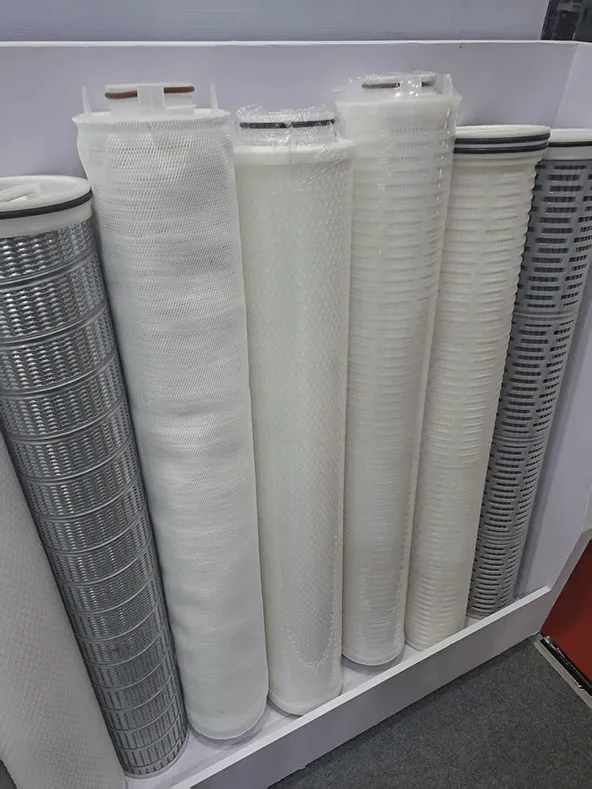
Common cartridge types include PP melt-blown cartridges, PP pleated cartridges, PES membrane cartridges, PTFE membrane cartridges, PVDF cartridges, nylon membrane cartridges, glass fiber cartridges, and stainless steel cartridges.
Cartridges are often used before filling, before membrane protection, for final clarification, sterile filtration, tank venting, compressed gas filtration, or high-purity process liquid filtration.
Common FDA-Compliant Filter Materials
Different materials perform differently in food-contact liquid filtration. The right choice should be based on chemistry, temperature, target particle size, flow rate, viscosity, and cleaning process.
| Material | Common Filter Form | Main Strength | Typical Applications |
|---|---|---|---|
| Polypropylene / PP | Felt bags, melt-blown cartridges, pleated cartridges | Economical, broad chemical resistance, low cost | Water, syrup, edible oil, beverage pre-filtration, general food processing |
| Polyethersulfone / PES | Membrane cartridges | High flow, low protein binding, fine filtration | Beverage polishing, pharmaceutical process liquids, final clarification |
| PTFE | Membrane cartridges, PTFE bags, PTFE gaskets | Strong chemical resistance, hydrophobic options, gas filtration | Aggressive liquids, tank venting, compressed gas, solvent-compatible processes |
| PVDF | Membrane cartridges | Strong chemical resistance and low extractables | High-purity liquids, solvents, cosmetics, pharmaceutical intermediates |
| Nylon | Mesh bags, membrane cartridges | Strength, solvent compatibility, stable particle retention | Wine, beverage, edible oil, solvent-containing process liquids |
| Stainless Steel | Mesh bags, baskets, housings | Reusable, high temperature, mechanical strength | High-temperature liquid, coarse filtration, backwashable or cleanable systems |
| Silicone / EPDM / FKM / PTFE-encapsulated seals | O-rings and gaskets | Sealing compatibility | Selected according to product chemistry, temperature, and cleaning method |
The filter media should not be evaluated alone. A food-contact filter bag with compliant felt but non-compliant thread, ring, gasket, or packaging may still create risk.
Polypropylene Filters for Food and Beverage Processing
Polypropylene is one of the most widely used materials in liquid filtration because it offers a strong balance of cost, chemical compatibility, and process performance.
PP filter bags and cartridges are commonly used for:
- Process water
- Syrups and sugar solutions
- Juice and beverage clarification
- Edible oil filtration
- RO pre-filtration
- Cooling water and utility water
- Food ingredient pre-filtration
- Paints, coatings, and compatible chemicals
PP felt bags provide depth filtration and good dirt-holding capacity. PP melt-blown cartridges are useful for graded depth filtration. PP pleated cartridges offer larger surface area and lower pressure drop when flow stability is important.
However, PP has temperature limitations. Hot edible oils, sterilization cycles, or high-temperature cleaning may require another material or a cartridge designed specifically for those conditions.
PES Membrane Filters for Fine and Final Filtration
PES membrane cartridges are often chosen for high-purity liquid filtration where fine retention, high flow, and low extractables are required.
PES is commonly used in:
- Beverage polishing
- Pharmaceutical process water
- Buffer filtration
- Biological product filtration
- Wine, tea, juice, and beverage clarification
- Electronic chemicals and other high-purity liquids
PES is naturally hydrophilic and generally offers good flow performance in aqueous applications. It can be a strong choice when the process requires fine filtration without excessive pressure drop.
For pharmaceutical or high-purity use, buyers should ask about integrity testing, extractables, endotoxin control, sterilization compatibility, and batch traceability.
PTFE Filters for Aggressive Liquids and Gas Filtration
PTFE is valued for excellent chemical resistance. It can be used in both liquid and gas filtration, depending on whether the membrane is hydrophobic or hydrophilic.
Hydrophobic PTFE is common in:
- Tank vent filtration
- Compressed gas filtration
- Sterile air filtration
- Solvent-compatible gas applications
- Aggressive chemical environments
Hydrophilic PTFE may be used for certain liquid applications where chemical resistance and low extractables are important.
PTFE is often more expensive than PP or PES, so it should be selected where the chemistry, solvent exposure, temperature, or sterilization requirement justifies the cost.
Nylon Mesh and Nylon Membrane Filters
Nylon is widely used in liquid filtration because it provides good mechanical strength and stable mesh structure. Nylon monofilament mesh bags are popular where a cleanable surface-filtering bag is required.
Common uses include:
- Wine filtration
- Beer and beverage clarification
- Edible oil filtration
- Coarse particle removal
- Food ingredient filtration
- Solvent-compatible applications
Nylon membrane cartridges may also be used for fine filtration of organic solvents or specialty process liquids. However, nylon compatibility must be checked carefully with acids, oxidizers, and process-specific chemicals.
Stainless Steel Liquid Filters
Stainless steel filter bags, baskets, cartridges, and housings are used where mechanical strength, cleanability, and temperature resistance are important.
They are commonly used in:
- High-temperature edible oil filtration
- Coarse filtration before bag or cartridge filters
- Chocolate, syrup, or viscous ingredient screening
- Reusable filtration systems
- Cleanable or backwashable process lines
Stainless steel does not replace the need for hygienic design. Food and beverage systems should still consider surface finish, dead zones, weld quality, cleaning access, gasket compatibility, and drainage.
What Documentation Should Buyers Request?
For FDA-compliant liquid filters, documentation is often as important as the filter itself.
A buyer should request:
- Material declaration for wetted components
- FDA compliance statement or food-contact declaration
- Relevant 21 CFR references when applicable
- Certificate of conformity
- Batch or lot traceability
- Material safety information
- Extractables or migration information when required
- Integrity test certificate for membrane cartridges
- Sterilization compatibility information
- Recommended operating temperature and pressure
- Cleaning or sanitization compatibility
- Packaging and storage instructions
For pharmaceutical or high-purity applications, additional documentation may be required, such as USP Class VI, endotoxin data, biosafety information, validation guide, lot release records, or regulatory support files.
How to Select the Right FDA-Compliant Liquid Filter
The best filter should be selected according to process conditions, not only by material name.
Step 1: Identify the Liquid
The supplier should know whether the liquid is water, syrup, oil, alcohol, juice, dairy, solvent, cosmetic base, pharmaceutical solution, or chemical blend.
Important factors include pH, viscosity, temperature, solids loading, oil content, alcohol content, and sensitivity to odor or extractables.
Step 2: Define the Filtration Goal
Common goals include:
- Remove visible particles
- Protect pumps or nozzles
- Improve clarity
- Reduce gels or fibers
- Pre-filter before membrane cartridges
- Protect RO or UF systems
- Reduce bioburden
- Polish product before filling
- Improve batch consistency
A 100-micron bag and a 0.2-micron membrane cartridge solve very different problems.
Step 3: Choose Micron Rating
For liquid filter bags, common ratings may range from 1 to 1000 microns depending on the media. For cartridges, ratings may range from coarse pre-filtration to fine membrane retention.
Nominal and absolute ratings should not be confused. Nominal filtration provides approximate retention, while absolute-rated filtration provides more controlled particle retention under defined test conditions.
Step 4: Check Temperature and Chemical Compatibility
A filter that is compliant for cold water may not be suitable for hot edible oil, acidic juice, alkaline cleaning solution, or alcohol-based extract.
Temperature, cleaning chemicals, CIP/SIP conditions, and contact time should always be reviewed.
Step 5: Review Sealing and Bypass Risk
In food-contact filtration, bypass can be as serious as media failure. A high-quality filter media cannot perform if the bag does not seal in the housing or if a cartridge end cap is poorly matched.
Check ring type, flange type, O-ring material, gasket material, housing design, and installation method.
Step 6: Confirm Documentation
Before ordering, confirm what compliance documents the supplier can provide. For critical applications, documentation should be reviewed before production, not after shipment.
Case Lessons from Public Industry Applications
High-Purity Edible Oils
A public filtration case involving high-purity edible oils shows why process filtration must balance purity, throughput, and product quality. Oils, waxes, oleoresins, and seed-derived products often require filtration that removes fine particles without introducing extractables or affecting product value.
For these applications, PP depth media, pleated cartridges, or stainless steel pre-filters may be used depending on viscosity, temperature, and particle load. The key lesson is that filter selection must protect both compliance and product quality.
Brewery and Beverage Filtration
Public beverage filtration examples show how breweries and beverage plants use staged filtration to reduce particulate load, extend filter life, and stabilize product clarity.
A common approach is to use coarse pre-filtration first, followed by finer cartridge filtration. This helps reduce premature blockage of final filters and improves production efficiency.
Foodservice Water and Beverage Systems
Commercial water and beverage dispensing systems often use cartridges built for coffee, tea, ice, cold beverage, and drinking water applications. These systems demonstrate the importance of matching filter design to the actual station: a coffee machine, ice maker, and cold beverage dispenser may require different filtration functions.
The key lesson is that FDA-compliant materials are only part of the selection. Flow rate, capacity, pressure drop, taste, scale control, and maintenance interval also matter.
Wine and Low-Alcohol Beverage Processing
Wine and low-alcohol beverages may require staged filtration to reduce yeast, spoilage organisms, haze-forming particles, and fine suspended matter while preserving taste and appearance.
PP cartridges, PES membrane cartridges, and nylon mesh filters may each play a role depending on whether the process is clarification, pre-filtration, polishing, or final microbial control.
Common Mistakes to Avoid
Mistake 1: Assuming “Food Grade” Means Suitable for Every Process
A material may be food grade but still unsuitable for a specific liquid, temperature, cleaning chemical, or contact duration.
Mistake 2: Ignoring Non-Media Components
The ring, flange, end cap, core, support layer, O-ring, gasket, adhesive, thread, and packaging must also be reviewed.
Mistake 3: Choosing Micron Rating Without Considering Dirt Load
A filter that is too fine may block quickly. Use staged filtration when solids loading is high.
Mistake 4: Confusing Nominal and Absolute Ratings
Nominal bags and absolute-rated cartridges serve different purposes. Critical final filtration often requires more controlled retention.
Mistake 5: Requesting Documents Too Late
Compliance documents should be confirmed before placing the order, especially for food, beverage, pharmaceutical, and export applications.
Final Recommendation
FDA-compliant liquid filters should be selected through a combination of material compliance, process compatibility, filtration performance, and documentation review.
For general food and beverage clarification, FDA-compliant PP filter bags or PP cartridges are often an economical starting point. For finer filtration, PES membrane cartridges or pleated PP cartridges may provide higher efficiency and lower pressure drop. For aggressive liquids, solvents, gas filtration, or high-purity applications, PTFE, PVDF, nylon, or stainless steel may be more suitable.
Omela Filtration can supply liquid filter bags, filter cartridges, and filter housings in multiple materials and micron ratings for food, beverage, pharmaceutical, cosmetics, water treatment, oils, coatings, and process liquids. Available options include PP, PE, nylon, PTFE, stainless steel, PES, PVDF, melt-blown, pleated, high-flow, and custom constructions.
To receive an accurate recommendation, provide the liquid type, temperature, pH, viscosity, solids loading, flow rate, pressure, micron rating, housing size, cleaning method, and required documentation. Based on these details, Omela engineers can recommend a practical filtration solution designed to balance food-contact safety, filtration efficiency, service life, and total operating cost.
FAQ
1. What are FDA-compliant liquid filters?
FDA-compliant liquid filters are filters made from materials suitable for their intended food-contact or process-contact conditions under applicable FDA requirements. The filter media, support layers, end caps, rings, seals, and other wetted components should all be reviewed.
2. Are FDA-compliant filters the same as FDA-approved filters?
Not always. In most industrial filtration applications, “FDA-compliant” is the more accurate term. It means the materials meet applicable FDA requirements for the intended use and conditions. The FDA does not necessarily approve every individual filter product.
3. Which materials are commonly used for FDA-compliant liquid filters?
Common materials include polypropylene, polyethylene, PES, PTFE, PVDF, nylon, stainless steel, silicone, EPDM, FKM, and PTFE-encapsulated seals. The correct choice depends on the liquid, temperature, pH, cleaning method, and required filtration performance.
4. Are polypropylene filter bags suitable for food and beverage filtration?
Polypropylene filter bags are commonly used in food and beverage filtration when made from suitable food-contact materials and used within the recommended temperature and chemical compatibility range.
5. When should I use a filter bag instead of a filter cartridge?
Use a filter bag for economical clarification, high dirt-holding capacity, coarse-to-medium particle removal, or high-solids liquids. Use a cartridge when tighter retention, higher efficiency, final polishing, or better sealing is required.
6. What documents should I request for FDA-compliant liquid filters?
Request a material declaration, FDA compliance statement, certificate of conformity, batch traceability, operating limits, chemical compatibility information, and, for membrane cartridges, integrity test or validation information when required.
7. Can one FDA-compliant filter be used for all food-contact liquids?
No. A filter must be matched to the specific liquid, temperature, contact time, cleaning method, pH, alcohol or oil content, and filtration objective. A filter suitable for cold water may not be suitable for hot oil, acidic juice, or solvent-containing extracts.
Author

Jessica Ma – Senior Filtration Engineer, Omela Filtration
Jessica Ma is a senior filtration engineer at Omela Filtration, specializing in dust and liquid filtration. With over 15 years of experience, she focuses on optimizing baghouse performance, enhancing filtration efficiency, and developing high-performance solutions for industrial dust collectors and precision liquid filtration applications.